Jacksonville volunteers keep children fed through summer food program
Volunteers ages 3 to 95 help Jacksonville keep kids fed all summer, with Take it to the Streets growing from 8,700 lunches to 16,500 and a clear way for neighbors to help.
A summer meal lifeline in Jacksonville
When school cafeterias shut down, Take it to the Streets helps fill the gap for Jacksonville children who might otherwise go without enough to eat. The effort is built around a simple idea with immediate consequences for local families: keep meals moving during the weeks when school breakfast and lunch are no longer available.
That matters in Morgan County, where about 33,021 people live and Jacksonville School District 117 served 3,131 students in the 2024-25 school year. In a county that size, a program that reaches children day after day is not a side project. It is part of the local safety net, especially for families whose summer budgets are already stretched thin.
How the program works night by night
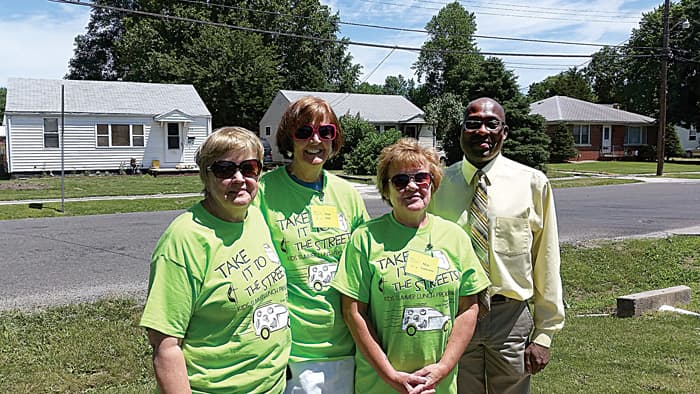
Take it to the Streets operates through Grace United Methodist Church, where volunteers gather, assemble meals and prepare them for delivery. Each lunch is put together with fruit, vegetables, a protein and a grain, a practical formula designed to give children a balanced meal they can count on during the summer.
The volunteer base is unusually broad. The program draws helpers from ages 3 to 95, and it typically needs about 40 volunteers each night to keep the work moving. In the summer described in the feature, the schedule began on Sunday evenings at 4 p.m. and continued Monday through Thursday at 5:30 p.m. at Grace United Methodist Church. That steady cadence matters because hunger does not follow a school calendar. Families need help repeatedly, not just once.
The meals themselves reflect the kind of food children actually eat. Peanut butter and jelly sandwiches are among the favorites, and Friday salad meals with egg and Go-Gurt have also been part of the rotation. Those details may sound small, but they help explain why the effort has lasted. Programs like this work best when they are both nutritious and familiar enough that children will actually eat what arrives.
The volunteers keeping it going
The effort is led by Pastor Don Jackson of Grace United Methodist Church, along with Brad Heaton, Sandy Heaton, Louise Corder, Larry Speakman, Sam Sheets, Sue Sheets and Squire Prince. Their names matter because this is not an abstract program run from far away. It is a local response built by people who know the families, the schools and the practical strain of summer in a town where many children rely on school meals during the academic year.
That local network has also proven durable. Take it to the Streets began in the summer of 2017 with 8,700 lunches served. By 2018, the number had climbed to 16,500 sack lunches, showing how quickly the program expanded once word spread and volunteers lined up. The same summer also brought 302 evening volunteers and 50 day volunteers, a sign that the effort was supported by a wide circle of residents and organizations, not just one congregation.
That growth is the clearest measure of community trust. Families keep coming back because the meals are there, and volunteers keep returning because the need is real.
Why the need is so persistent
The local picture fits a broader national pattern. USDA’s summer meals program is designed to provide nutritious meals to kids and teens when school is out, and Illinois administers its Summer Food Service Program through the Illinois State Board of Education. Those programs exist for the same reason Take it to the Streets does: summer can leave a serious food gap for children who depend on school meals the rest of the year.
The scale of food insecurity shows why that gap remains urgent. Feeding America reports that Illinois’ food insecurity rate was 13.1% in 2023, while the U.S. rate was 14.3%. Those numbers do not describe every household in Morgan County, but they do show the larger economic pressure surrounding local families. In smaller communities, where a sudden job loss, medical bill or reduced hours can ripple through a household fast, a reliable meal program can stabilize the week.
There is also a rural dimension to the problem. Feeding America has noted that more than 80% of U.S. counties with the highest child food insecurity rates are rural counties. Morgan County is not isolated from that trend just because Jacksonville has schools, churches and civic groups that are active and visible. If anything, the local response shows how much rural and small-town communities rely on neighbors to bridge the gap.
What help looks like now
Take it to the Streets is not only a volunteer effort. It is also a place where donations and participation can translate directly into meals. Financial gifts can be sent to Grace United Methodist Church with “Take It To The Streets” in the memo. Those dollars help cover food and the supplies needed to pack and move meals through the summer.
People who want to volunteer or contribute can reach Sandy Heaton at 217-322-3239 or Grace United Methodist Church at 217-245-9521. Those same contact points are also the clearest way for families to learn more about the program and how meals are distributed.
- Send donations to Grace United Methodist Church
- Write “Take It To The Streets” in the memo
- Call Sandy Heaton at 217-322-3239
- Call Grace United Methodist Church at 217-245-9521
A larger safety net, but not a substitute
Illinois added another layer of summer food support when it launched Summer EBT in 2024. The benefit provides eligible families with a $120 per child grocery benefit in 2025, which can help households buy food during the months when school is out. That policy support is important, but it does not replace the hands-on work done at Grace United Methodist Church.
Prepared meals still matter because they arrive ready to eat, in the middle of a week, for children whose homes may be under strain. That is why Take it to the Streets stands out in Jacksonville. It combines public need, private generosity and local know-how into something immediate and practical. For Morgan County families, the measure of success is simple: another summer where children are fed, week after week, by people who know exactly why it matters.
This article was produced by Prism’s automated news system from verified source data, official records, and press releases, then run through automated quality and moderation checks before publishing. The system is built and supervised by the people who set the standards it runs under. Read our full AI policy.
Did this article answer your question?