Meredosia National Wildlife Refuge Offers Conservation, Recreation for Morgan County Visitors
Free admission, hiking, fishing, and world-class birding await at Meredosia NWR, a 3,645-acre Illinois River refuge just north of the village of Meredosia.
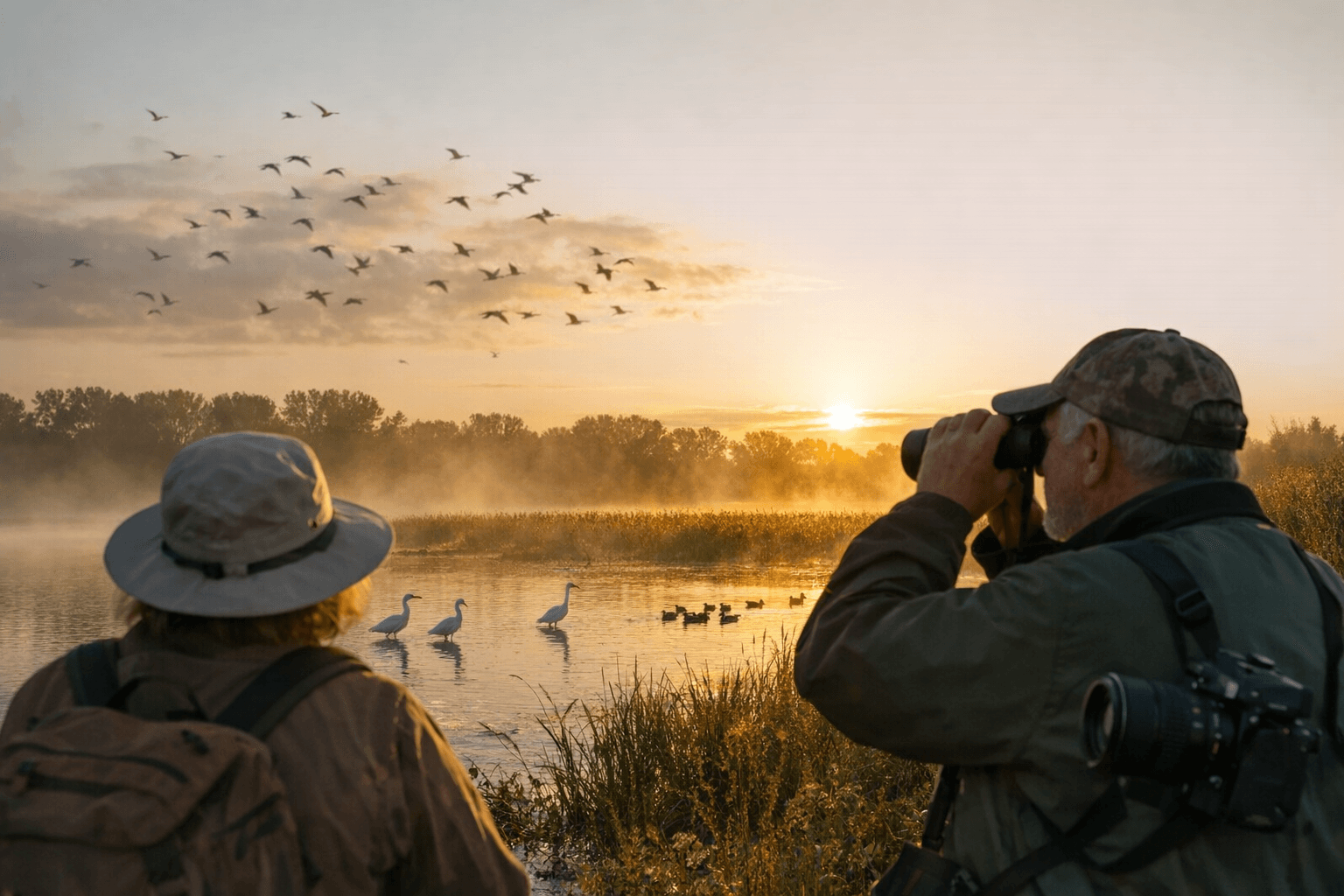
Tucked along the east bank of the Illinois River just north of the village of Meredosia, the Meredosia National Wildlife Refuge draws hikers, anglers, paddlers, and birders to one of west-central Illinois's most ecologically rich corners. The refuge sits within both Cass and Morgan counties, covers roughly 3,645 acres across multiple management units, and charges nothing for admission. For Morgan County residents who have never ventured up Beach Road to explore it, the refuge offers a surprisingly varied landscape of forest, hills, prairie, wetlands, and open water, all within a short drive of Jacksonville.
A Refuge with Deep Roots
Established in 1973 and managed by the U.S. Fish and Wildlife Service, Meredosia NWR carries an IUCN Category IV designation, meaning its primary purpose is active habitat and species management rather than passive preservation. Day-to-day operations are handled through the Chautauqua National Wildlife Refuge complex office in Havana, Illinois, reachable at 309-535-2290. The refuge does not stand alone: it is one of three units within the Illinois River National Wildlife and Fish Refuge Complex, alongside Chautauqua NWR and Emiquon NWR. Together those three refuges stretch along 124 miles of the Illinois River and encompass approximately 12,163 acres of backwater lakes, bottomland forests, floodplain wetlands, and upland forest and prairie.
The land itself carries history that long predates federal ownership. According to refuge documentation, this stretch of the Illinois River floodplain sits within the traditional homeland of the Illinois people, recognized today as the Peoria Tribe of Indians of Oklahoma, a confederation of Kaskaskia, Peoria, Piankeshaw, and Wea tribes from Illinois and Indiana. Subsequent tribes including the Kickapoo and Potawatomi also lived here. The area was historically known for its exceptional capacity to sustain fish and wildlife, a reputation the refuge continues to uphold.
Hydrology and Habitat: What Makes the Refuge Work
Meredosia NWR occupies the upper end of Alton Pool within the Illinois River floodplain, extending from river mile 71.5 on the south to river mile 76.7 on the north. The centerpiece is Meredosia Lake, a backwater lake classified under Illinois law as a "meandered lake" and therefore under the control of the Illinois Division of Water Resources. Waterfowl hunting and fishing on Meredosia Lake are managed separately by the Illinois Department of Natural Resources, an important distinction for visitors who plan to fish or hunt.
Beyond the lake, the refuge contains eight small impoundments equipped with associated levees, ditches, and water control structures. These impoundments range from 4 to 20 acres each and are managed primarily for moist-soil vegetation, the mix of shallow water and emergent plants that migrating waterfowl depend on during their spring and fall movements along the Mississippi Flyway. The result is a mosaic of habitat types across the refuge: bottomland forest, floodplain wetland, upland forest, open prairie, and lake and river frontage, giving wildlife and visitors alike a wide range of terrain to move through.
What the Deed Restrictions Mean for Visitors
A portion of the refuge land was conveyed under deed restrictions requested by a donor identified in refuge planning documents as Mr. Anderson. Those restrictions, which run with the land in perpetuity, limit certain activities in specific ways. Timber cutting is permitted only when necessary for wildlife and habitat improvement. Motorized vehicle use is confined to roads specifically authorized for public use. Hunting is allowed only to the extent deemed necessary for proper management of the waterfowl resource. These conditions reinforce rather than conflict with the refuge's public-use philosophy: foot traffic, paddling, fishing, and wildlife observation are all welcomed within the seasonal framework described below.
Seasons, Hours, and Access
The refuge operates on a split seasonal schedule that reflects its waterfowl management mission. From February 1 through October 15, the refuge is open during daylight hours and the full range of visitor activities is available. From October 16 through January 31, portions of the refuge close to protect the waterfowl sanctuary, though dawn-to-dusk access continues in open areas. Visitors planning a late-fall or winter trip should contact the Chautauqua NWR office in advance to confirm which areas remain accessible.
Seasonal fishing runs from February 1 through October 15, consistent with the broader open season. Paddlers and hikers are similarly welcome during that window. Leashed dogs are permitted throughout the refuge, making it a workable destination for Morgan County residents who want to combine a trail walk with a wildlife outing.
Getting there is straightforward. The refuge address is 2219 Beach Road, Meredosia, IL 62665. Coming from the east on IL 104W, follow Putman Street north through the village of Meredosia to Beach Road. From IL 67S, take Kochs Lane to Beach Road. Visitor information is posted on the west side of Beach Road. Multiple parking areas serve different parts of the refuge, including a trailhead and observation deck area, a pull-off for the Shearl/Skinner Wetlands, and a boat ramp. Visitors should contact the refuge office for current GPS coordinates and to verify which facilities are open, as on-site map availability and restroom status have not been confirmed in public listings.
What to Do Once You're There
The refuge's terrain mix, described in visitor resources as covering forest, hills, prairie, wetland, lake, and river views, supports a full day of low-key outdoor recreation. Hiking the nature trail leads to an observation deck, giving visitors an elevated view over the floodplain landscape. Birding is the activity most consistently highlighted in visitor literature; the refuge carries a reputation as a birding hotspot, a designation earned by its position in the Illinois River corridor and the active management of its wetland impoundments for waterfowl and other wetland species. Serious birders should check with local Audubon chapters or contact the refuge complex office for seasonal species highlights, since no formal checklist was available in current public materials.
Paddling is permitted during the open season, giving canoe and kayak users access to the refuge's water features. Fishing follows Illinois Department of Natural Resources regulations for Meredosia Lake and any applicable federal refuge rules for the impoundment areas. Educational and volunteer programs are also listed among available activities; the Chautauqua NWR office can provide current program schedules.
Nearby Options
Visitors looking to extend a day trip have a couple of easy additions. Ray Norbut State Fish and Wildlife Area is the closest comparable public land, offering additional hunting, fishing, and wildlife viewing opportunities. For overnight stays, Buena Vista Farms Inc in Chapin, Illinois, provides camping and can be reached at 217-243-3290.
Planning Your Visit
Admission is free. No reservations are required for general access. The refuge's position within the Illinois River floodplain means water levels and habitat conditions can shift seasonally, so calling the managing office at 309-535-2290 before a first visit remains the most reliable way to confirm current access, trail conditions, and any special closures. The Chautauqua National Wildlife Refuge office address is 19031 East County Road 2110 North, Havana, IL 62644-6372.
As one of three refuges in a complex that manages 124 miles of Illinois River corridor, Meredosia NWR carries conservation weight well beyond its acreage. For Morgan County residents, it also represents one of the more accessible working examples of what large-scale wetland and floodplain management looks like on the ground, free to visit, open most of the year, and close enough to Jacksonville to make a morning trip entirely practical.
This article was produced by Prism’s automated news system from verified source data, official records, and press releases, then run through automated quality and moderation checks before publishing. The system is built and supervised by the people who set the standards it runs under. Read our full AI policy.
Did this article answer your question?