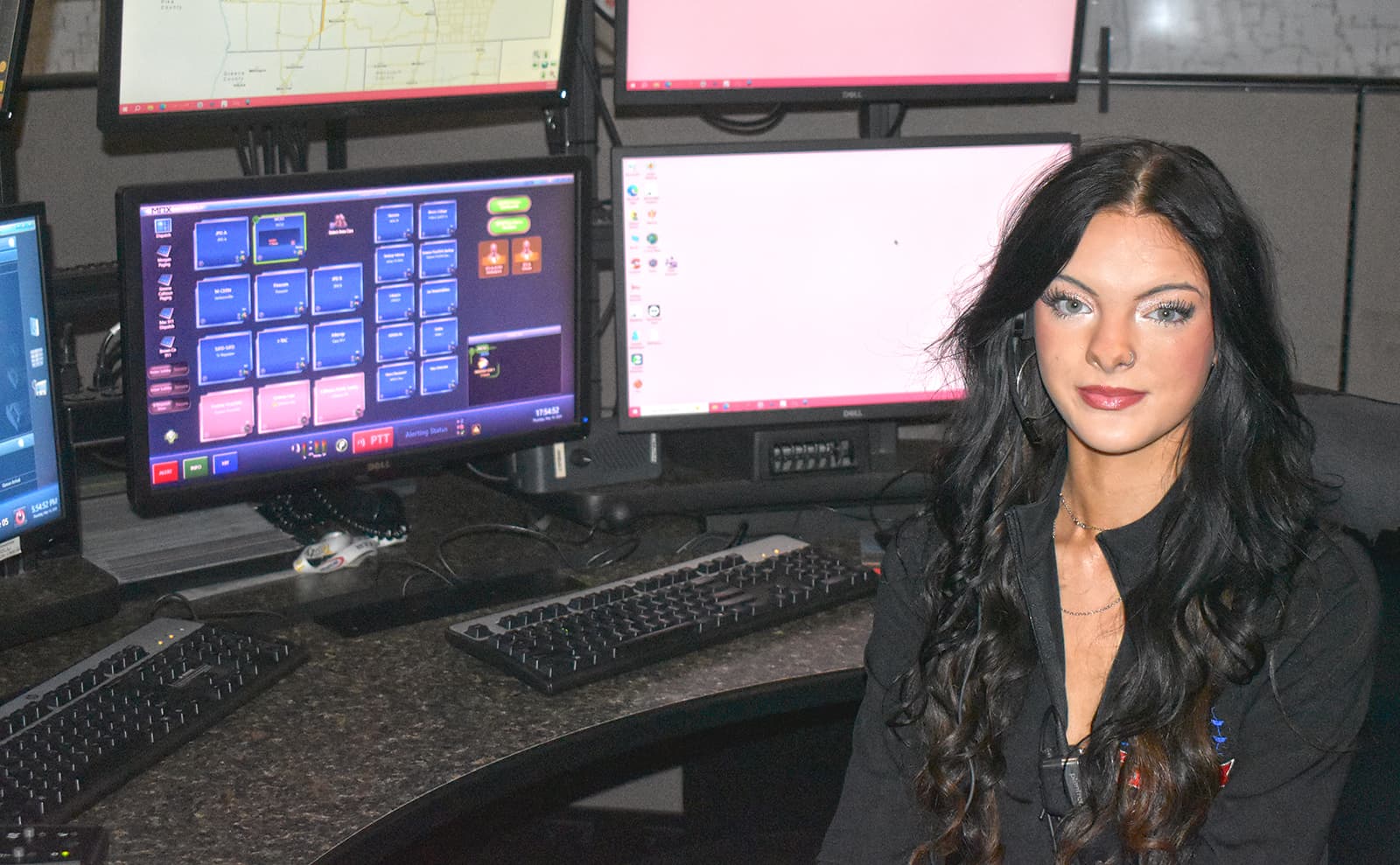
Morgan County 911 dispatcher Gattaca Daniels profiled in Behind the Badge
Gattaca Daniels is one of the first calm voices Morgan County hears in a crisis, and her work helps guide help to the right place across a 1,400-square-mile region.
A calm voice at the center of Morgan County emergencies
When Morgan County families dial 911, the first critical seconds often belong to a telecommunicator like Gattaca Daniels. MSN’s Behind the Badge feature puts a name and face to work that usually stays invisible, but the impact is immediate: one calm voice helps decide how fast police, fire, or EMS reach the right address in Jacksonville, in a village, or out on a rural road.
That matters in a county where the West Central Joint Dispatch Center serves as the hub for emergency response across Morgan, Greene, and Calhoun counties. The center says it operates every hour of every day, every day of the year, handling both emergency and non-emergency calls for Morgan County while coordinating the public-safety response that keeps communities functioning when the worst happens.
What Daniels’ job really does in those first moments
Daniels’ role is not just about answering a phone. It is about collecting the right information fast, staying composed under pressure, and keeping callers focused long enough to help responders get moving. In a crisis, those first exchanges can shape how quickly help is sent and how effectively it arrives, especially when the call involves confusion, fear, or multiple hazards at once.
That is why the work carries so much weight on the worst day of someone’s life. The dispatcher is often the bridge between panic and action, translating a caller’s fear into information that can be used by deputies, firefighters, and medics already on the way. The MSN profile highlights the emotional labor behind the job as much as the technical side, and that balance is part of what makes the service essential.
How the West Central Joint Dispatch Center is built to serve the county
The West Central Joint Dispatch Center was developed as a joint effort involving the City of Jacksonville, the Morgan County Board, Passavant Hospital, and the West Central Emergency Telephone System Board. That collaboration reflects how many local institutions have to work together when one county’s safety net depends on a single communications center.
The center says it is the 9-1-1 authority for Morgan, Greene, and Calhoun counties. According to the City of Jacksonville, the center has 14 telecommunicators and answers about 16,000 9-1-1 calls each year across approximately 1,300 square miles serving about 52,000 people. The West Central ETSB’s FAQ puts the footprint even broader, describing about 1,400 square miles and a population of more than 50,000, which shows just how wide the coverage area is for one local dispatch operation.
That scale helps explain why dispatch capacity is such a public-safety issue in Morgan County. A small team is covering a large geography, and that geography includes Jacksonville as well as smaller communities and rural stretches where responders may be farther apart. In that setting, every accurate detail from a caller can make the difference between a routine response and a delayed one.
Why accreditation and training matter when seconds count
West Central Joint ETSB says the dispatch center has earned triple accreditation in medical, fire, and police dispatch from the International Academies of Emergency Dispatch. That distinction points to standardized protocols behind the work Daniels and her colleagues do every day, and it suggests the center is operating with a structure designed for consistency in emergencies.

For residents, that means the voice on the other end of the line is not improvising. The center’s work is built around recognized dispatch standards that help determine what questions get asked, how information is prioritized, and when responders are sent. In a county where one call may need to alert multiple agencies, that structure is a public-safety asset, not a background detail.
What callers should be ready to say when every second matters
The clearest lesson from a story like Daniels’ is that callers can help themselves by being prepared to give the facts quickly and plainly. In the first moments of a 911 call, what matters most is the location, the nature of the emergency, and whether anyone is in immediate danger. The clearer that picture is, the faster a telecommunicator can direct the right response.
A helpful caller does not need perfect wording. What helps is staying on the line, answering the dispatcher’s questions, and avoiding extra chatter that slows the exchange. If the situation involves fire, injury, crime, or a medical emergency, dispatchers need enough information to match the call with the right public-safety resources and to keep responders from arriving blind.
A few practical points stand out for local families:
- Know the exact address or nearest landmark if you can.
- Be ready to explain what is happening right now.
- Say whether anyone is hurt, trapped, or in immediate danger.
- Follow the dispatcher’s questions instead of trying to guess what comes next.
- Use the non-emergency line when the situation does not require immediate response, so 911 remains open for urgent calls.
Those basics are especially important in Morgan County, where dispatchers are handling emergency and non-emergency traffic for a broad region. A clear call helps preserve the center’s ability to triage the next crisis waiting in the queue.
The local impact behind an invisible job
The Morgan County Sheriff’s Department, listed by the ETSB, is in Jacksonville and has fourteen sworn deputies. That local detail underscores why the dispatch center matters so much: deputies, firefighters, and medics can only get where they are needed if the call is passed cleanly and quickly into the response system. In a county with both urban Jacksonville coverage and more spread-out response areas, dispatch is the connective tissue.
This is why a profile of Daniels belongs in the public-safety conversation, not just the human-interest section. The story reminds Morgan County that emergency response begins long before a siren reaches the street. It begins with a trained telecommunicator, a steady voice, and a system built to move help from the communications center to the people who need it most.
This article was produced by Prism’s automated news system from verified source data, official records, and press releases, then run through automated quality and moderation checks before publishing. The system is built and supervised by the people who set the standards it runs under. Read our full AI policy.
Did this article answer your question?