Morgan County column explains why the Mediterranean diet endures
The Mediterranean diet endures because the strongest studies link it to longer, healthier lives. In Morgan County, the practical version looks like pantry cooking, not a fad.

A bowl of beans, a pan of vegetables and a steady dinner schedule get closer to the Mediterranean diet than any glossy wellness plan. Clara and Justin Hamel connect that pattern to Morgan County households that need food that is affordable, familiar and easy to repeat.
What the Mediterranean diet really asks for
The diet’s original Greek meaning, diaita, points to a whole way of living rather than a short burst of eating rules. The strongest version of the pattern is not just olive oil and vegetables. In Harvard nutrition experts’ description of the traditional Mediterranean lifestyle, it also includes physical activity, regular meal patterns, wine and social support.
That broader definition makes the diet feel less like a specialty plan and more like a set of habits that can fit ordinary days in Jacksonville and across Morgan County. A walk after supper, eating at roughly the same time each night and sharing a meal with family or neighbors are part of the same picture as the food itself.
How the science built its reputation
The diet’s staying power starts with the Seven Countries Study, which began in 1947 and became the first major study to examine diet and lifestyle, along with other cardiovascular risk factors, across contrasting countries and cultures over time. The project is closely tied to Ancel Keys, the scientist most associated with identifying and popularizing the Mediterranean diet.
The study has produced an unusually large body of follow-up work: more than 550 peer-reviewed articles and 10 books or monographs over more than 50 years of follow-up.
What newer studies add
A 2023 National Heart, Lung, and Blood Institute summary found that people with the highest adherence to healthy dietary patterns, including the Alternate Mediterranean Diet, had a 14% to 20% lower risk of death than those with the lowest adherence. In the same analysis, the highest adherence groups also had a 6% to 15% lower risk of heart-disease death, a 7% to 18% lower risk of cancer death and a 35% to 46% lower risk of respiratory-disease death.
In a 2024 NHLBI summary, a Women’s Health Initiative study published in JAMA Network Open linked higher Mediterranean-style diet adherence to reduced premature death risk. The Women’s Health Initiative is a long-term NHLBI-sponsored study focused on preventing heart disease, breast and colorectal cancer and osteoporosis in postmenopausal women.
In the PREDIMED trial, adults at high cardiovascular risk who followed a Mediterranean diet supplemented with extra-virgin olive oil or nuts had fewer major cardiovascular events than those assigned to a reduced-fat diet. Later follow-up work published in 2026 built on that evidence by examining additional cardiovascular outcomes using annual olive-oil intake measurements.
Why the benefits matter beyond the heart
The strongest and most repeated benefit is cardiovascular. Harvard Health links the Mediterranean diet to lower risk of heart disease, metabolic syndrome, diabetes, certain cancers, depression and frailty in older adults, along with better mental and physical function.
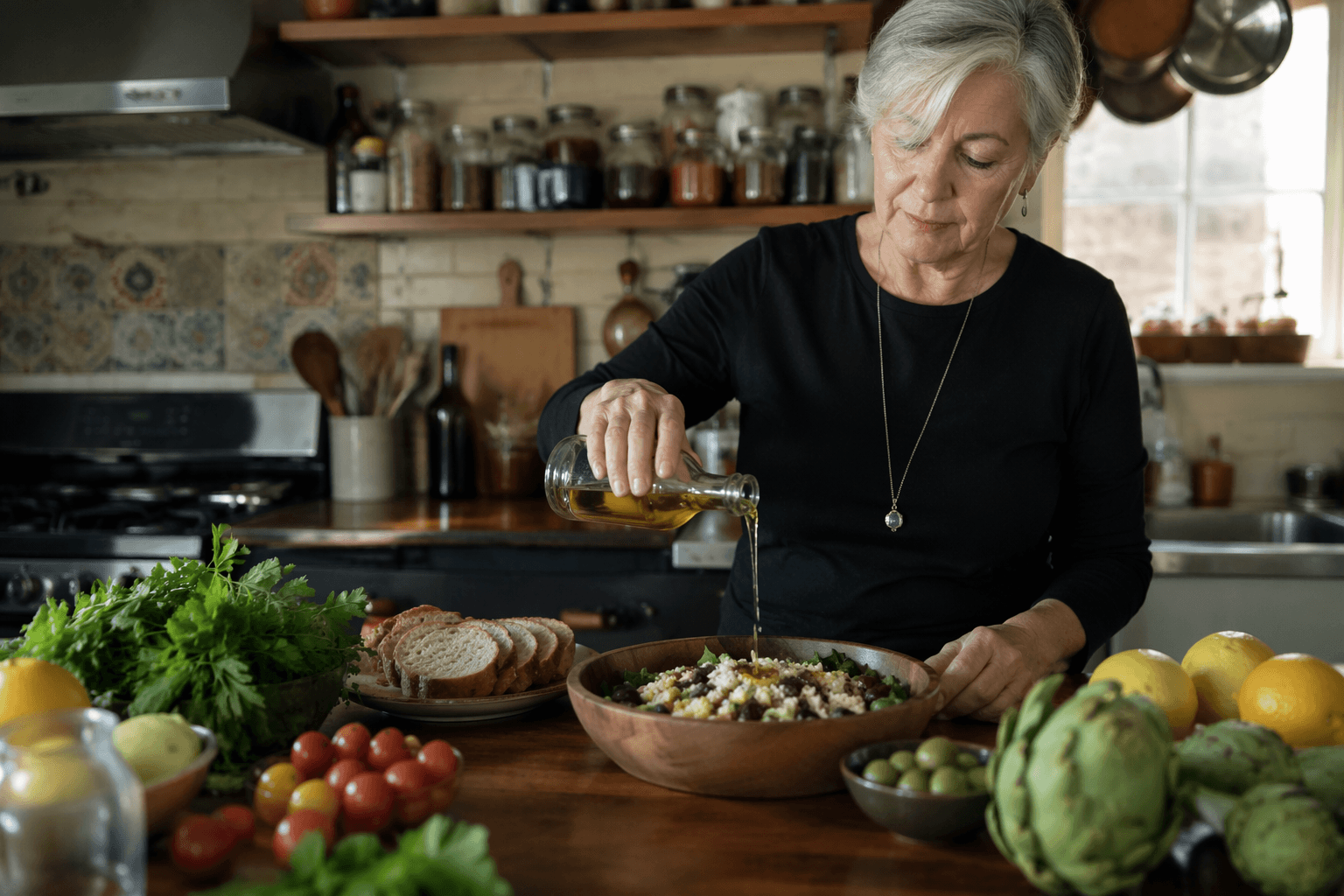
The American Heart Association also keeps the Mediterranean style near the top of heart-healthy eating patterns and consumer diet rankings.
How to make it work in Morgan County
The local version does not need imported ingredients or a chef’s kitchen. In Morgan County, the easiest path usually begins with groceries that already fit a family budget: olive oil, canned beans, oats, frozen vegetables, canned tomatoes, nuts, whole-grain bread and simple proteins such as canned fish or eggs. Those foods let you build meals that look Mediterranean without trying to recreate a vacation menu.
A practical table often comes down to a few repeated habits:
- Use olive oil as the main added fat instead of leaning on butter or heavy sauces.
- Make beans, lentils or chickpeas the center of a meal at least once or twice a week.
- Keep frozen vegetables on hand so dinner does not depend on a perfect shopping trip.
- Put fruit, nuts and yogurt where they are easy to reach, and sweets where they are not the default.
- Build dinner around vegetables and whole grains, then use meat as a smaller part of the plate instead of the main event.
- Keep meal times regular when work and school schedules allow, because the Mediterranean model is about rhythm as much as ingredients.
That approach fits the evidence better than chasing expensive specialty items. The studies behind the diet reward repeatable patterns such as cooking more at home, eating plants more often and keeping meals social.
This article was produced by Prism’s automated news system from verified source data, official records, and press releases, then run through automated quality and moderation checks before publishing. The system is built and supervised by the people who set the standards it runs under. Read our full AI policy.
Did this article answer your question?