Morgan County Skywatching Guide Comet Meteors and Winter Solstice Nights
Year end sky events brought a close pass by Comet 3I ATLAS, an ideal New Moon for stargazing, and the Ursid meteor shower timed with the winter solstice, offering Morgan County residents several clear opportunities to observe celestial activity. These events mattered because dark skies and accessible viewing windows provided a rare chance for families, photographers and educators to experience meteors and a comet during the holiday period.
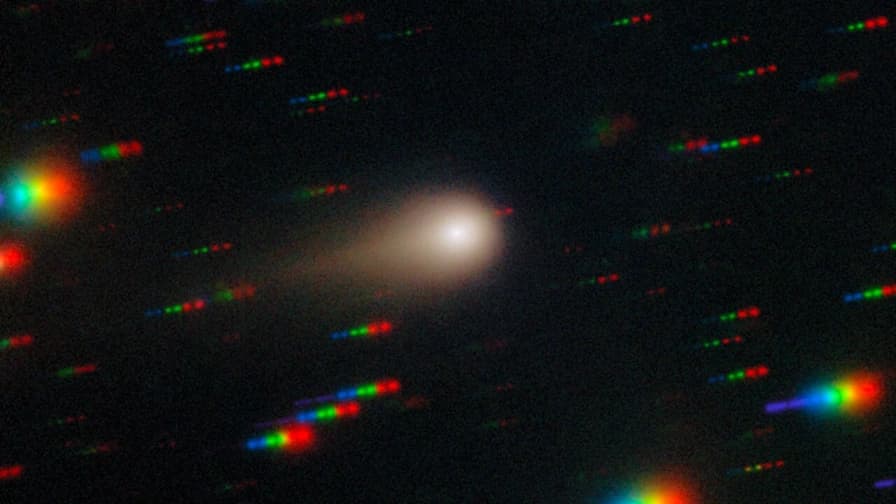
The final weeks of December delivered a compact but notable astronomy lineup that was visible across Morgan County. Comet 3I ATLAS made its closest approach to Earth on December 19, followed by a New Moon on December 20 that reduced skyglow and improved conditions for nighttime observation. The Geminids meteor season ran through December 20 and produced a strong showing earlier in the month, while the Ursid meteor shower peaked from the night of December 21 into the morning of December 22.
Those planning to look up found two advantages working in their favor. The New Moon left the late December skies unusually dark, and the Moon was a slim waxing crescent during the Ursid peak at roughly five a.m. Central Time on December 22, meaning lunar brightness did little to interfere with faint meteors. Under typical conditions the Ursids yield about five to ten meteors per hour radiating from the northern sky near Ursa Minor, though the stream has produced brief spikes of much higher activity in some years. The Geminids earlier in December are known for bright colorful meteors and can reach much higher hourly rates at peak.

For casual observers the comet, bright meteor displays and a visible Moon and Saturn pairing offer low barrier opportunities. The Moon and Saturn were close enough on December 26 and December 27 to be seen together with the naked eye and binoculars, creating pleasant evening viewing for people who prefer not to stay up late. Comet visibility depended on local weather and viewing conditions, but the dark nights around December 19 and 20 gave residents the best chance to spot it.
The local impact extends beyond a single week of skywatching. Morgan County communities benefit when residents take advantage of dark nights for education, photography and family outings. Simple choices such as reducing unnecessary outdoor lighting and using shielded fixtures can improve sky visibility for neighbors and support civic interest in preserving dark sky access. As the holidays conclude, those who missed peak nights can still watch the Moon and planets and plan for future meteor showers using clear, moonless windows.
This article was produced by Prism’s automated news system from verified source data, official records, and press releases, then run through automated quality and moderation checks before publishing. The system is built and supervised by the people who set the standards it runs under. Read our full AI policy.
Did this article answer your question?