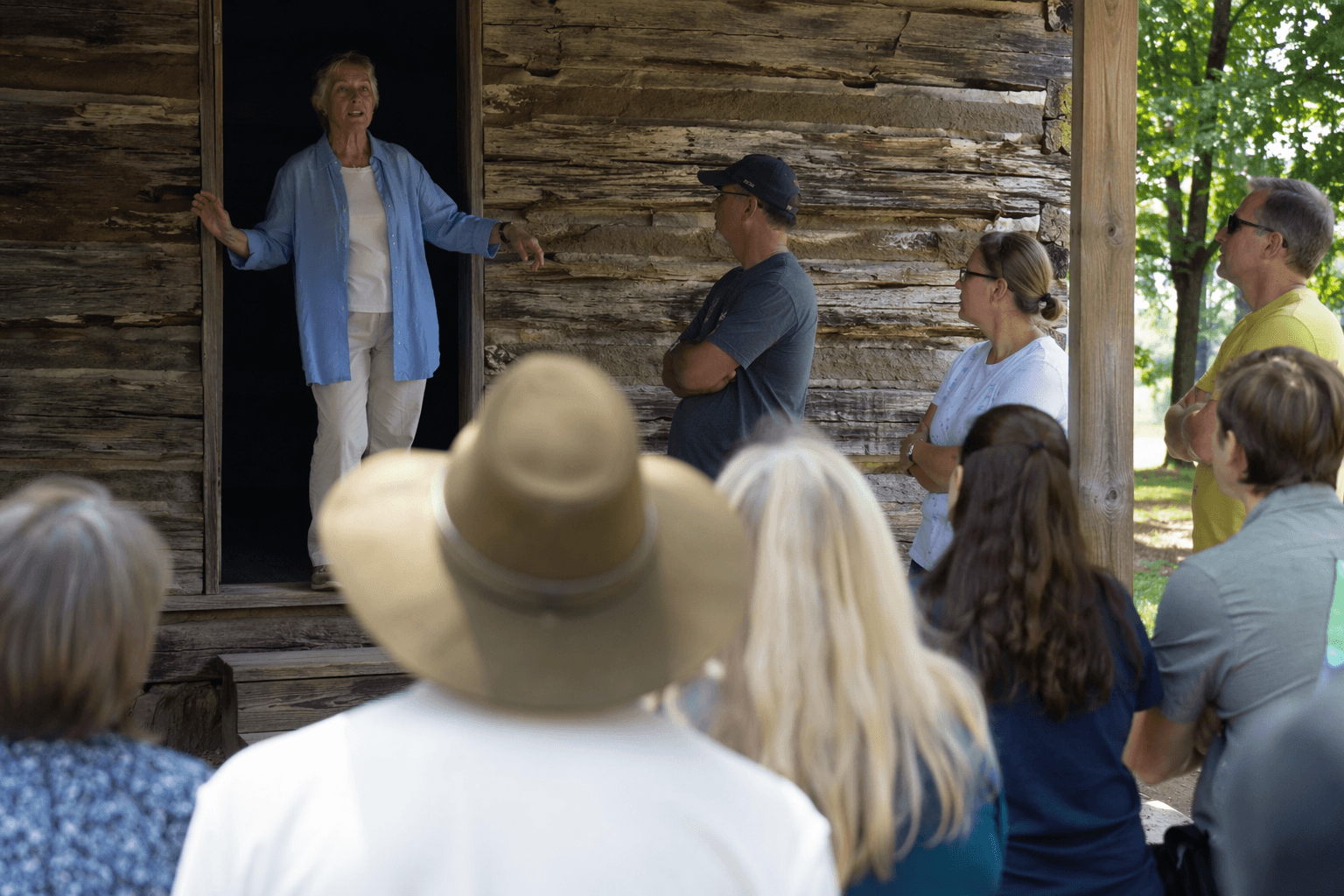
Self-guided tour spotlights Jacksonville’s historic heart and Lincoln ties
Jacksonville’s self-guided historic loop turns Lincoln-era landmarks into a downtown walk that can feed shops, restaurants and weekend traffic.

Jacksonville’s historic core is built for a walk, and that is what makes the route matter to downtown now. A self-guided circuit from Duncan Park to Central Park, then along State Street and West College Avenue, keeps visitors in the same blocks where the county seat’s oldest buildings, storefronts and foot traffic still overlap. The question is not whether Jacksonville has history; it is whether the city can turn that history into longer visits, more browsing and a stronger weekend economy.
A county seat that grew around a square
Jacksonville was founded in 1825 and remains Morgan County’s county seat, which gives the downtown more than a nostalgic backstory. On January 6, 1825, John Howard, Abraham Pickett and John C. Lusk were appointed to locate a permanent county seat, and by March 10, 1825, surveyor Johnson Shelton had laid out a five-acre public square that is now Central Park. That origin explains why the historic core still reads as a civic landscape, not just a collection of old façades.
The city still frames Jacksonville as one of the oldest towns in Illinois, and the Lincoln connection deepens the draw. Abraham Lincoln spent time practicing law and visiting here, so the local story folds together county government, frontier settlement, national politics and abolition-era memory. That blend is part of the city’s appeal to visitors who want more than a quick stop on the way through west-central Illinois.
Where Lincoln-era history meets downtown blocks
The Governor Duncan Mansion is one of the strongest anchors on the route. Jacksonville describes it as the only executive mansion in Illinois outside Springfield, a frontier home for Governor Joseph Duncan, who served from 1834 to 1838, when Lincoln was a young lawyer and state representative. The city’s history tour also places the mansion in Jacksonville’s State Street Historic District and says it was constructed between 1833 and 1835.
The Library of Congress dates the Governor Joseph Duncan House to 1835 for initial construction, which gives the place a precise foothold in the county seat’s early development. That date matters because it places the building squarely in the decade when Jacksonville was still defining its civic center, before the city’s commercial life stretched far beyond the original square. In practical terms, it means the mansion is not an isolated museum piece but part of a downtown that was taking shape at the same time.
A walkable map of the historic district
The best way to read Jacksonville’s heritage is on foot, with the route unfolding block by block. The Jacksonville Area Convention & Visitors Bureau highlights the Governor Duncan Mansion in Duncan Park, Underground Railroad sites, the grand homes along State Street and College Avenue, the monuments in the square and the Big Eli Wheel as part of the city’s living historic fabric. The Morgan County GIS portal strengthens that approach by offering an interactive Historic Jacksonville Tour and a Jacksonville Historic District map, making it easy to trace the route while moving through the core.
The district itself has clear boundaries. The National Register nomination describes Jacksonville Historic District as a west-side streetscape bounded by Dunlap, Dayton, Finlay and Anna, plus their extensions, and says the boundary was drawn to preserve Jacksonville’s pre-World War I character. That detail matters for downtown because it shows preservation is not confined to one mansion or one plaque. It protects an entire grid of streets where a visitor can still read the city’s early development in the pattern of the blocks.
A useful way to organize the walk is around the named sites preserved in Illinois Department of Natural Resources records:
- Governor Joseph Duncan House, 4 Duncan Place
- Illinois College’s Beecher Hall
- Jacksonville Water Treatment Plant
- Porter Clay House, 1019 West State Street
- Strawn Art Gallery, 331 West College Avenue
- Meredosia Route 104 Bridge
Taken together, those places show how Jacksonville’s history spreads across education, domestic architecture, public infrastructure and transportation. That spread is exactly what gives the tour its downtown value, because it keeps visitors moving between the historic square, the west-side district and the blocks where businesses depend on people lingering long enough to stop in.
Why the route has economic potential
The strongest downtown story here is not just preservation, but dwell time. A self-guided tour works differently from a one-stop attraction because it can move people from Duncan Park to the square and then out toward West State Street and West College Avenue, where every extra block creates another chance to shop, eat or browse. The preservation question is whether those steps are adding measurable commercial activity, creating new visitor habits or leaving untapped opportunities in the square’s business district.
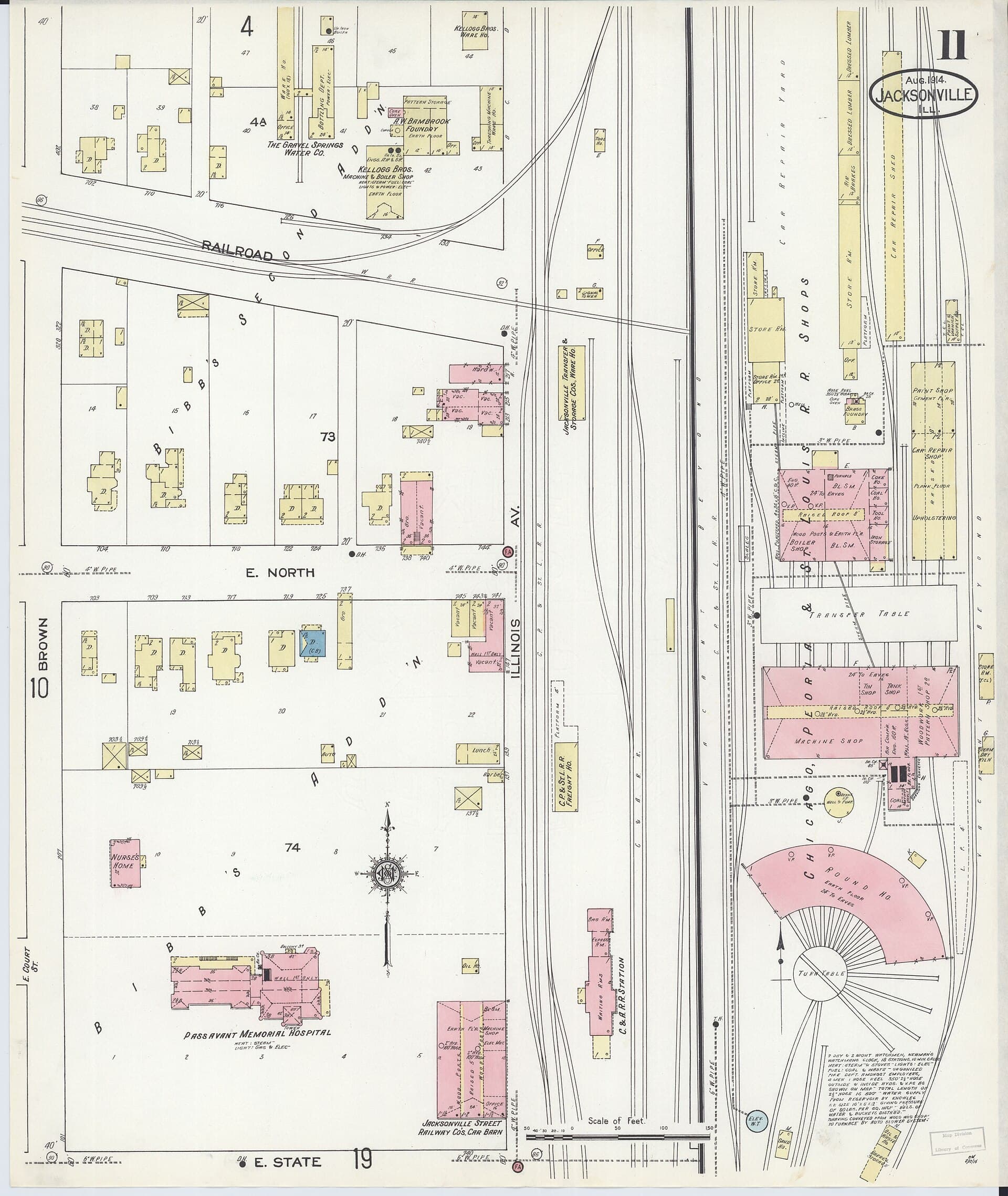
Jacksonville’s rail history also helps explain why the core has enough density to support that kind of foot traffic. The Northern Cross, the first railroad in Illinois, ran from Meredosia to Jacksonville in 1839, linking the county seat more closely to trade and travel. That rail connection helped push growth into the civic center, and it still shapes the way the city reads today: a compact downtown, a historic square and a set of streets that reward walking rather than driving past.
The institutions keeping the story active
Jacksonville’s history is maintained by more than plaques and maps. The Morgan County Historical Society was formed on November 18, 1904, at the Jacksonville Public Library, and it was established to collect, maintain and share information about the people, places and events of Morgan County. It also runs public programs, publishes local-history books and operates an Underground Railroad committee tied to Woodlawn Farm, which keeps the county’s abolition-era memory connected to present-day education.
The Underground Railroad context gives the route a moral and regional dimension that reaches beyond Jacksonville. The Illinois Underground Railroad Task Force says the network helped an estimated 45,000 enslaved people achieve freedom, and it notes that the system became increasingly active in Illinois by the 1830s. That makes Jacksonville’s Underground Railroad sites more than an interpretive stop. They sit inside a broader Illinois story about mobility, risk and resistance.
The preservation infrastructure is active, too. Jacksonville’s Historic Preservation Commission includes eleven city residents, along with an ex officio City Council member and a Jacksonville Main Street Program representative. The state’s HARGIS portal, which catalogs historic buildings, structures, sites, objects and districts, was launched in 2003 and updated on ArcGIS in 2021, giving local and state preservation efforts a common platform for tracking the built environment.
That is why Jacksonville’s historic core still feels economically relevant, not frozen. The county seat’s earliest square, its Lincoln-era homes, its west-side district and its downtown institutions form a compact route that can convert heritage into repeated visits, and repeated visits into a more resilient center city.
This article was produced by Prism’s automated news system from verified source data, official records, and press releases, then run through automated quality and moderation checks before publishing. The system is built and supervised by the people who set the standards it runs under. Read our full AI policy.
Did this article answer your question?