Unseasonable Warmth Warming Jacksonville, Temperatures Near Record for Christmas
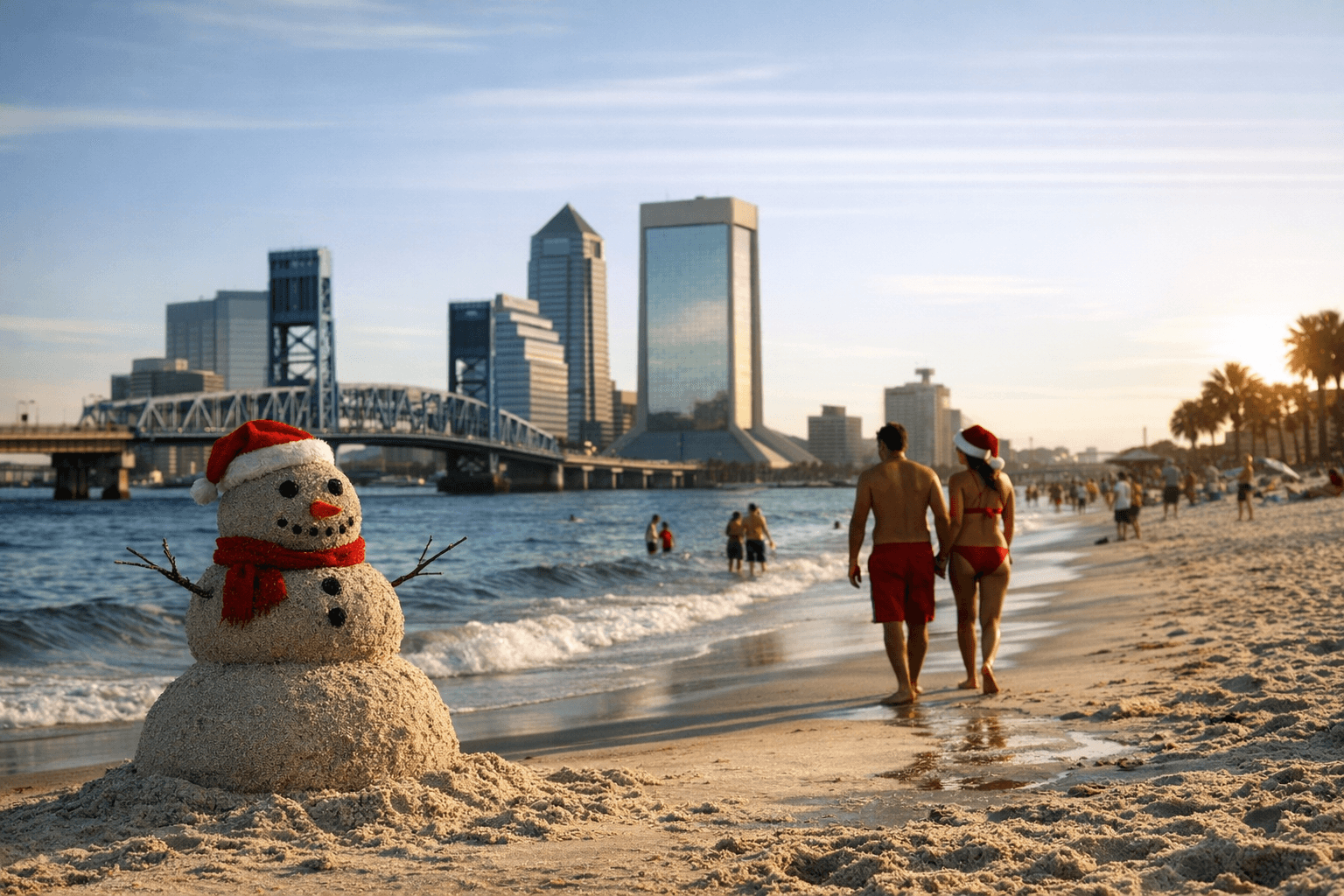
Forecasts on December 23 predicted an unusually warm stretch for Jacksonville and much of the central United States, with guidance pointing to highs around 60 degrees Fahrenheit on Christmas Day. The pattern mattered for Morgan County because it reduced typical holiday heating demand, altered outdoor plans and highlighted broader shifts in winter temperature variability.

Weather models issued on December 23 showed Jacksonville headed into a run of spring like warmth that stood out against typical December conditions. National Weather Service guidance and AccuWeather projections both indicated highs near 60 degrees Fahrenheit on Christmas Day, a level well above seasonal norms and only seven degrees below the Jacksonville area record of 67 degrees. Forecasts at the time predicted even warmer afternoons in the days following, with highs climbing into the mid 60s before a return to more seasonable levels by Saturday night.
Meteorologists attributed the pattern to a polar vortex configuration that kept cold air bottled in Canada while positive temperature anomalies funneled warmer air into the central United States. That dynamic raised the prospect that multiple states could challenge record high temperatures over the holiday period, while Jacksonville and surrounding parts of Morgan County experienced a clear departure from typical December weather.
The immediate local impacts were practical and measurable. Warmer temperatures typically lower residential heating demand, which can reduce short term utility bills and ease pressure on natural gas supplies during peak winter months. For local merchants and restaurants, milder weather can change foot traffic patterns for holiday shopping and outdoor dining. For county services and event organizers, forecasts prompted adjustments to plans for outdoor holiday events and travel advisories, as rain chances often accompany temperature surges in this pattern.
Beyond the holiday week, the episode reinforced conversations among climate and weather professionals about increasing variability in winter weather. While a single warm spell does not by itself prove long term trends, the pattern of a displaced polar vortex producing strong temperature anomalies is consistent with a growing body of research linking altered large scale circulation to more extreme swings in winter temperature.
For Morgan County residents the warm stretch was largely a benign anomaly this season, offering milder holiday conditions and lower immediate heating demand. Officials and utilities will watch whether the expected return to seasonable temperatures arrives as forecast by Saturday night, and whether similar episodes become more frequent in coming winters.
This article was produced by Prism’s automated news system from verified source data, official records, and press releases, then run through automated quality and moderation checks before publishing. The system is built and supervised by the people who set the standards it runs under. Read our full AI policy.
Did this article answer your question?