Alaska Eyes 800-Mile North Slope Gas Pipeline to Cut Foreign Energy Reliance
Dunleavy's $46B gas pipeline would slash North Slope Borough's property tax revenue 90% at full capacity, while no gas offtake is planned for Prudhoe Bay communities themselves.
The most consequential number in Governor Mike Dunleavy's push for an 800-mile natural gas pipeline isn't the $46 billion project cost, or even the promise of $22 billion in future state revenue. For North Slope Borough, it's 90 percent: the estimated reduction in property tax receipts that the Alaska Department of Revenue says would follow if Dunleavy's proposed tax overhaul clears the Legislature to get Glenfarne, the New York-based developer, across the finish line.
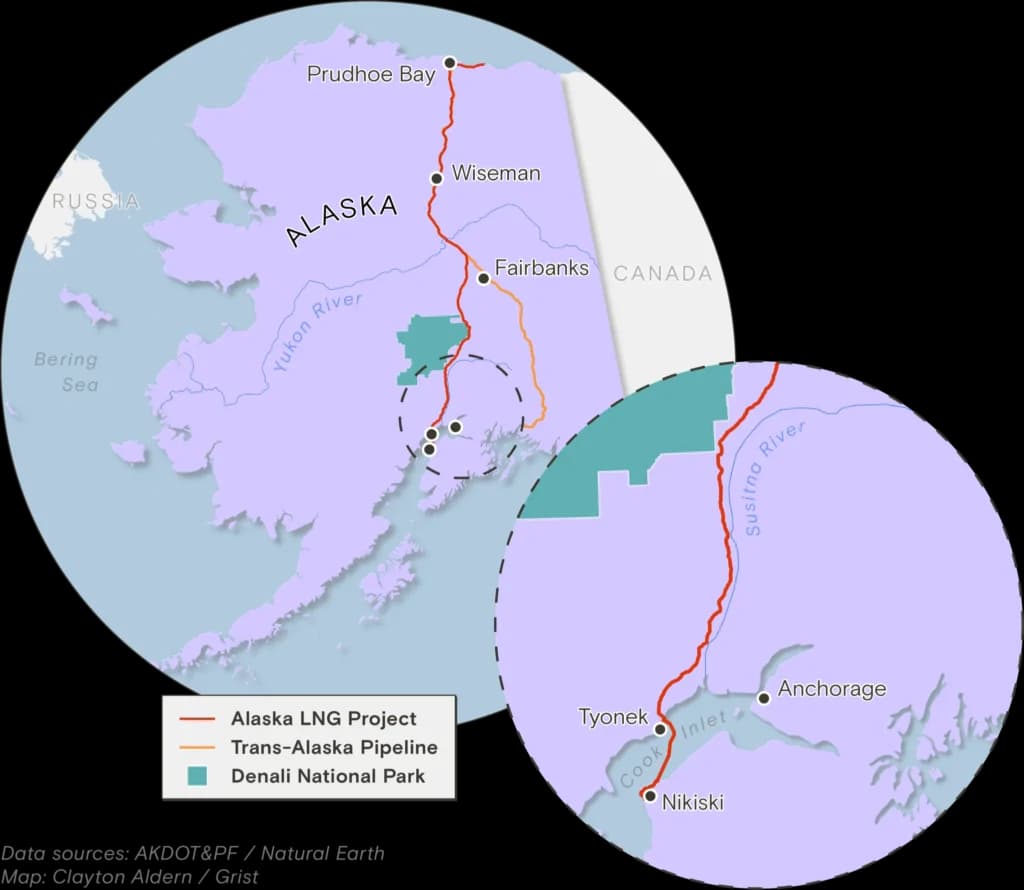
The pipeline would run from Prudhoe Bay south to processing and liquefaction facilities in Nikiski on the Kenai Peninsula, targeting Asian rim export markets with gas deliveries potentially beginning in 2031. Dunleavy has framed the project as a direct counter to energy dependence on "some of the world's most unstable regions," drawing backing from President Trump and a coalition of state lawmakers. But for Utqiagvik, Wainwright, Point Hope and the communities clustered around Prudhoe Bay, the deal on the table carries a sting that goes beyond the tax math: no gas offtake is currently planned for the North Slope itself.
North Slope Borough Mayor Josie Patkotak, testifying before the Senate Resources Committee in late March, acknowledged that the absence of any local gas supply makes the trade-off harder to defend to borough residents. Oil and gas property taxes underpin the borough's municipal budget, funding schools, roads, public safety and social services across a region the size of Wyoming. Replacing those near-term taxes with a volume-based levy that only activates when gas is flowing through the pipeline means the borough absorbs the fiscal risk during whatever construction window lies ahead.
Alaska has been here before. The state has attempted to monetize stranded North Slope gas in some form since the 1970s, when the Trans-Alaska Pipeline System was built for oil and a parallel gas line never materialized. The Alaska Gasline Development Corp. carried successive governors' hopes for decades before yielding to the current arrangement: a state partnership with Glenfarne, which has not yet made a final investment decision. What's nominally different this time is the combination of a private-sector lead developer with pre-positioned Asian buyers, federal-level political support, and a Legislature being asked to move swiftly on a restructured tax framework before market windows close.
GaffneyCline, a consultant retained by the Legislature, identified the existing state property tax as among the single largest financial barriers to the project moving forward. Glenfarne Alaska President Adam Prestidge called legislative action on the tax bill "the most important step the Legislature can take" to finally bring North Slope gas to market. The Department of Revenue projects the full package, if the pipeline operates for 30 years, could yield more than $26 billion in combined state and local revenue, including roughly $4 billion for municipalities.
The six months ahead will test whether that long-range promise can close the near-term gap. The Legislature must act on Dunleavy's tax bill while Glenfarne works toward a final investment decision; federal permitting and environmental review for a line crossing remote Arctic terrain remains in early stages; and tribal governments and borough officials have signaled they expect meaningful consultation on subsistence protections and land access before any construction begins. Meanwhile, Polar LNG, a separate venture that named industry executive Joel Riddle as president and CEO last month, announced a shoreside liquefaction concept at Prudhoe Bay, positioning itself as a complementary rather than competing path to market.
If Glenfarne commits, the project's earliest gas deliveries to Alaskans are projected for 2029. For Prudhoe Bay workers and North Slope Borough taxpayers, the more immediate question is whether the borough's cut of future pipeline revenues will be enough to justify the fiscal sacrifice it's being asked to make now.
Sources:
Know something we missed? Have a correction or additional information?
Submit a Tip