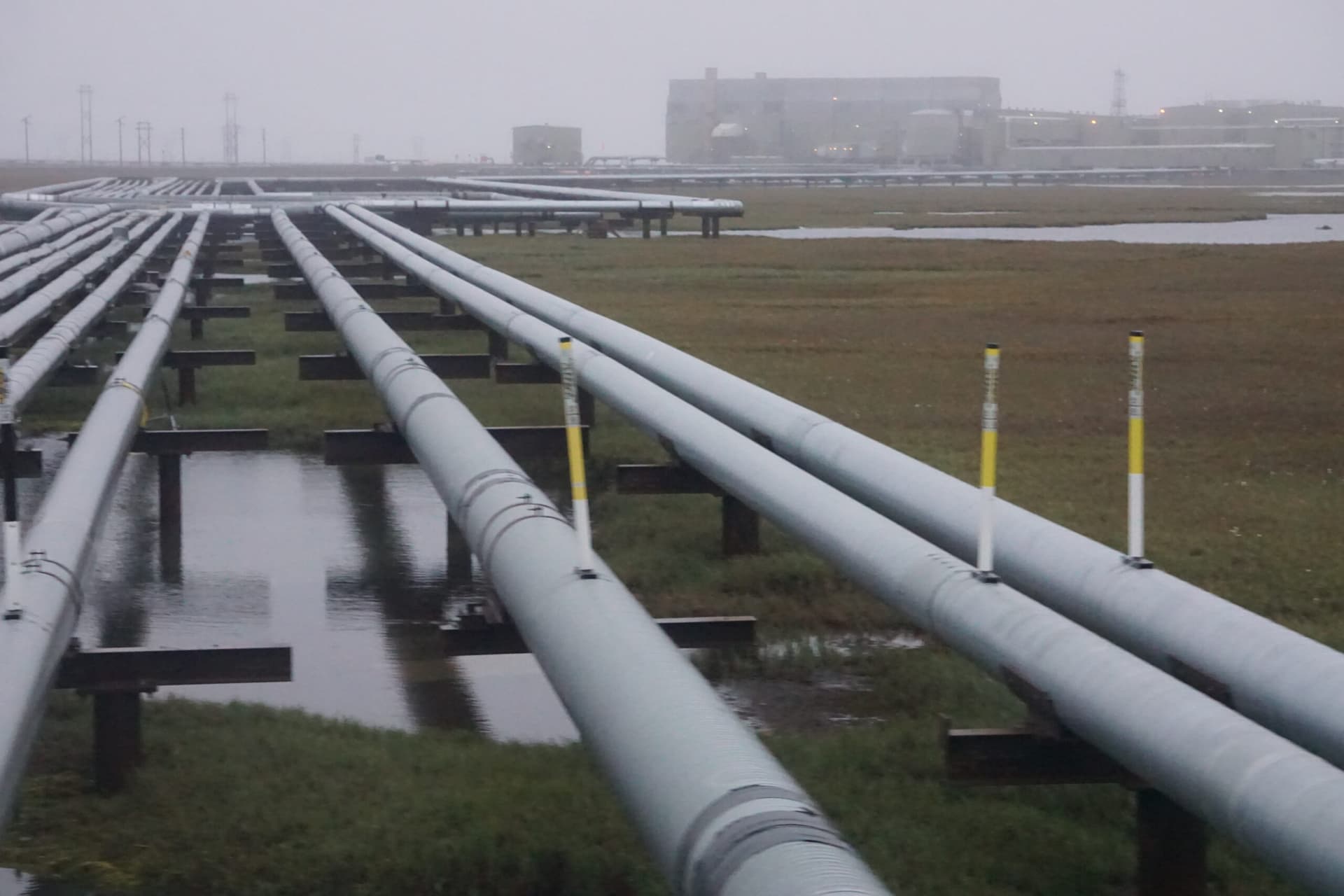
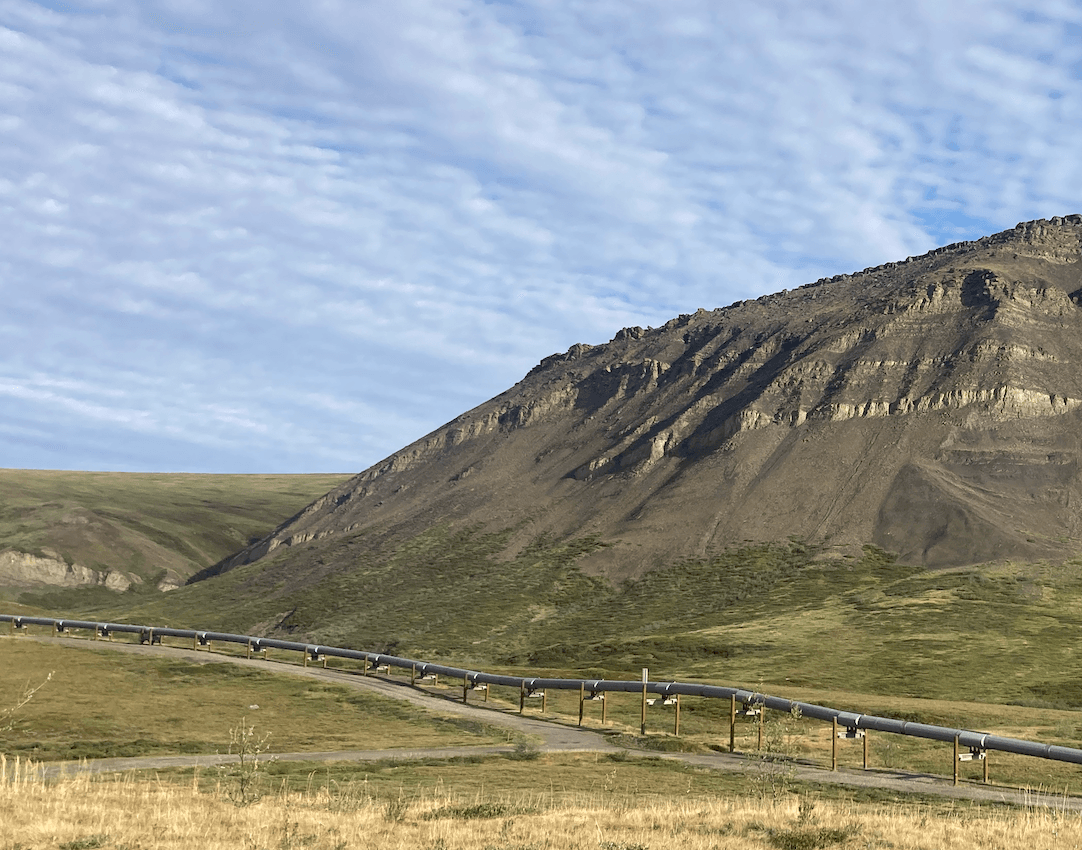
Alaska Supreme Court Weighs Youth Climate Case Tied to LNG Project
Eight young Alaskans asked the state's highest court to revive a lawsuit claiming the Alaska LNG Project would roughly triple the state's greenhouse gas emissions for decades.
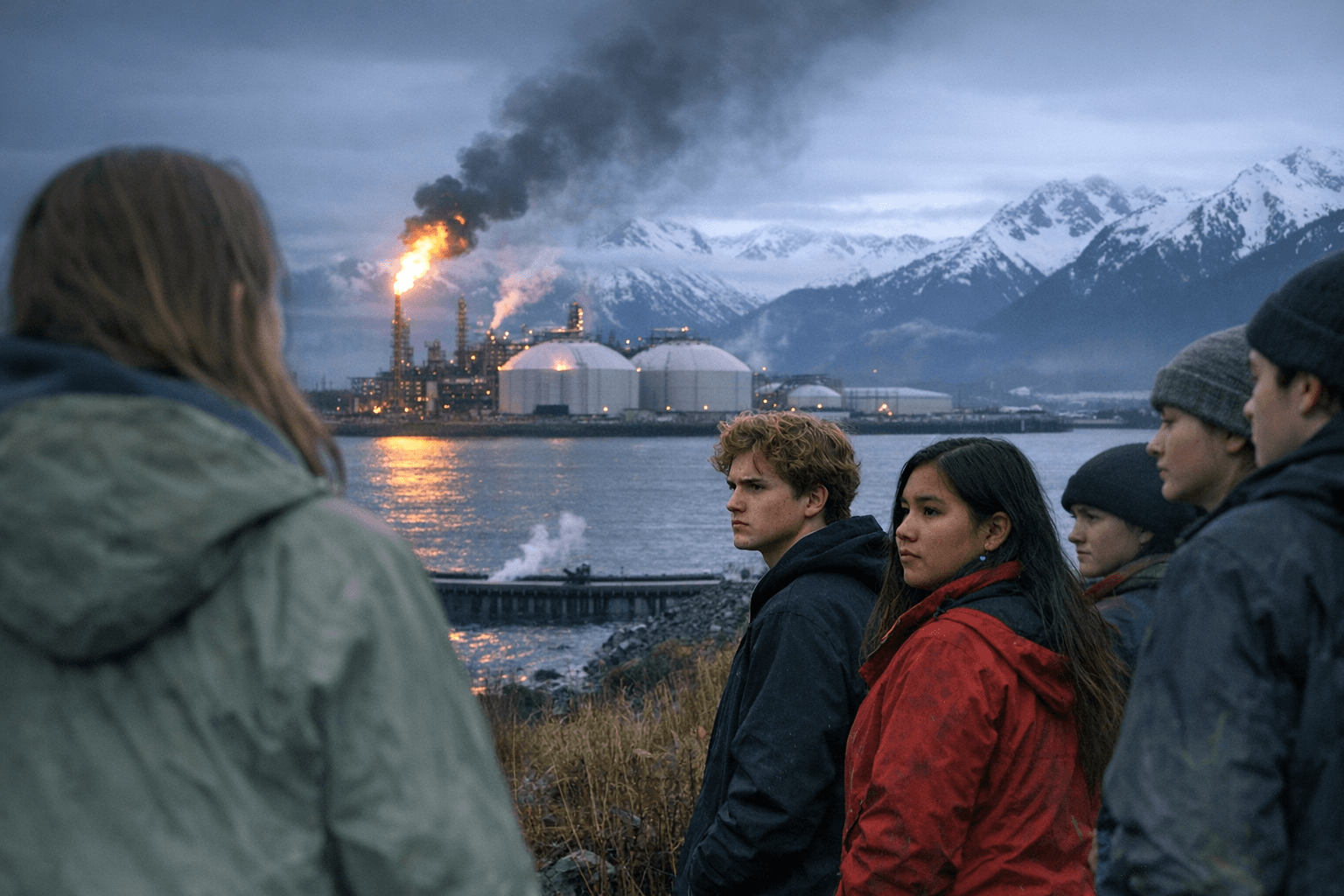
Eight young Alaskans brought their constitutional climate challenge to the Alaska Supreme Court on March 11, asking the justices to reverse a lower court dismissal and allow their case against the Alaska LNG Project to proceed to trial.
The case, Summer Sagoonick et al. v. State of Alaska et al., known as Sagoonick II, centers on a state statute that plaintiffs say mandates development of the North Slope-to-export liquefied natural gas pipeline. The youth plaintiffs, represented by Oregon-based public interest law firm Our Children's Trust, argue the project would unleash greenhouse gas emissions that violate their public trust and due process rights under the Alaska Constitution. Our Children's Trust has described the Alaska LNG Project as a fossil fuel undertaking that would roughly triple the state's greenhouse gas emissions for decades.
Andrew Welle, supervising senior attorney at Our Children's Trust and lead counsel in the case, argued before the court that the claims are proper for judicial review. "For the separation of powers to have any meaning, the courthouse doors must remain open to these youth," Welle told the court. He has described the gas line as "the largest fossil fuel project currently being pursued by the state of Alaska" that "would drastically increase Alaska's emissions at a time when climatologists are telling us that they need to be rapidly reduced in order to protect the health and safety of young people."
The case was previously dismissed by Alaska Superior Court Judge Dani R. Crosby, who held that climate mitigation questions are not justiciable. "Important questions regarding climate change mitigation do not present justiciable questions because the Court lacks both the authority and the tools to reweigh the competing economic, environmental, social or conservation goals served by the legislature's policy choice to enact the challenged statute or advance the Alaska LNG Project," Crosby wrote. The state's position echoes a 2022 Alaska Supreme Court majority holding that natural resource policy belongs to lawmakers and agencies, not the courts.
Plaintiffs are pushing back against that reasoning by leaning on two prior favorable precedents. In 2014, the Alaska Supreme Court found that youth have standing to sue the state government in climate-related cases. And in 2022, when the court dismissed a separate challenge from 16 youth plaintiffs in a 3-2 decision, Chief Justice Peter Maassen and Justice Susan Carney filed a dissent arguing that state law "requires that we explicitly recognize a constitutional right to a livable climate — arguably the bare minimum when it comes to the inherent human rights to which the Alaska Constitution is dedicated." Welle has said the current plaintiffs hope the full court will now adopt that reasoning.
Justice Jude Pate, according to reporting from KDLL, noted during arguments that the Alaska Constitution's sustained yield provision, which requires that replenishable resources such as fish, forests and wildlife be managed on a sustained yield principle, is relevant to the court's consideration.
The case takes its name from Summer Sagoonick of Unalakleet. If the Alaska Supreme Court revives the lawsuit, the state's statutory support for the Alaska LNG Project, which would ship liquefied natural gas from the North Slope to Asian export markets, could face a trial-level constitutional examination for the first time.
Know something we missed? Have a correction or additional information?
Submit a Tip