Arctic fiber break leaves North Slope communities with limited internet access
Quintillion Global says a subsea fiber optic cable severed earlier this year was located about 32 to 37 miles north of Oliktok Point, a development that has left many coastal Arctic communities with degraded or no internet service. The outage has shifted reliance to satellite links, strained local health and safety operations, and prompted company plans for both subsea repairs and an overland redundancy that will require federal permits and likely funding.
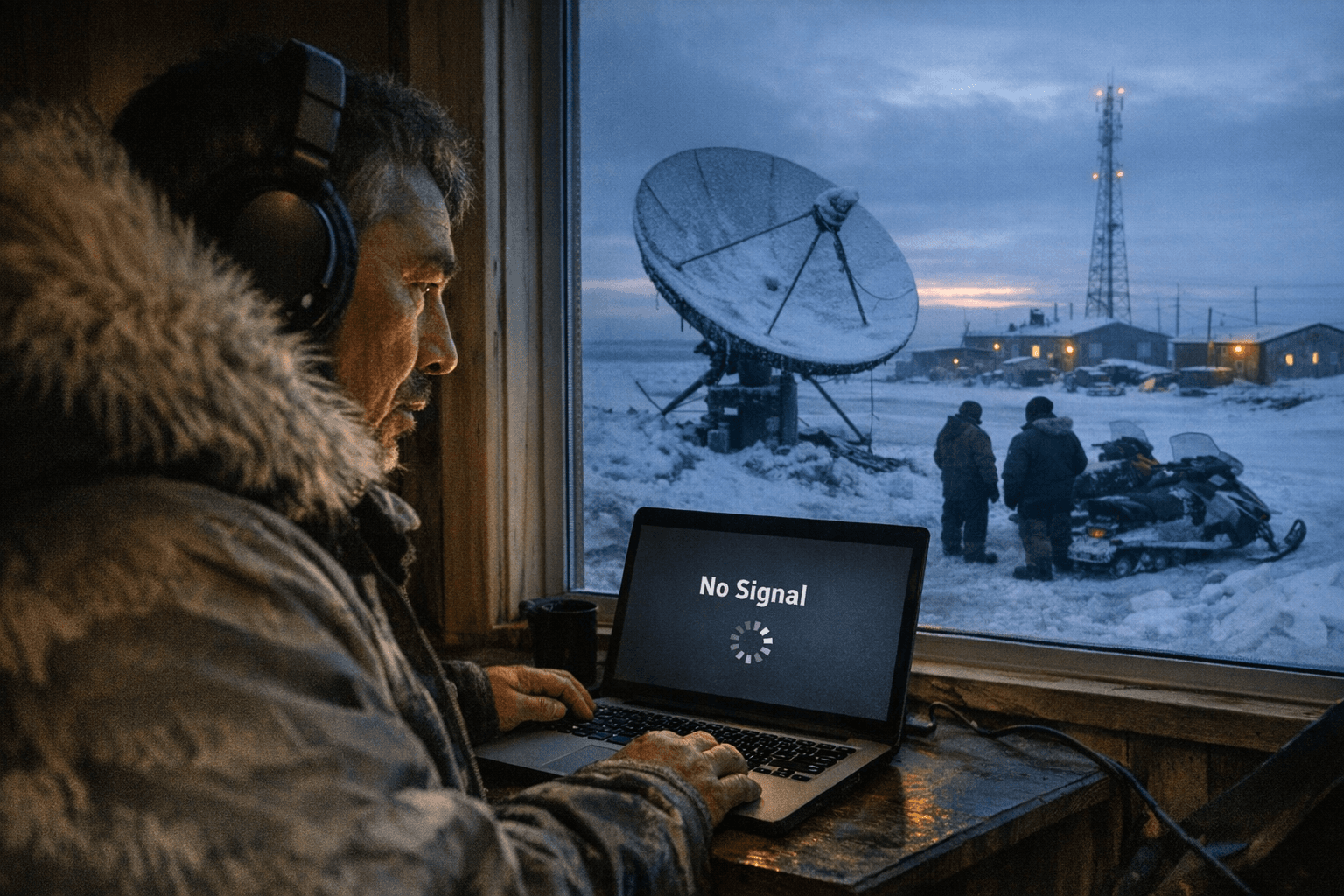
Quintillion Global reported on December 26 that forensic work points to an ice scour as the cause of a January 18 subsea fiber cut, placing the break roughly 32 to 37 miles north of Oliktok Point. The severed cable has produced widespread connectivity problems for North Slope and Northwest Alaska communities, forcing residents, local businesses and critical services to substitute satellite connections such as Starlink where available.
The break sits offshore from Oliktok Point, a location adjacent to U.S. Air Force facilities including the Long Range Radar Site and DEW station POW 2 NWS station A 19, and near a gravel airstrip. Quintillion has mobilized technical teams and is staging repair and installation vessels, but the company says winter sea ice prevents immediate subsea repairs and that work must wait for open water. Quintillion also plans to develop options to reroute the Oliktok landing to avoid an increasingly volatile ice area, and to form a self healing network ring between Utqiagvik and Deadhorse by pursuing a land bridge terrestrial route.
Local service providers have reported service degradation. Arctic Slope Telephone Association Cooperative and GCI have both said connectivity is degraded or out of service in several communities and that they are working with Quintillion to maintain essential services for health care and public safety. Many users have adopted satellite broadband to maintain basic communications, a shift that underscores both the resilience and limits of non terrestrial alternatives when subsea infrastructure fails.
Economically the outage highlights the fragility of single route subsea networks for the Arctic economy. Persistent interruptions increase transaction costs for remote businesses, disrupt telehealth and emergency response capacity, and amplify operational risks for industrial activity in Prudhoe Bay and other energy and logistics hubs. Quintillion has previously received federal grants to expand Arctic fiber, and the company says coordination with tribal partners, the Alaska congressional delegation and federal agencies will be crucial to secure permits and likely funding for an overland redundancy.
Long term, Quintillion and local stakeholders emphasize that changing sea ice behavior driven by climate change is increasing the risk profile for subsea cable routes in the Beaufort Sea. Residents can expect continued updates from the company as forensic work and planning proceed, and an extended repair timeline that depends on seasonal access and federal approvals for any terrestrial construction.
Know something we missed? Have a correction or additional information?
Submit a Tip