Barrow Invitational Draws Alaska Wrestlers, Boosts Youth Health and Community
The annual Barrow Invitational took place Jan. 2–3, 2026 in Utqiagvik, bringing high school teams from across Alaska for two days of competitive wrestling and community activity. Barrow High Whaler wrestlers competed in multiple weight classes, advancing in brackets and recording falls and decisions, an outcome that matters for local youth development, community cohesion, and regional health equity.
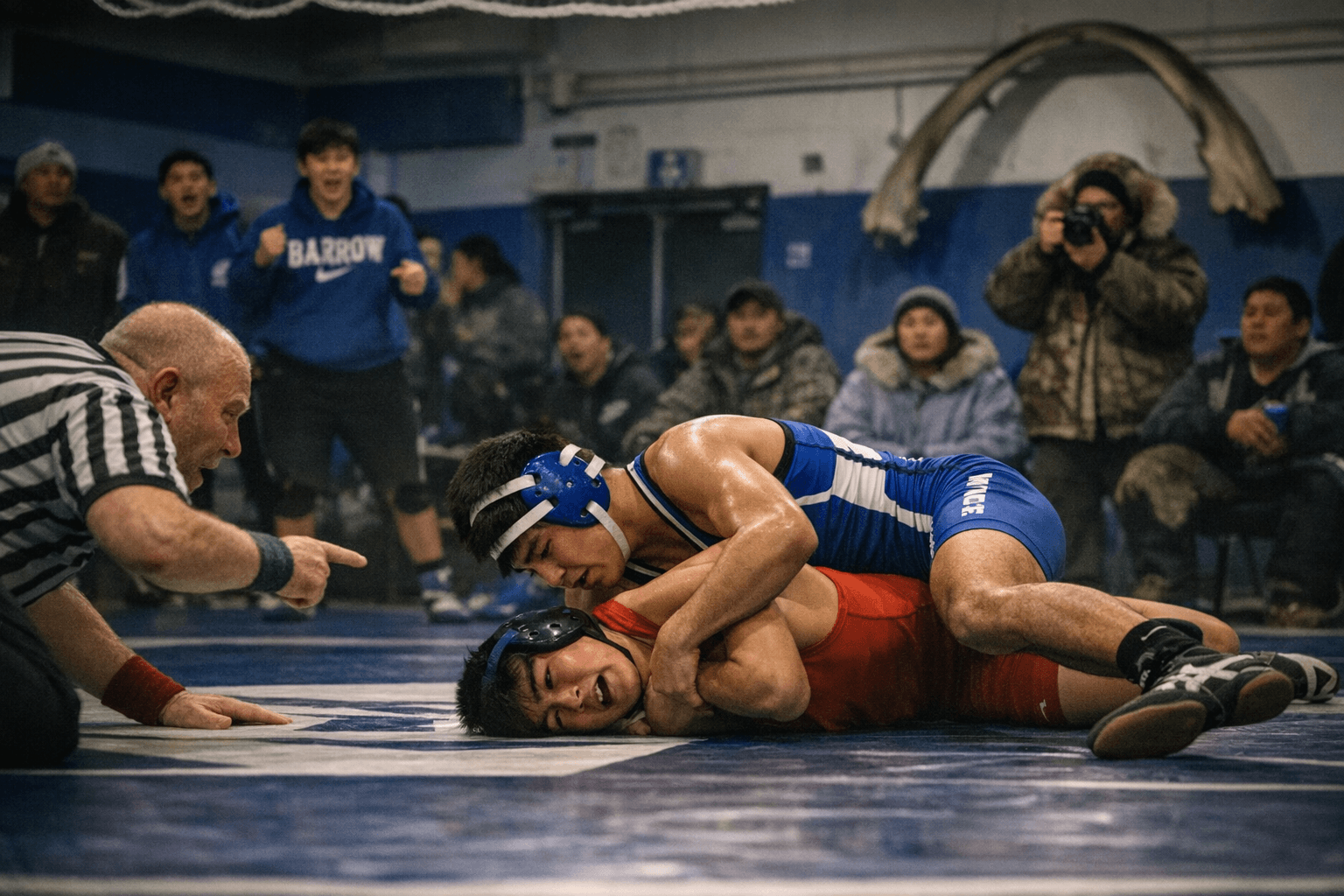
The Barrow Invitational returned to Utqiagvik on Jan. 2–3, 2026, hosting high school teams from across Alaska in one of the region’s winter wrestling showcases. Barrow High athletes competed across multiple weight classes and posted a number of wins over the two days. Several Whaler wrestlers advanced in bracket play and recorded falls and decisions in early rounds, with the official results listing brackets, individual bout outcomes, and identifying Barrow High competitors.
The tournament draws teams into the polar winter sports season, when travel, weather and daylight patterns shape both logistics and community life on the North Slope. For Utqiagvik, staging a multi-team event on Jan. 2 and 3 provides more than athletic competition; it activates school facilities, brings visiting families and coaches into town, and creates informal opportunities for residents to gather during a season that can be socially isolating.
Youth wrestling has clear implications for public health in the region. Regular participation supports physical fitness, coordination and healthy habits at a young age, and it can contribute to mental well-being by providing structure, goals and social connection. Local tournaments help sustain those benefits by keeping travel times manageable for Barrow High athletes and allowing more young people to compete without the prohibitive costs and logistical barriers that can accompany out-of-region travel.
At the same time, hosting tournaments during deep winter exposes gaps in medical and support services that affect athletes and the wider community. Consistent access to athletic trainers, timely emergency response and concussion management are important for safety and recovery. For small and remote schools, securing funding for on-site medical support and equipment can be challenging, and travel schedules increase the need for coordinated health coverage. Strengthening telehealth links with regional providers and funding temporary on-site medical staffing during multi-team events would reduce both immediate risks and long-term disparities.
The Invitational’s official brackets and bout results create a transparent record of competition and help athletes, coaches and families track progress through the season. For Barrow High, early-round falls and decisions by Whaler wrestlers demonstrate competitive depth and the potential for continued success as the season progresses.
Beyond wins and losses, the tournament underscores broader community priorities: investing in youth programs that promote health, ensuring equitable access to athletic and medical support, and using school events to knit social ties during the polar winter. As schools and borough leaders plan future events, attention to funding for athletic trainers, travel subsidies for rural schools and coordinated medical protocols can help sustain the health and resilience of young athletes across the North Slope.
Know something we missed? Have a correction or additional information?
Submit a Tip