Doyon 26 Rig Deconstruction 95% Complete After January North Slope Overturn
Two fires broke out during metal-cutting on Doyon 26 last week as crews removed 95% of "The Beast" from tundra near Nuiqsut, but roughly 2,150 gallons of spilled fuel remains unrecovered.
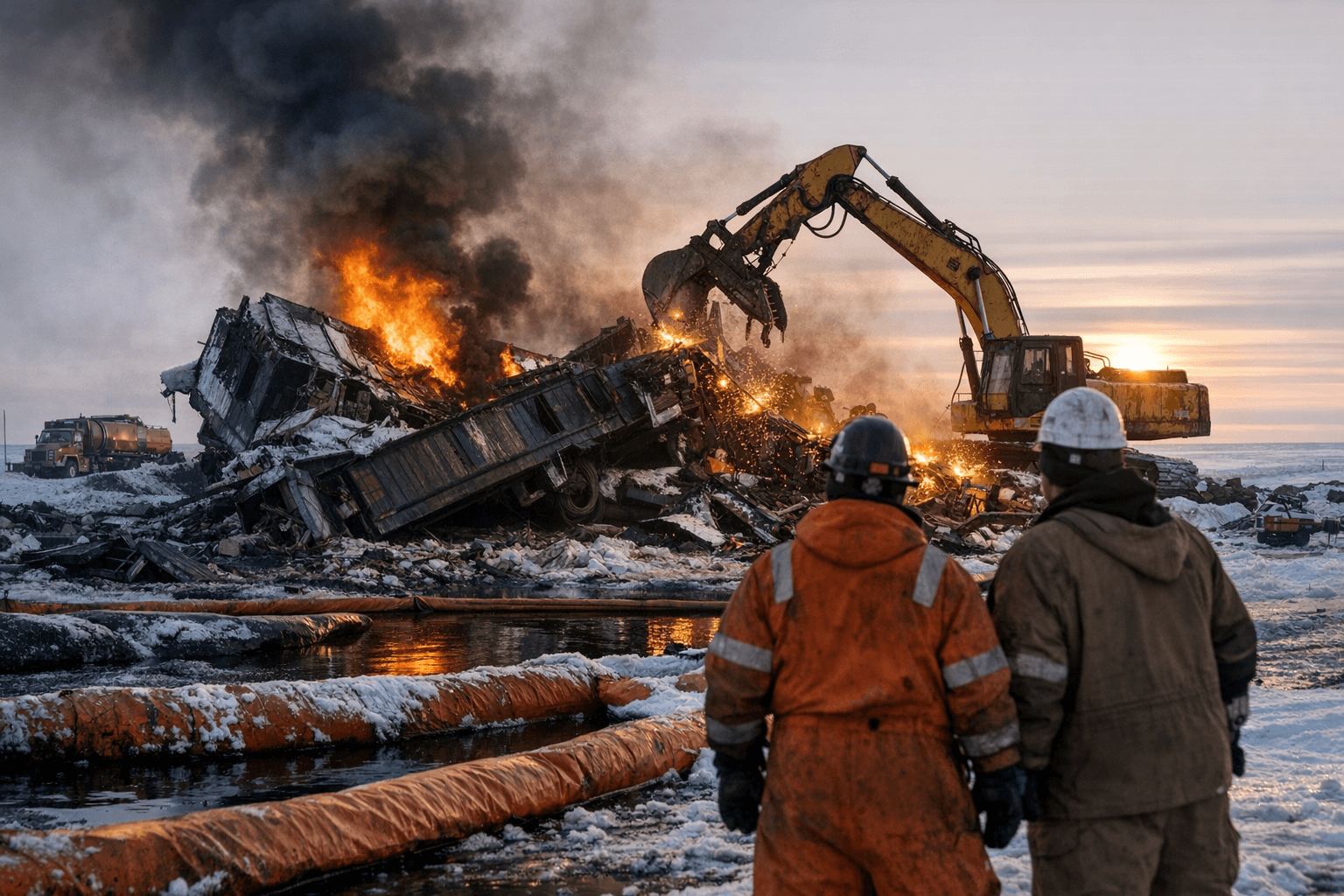
Two small fires ignited during metal-cutting operations on March 21 and 22, the latest complication in a two-month effort to deconstruct "The Beast," the nearly 10-million-pound Doyon 26 drilling rig that toppled on the North Slope 6.5 miles northwest of Nuiqsut in January. Doyon Drilling Inc. reported March 28 that both fires broke out on the east side of the rig, were quickly extinguished without injuries, and that crews have since completed heavy shearing and welding work, pushing deconstruction to roughly 95% of the structure removed.
That milestone marks the near-conclusion of Phase 2 of a three-stage response, but the cleanup is far from over. Crews have recovered about 2,585 gallons of spilled material from an estimated 4,735 gallons total, leaving approximately 2,150 gallons to be addressed through soil remediation and residual product recovery in Phase 3. Monitoring commitments extend through spring breakup and beyond, a critical window on the North Slope when warming temperatures can push residual contaminants toward waterways, including a Colville River tributary near the crash site.
Doyon 26, described as the largest land drilling rig in North America, toppled at about 4:45 p.m. on Jan. 23 while being moved along a gravel road near the Kuukpik Pad, part of ConocoPhillips' Alpine operations. The rig was carrying diesel, hydraulic oil, and glycol when it came down; the impact released fluids onto the surrounding tundra and sparked a brief fire that emergency responders quickly contained. Two workers who were aboard the rig and six initial responders were taken to nearby clinics, treated, and released, with no serious injuries reported.
Doyon Drilling, a subsidiary of the Fairbanks-based regional Native corporation Doyon, Limited, owns and operates the rig and is leading cleanup under a Unified Command that also comprises the U.S. Environmental Protection Agency, the Alaska Department of Environmental Conservation, the North Slope Borough, and the Iñupiat Community of the Arctic Slope. Alaska DEC issued a series of situation reports throughout the response; SitRep 3, dated Feb. 4, captured the early footprint of the spill through aerial, infrared, and visual surveys and documented initial containment measures including sandbag berms and a snow fence to prevent product from migrating further across the tundra. A third-party investigation into why the rig toppled during the road move remains ongoing, with no preliminary findings yet released.
The volume of product recovered has climbed steadily since those first days. SitRep 3 counted just 111 gallons pulled by water flushing and vacuum trucks. By Feb. 19, that figure had surpassed 2,475 gallons and about 30% of the rig had been deconstructed, starting with the derrick. Workers built a temporary ice road and ice pad specifically to move components off the tundra without causing additional damage to sensitive habitat. The surrounding area is critical habitat for caribou, polar bears, Arctic foxes, muskox, and ptarmigan, and includes a zone used for caribou calving.
The loss of Doyon 26 raised early questions about ConocoPhillips' National Petroleum Reserve-Alaska exploration program, for which the rig was commissioned in 2016. ConocoPhillips said it plans to proceed with its full four-well exploration drilling schedule using substitute rig Doyon 142, which the company said can handle all the work the disabled rig was scheduled to complete.
Phase 3, covering final cleanup, mitigation, and remediation, will determine how fully the site can be restored before caribou herds return to the area. Nuiqsut residents and subsistence users have pressed for firm commitments on long-term monitoring timelines, particularly concerning freshwater sources and subsistence resources near the Colville River tributary adjacent to the accident site.
Know something we missed? Have a correction or additional information?
Submit a Tip