Environmental groups fight faster Arctic oil permitting on North Slope
A new Interior rule could speed oilfield permits in NPR-A, with direct consequences for North Slope jobs, lease activity and borough revenue.
Environmental groups are pushing back as the Interior Department moves to speed oil and gas permitting across the 23-million-acre National Petroleum Reserve in Alaska, a shift that could affect how quickly roads, pads, drilling support and other infrastructure are approved on the western North Slope.
The Bureau of Land Management opened a 45-day scoping period for an environmental impact statement tied to the rulemaking, and public comments are due July 6, 2026. The agency said the proposal would streamline authorization for qualifying production sites and associated rights-of-way by using predefined criteria for common activities with similar environmental effects. Interior Secretary Doug Burgum announced the effort on May 15, following a petition from the Alaska Oil and Gas Association filed May 12.

For North Slope communities, the practical stakes are immediate. If the new process advances, operators could see faster decisions on the infrastructure that turns a lease into a producing project, from access roads to drill pads and support facilities. If it stalls, companies could face a longer permitting timeline, more review steps and greater uncertainty around development schedules, all of which can ripple into hiring, contractor work and the flow of tax and royalty dollars that help support borough services.
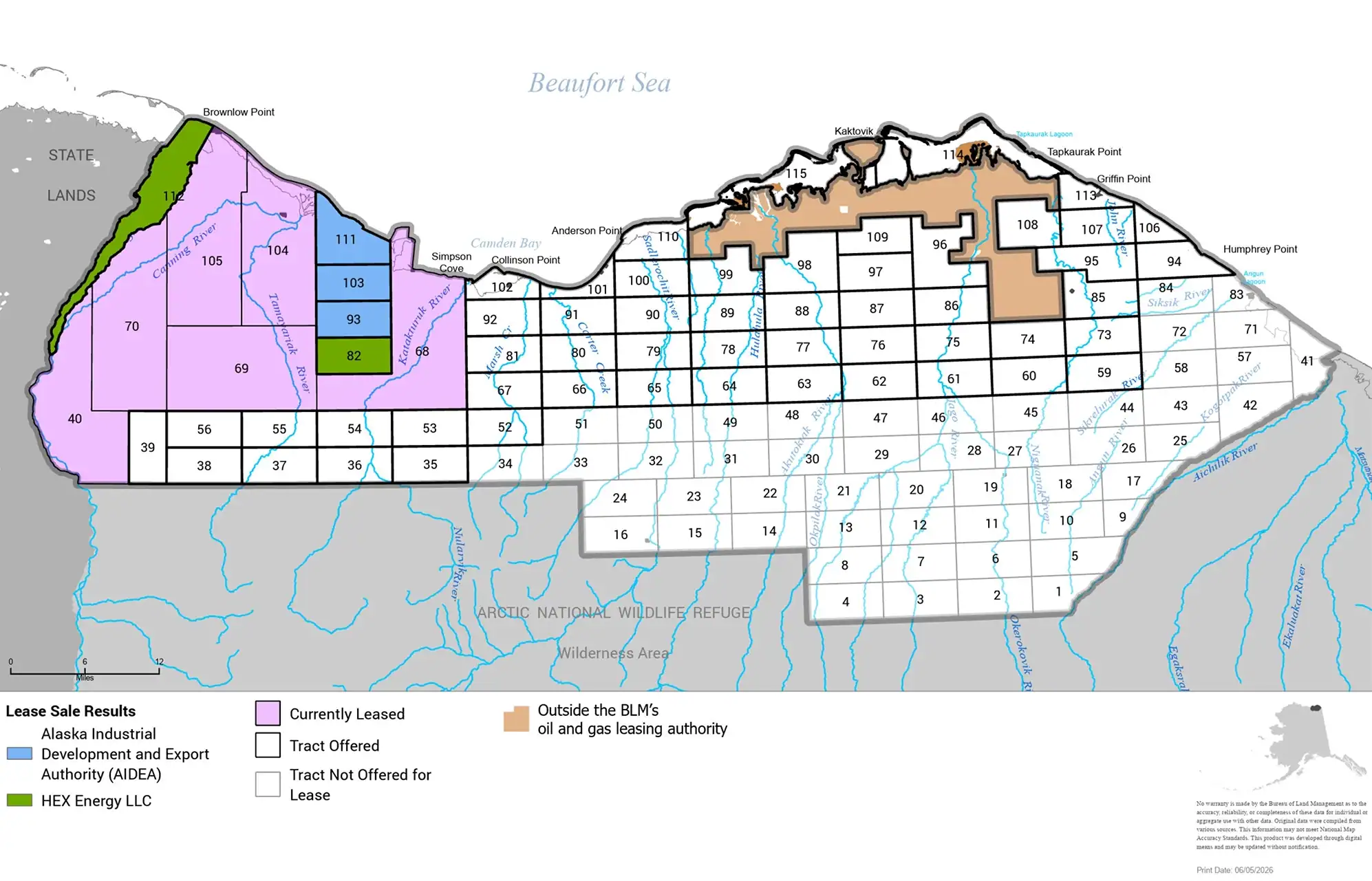
The administration said the move builds on Executive Order 14153, Secretary’s Order 3422 and the Working Families Tax Cuts Act. It also said it had rescinded the 2024 rule that restricted leasing and development in NPR-A and reopened nearly 82 percent of the reserve through an updated Integrated Activity Plan. Interior said about 1.6 million acres are now leased, and it pointed to the March 2026 lease sale, which drew 187 tracts with bids and produced $163,696,722 in receipts.
The debate is not just about speed. Harvard’s Environmental and Energy Law Program says Congress required maximum protections for places such as the Utukok River and the Teshekpuk Lake area because of subsistence, wildlife, historical, recreational and scenic values. Harvard also notes that BLM finalized a 2024 rule barring new oil and gas development on 11 million acres in NPR-A before later rollbacks. That history explains why the current fight has become another test of how much industrial expansion the North Slope will absorb, and how much control federal agencies will keep over the reserve’s future.
Industry supporters argue the environmental impacts of projects like ConocoPhillips’ Willow have already been thoroughly analyzed, while opponents say speeding the process could weaken scrutiny in one of the most sensitive parts of the borough. The outcome will shape whether NPR-A remains a slower-moving frontier or becomes a faster lane for North Slope development.
This article was produced by Prism’s automated news system from verified source data, official records, and press releases, then run through automated quality and moderation checks before publishing. The system is built and supervised by the people who set the standards it runs under. Read our full AI policy.
Did this article answer your question?