FBI says Alaska cybercrime losses hit record nearly $40 million in 2025
Alaskans lost nearly $40 million to cybercrime in 2025, with crypto scams alone taking more than $18.6 million and older residents hit hardest.

Alaskans filed fewer cybercrime complaints in 2025 than the year before, but they lost far more money. The FBI said 3,202 complaints brought nearly $40 million in losses, the highest financial hit ever reported in Alaska for cyber-enabled crime and a 52% jump from 2024.
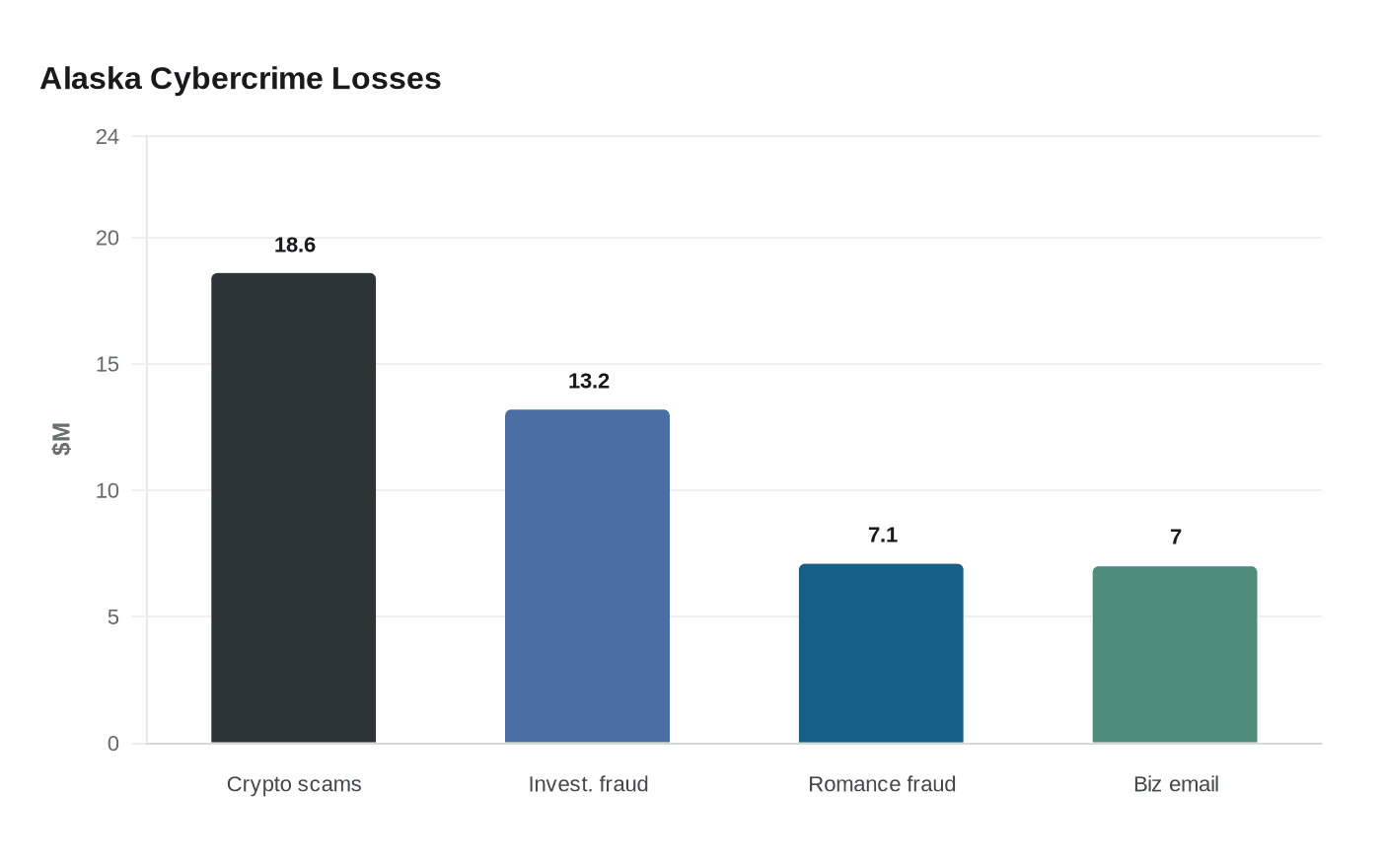
The biggest damage came from schemes that drain household savings and business accounts fast. Cryptocurrency-related scams accounted for about 46% of Alaska’s reported losses, more than $18.6 million. The costliest specific categories were investment fraud at $13.2 million, confidence and romance fraud at $7.1 million, and business email compromise at $7 million. Nationally, the FBI’s Internet Crime Complaint Center logged more than 1 million complaints in 2025 and nearly $21 billion in losses, showing Alaska’s problem is part of a much larger digital crime wave.

The burden fell heavily on older residents. People age 60 and older made up 20% of the Alaskans who reported losses, but they accounted for $16.2 million in stolen money. That is not a distant banking problem. It is retirement savings, fixed incomes and emergency cash disappearing through a fake investment pitch, a sweetheart scam, or a fraudulent email that reroutes a payment before a bookkeeper notices.

The warning lands especially hard on the North Slope Borough, where geography makes online life a necessity, not a convenience. The borough spans nearly 95,000 square miles and had an estimated 10,582 residents on July 1, 2025. In 2020-2024, 75.1% of households had a broadband subscription, which means banking, shopping, school communication and local government services increasingly move through screens and inboxes. In Utqiagvik and across remote communities, one convincing scam message can travel faster than an in-person check, and a mistaken transfer can be harder to unwind.
State officials have been pressing the same point. Alaska Attorney General Stephen Cox warned on April 29 that scammers are using crypto ATMs, impersonating police, banks and family members, and even using AI voice cloning to sound like a child or grandchild in distress. The clearest defense is to slow down: do not move money because someone says the account is at risk, do not trust caller ID, and do not send cash to a crypto ATM because a stranger on the phone demands it. Verify payment changes with a known phone number, and if money has already gone out, report it immediately to authorities and the Alaska Division of Banking and Securities. In a state as connected and as remote as Alaska, that caution can be the difference between a scare and a devastating loss.
This article was produced by Prism’s automated news system from verified source data, official records, and press releases, then run through automated quality and moderation checks before publishing. The system is built and supervised by the people who set the standards it runs under. Read our full AI policy.
Did this article answer your question?