Federal government schedules June 2026 Arctic refuge drilling auction
Kaktovik leaders say the June 5 Arctic refuge auction could mean more tax money for schools and water systems, even as caribou numbers have fallen to 143,000.
Kaktovik Mayor Nathan Gordon Jr. says the June 5 Arctic refuge lease sale could mean more oil-tax dollars for the North Slope Borough, where those revenues help pay for schools, water systems and other public services in one of the most expensive places in Alaska to run government.
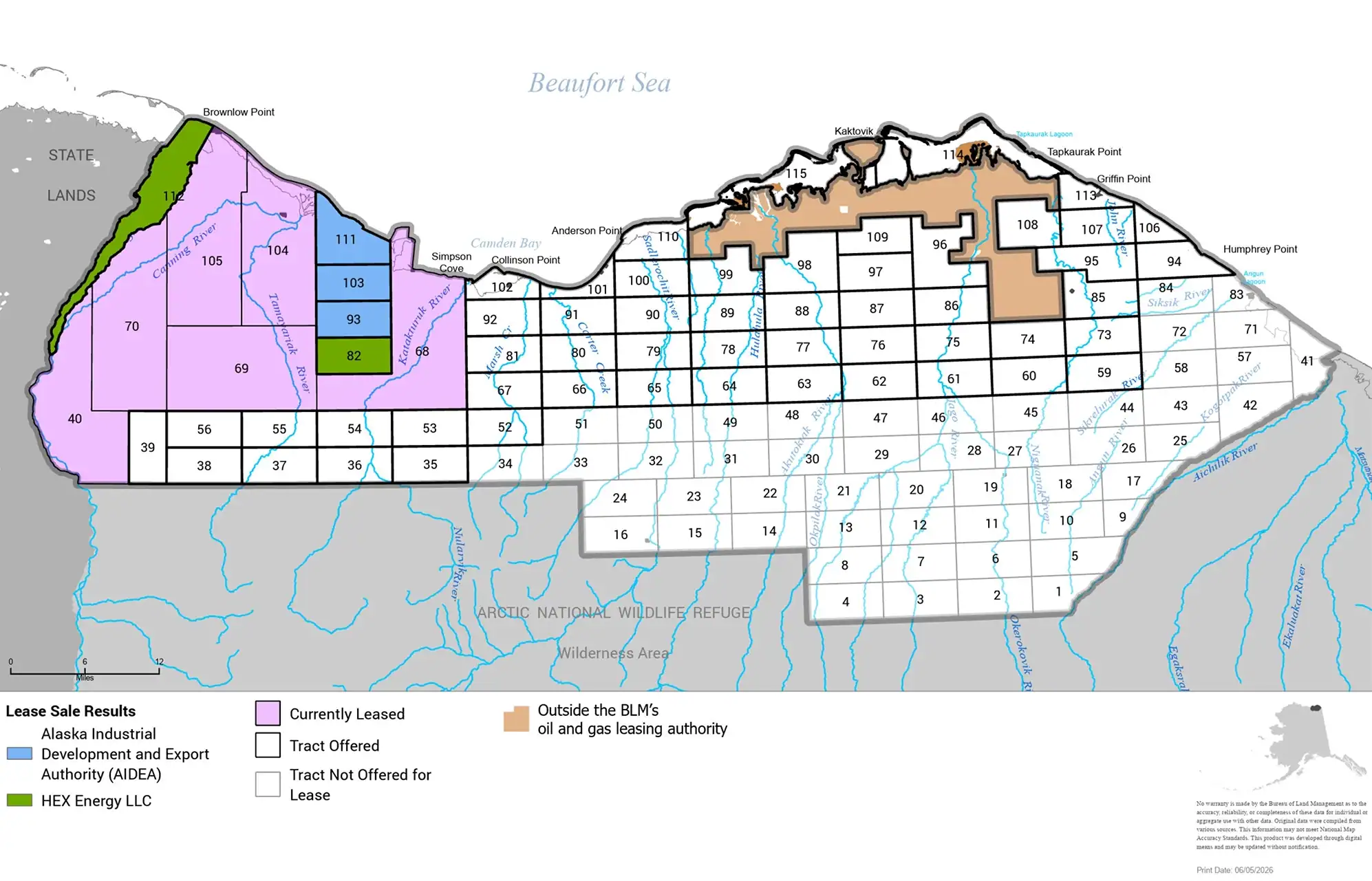
The Bureau of Land Management scheduled the auction for June 5, 2026, and said it will be the first lease sale for the 1.56-million-acre Coastal Plain under the Working Families Tax Cuts. The agency also said it must hold at least four Coastal Plain lease sales by 2035, with at least 400,000 acres offered in each one. BLM held its first Coastal Plain sale on January 6, 2021.
The stakes are especially sharp in Kaktovik, the only community inside the Arctic National Wildlife Refuge and the only village on the coastal plain itself. Gordon has argued that development can bring direct benefit to the community because the borough relies heavily on taxes from oil and gas companies. North Slope Borough Water and Sewer operates water and wastewater systems across the borough’s villages, underscoring how dependent remote communities are on a steady flow of infrastructure funding.
Supporters of drilling also point to the scale of the resource. BLM says the 2017 Tax Cuts and Jobs Act directed Interior to create a competitive oil and gas program for the Coastal Plain, and the U.S. Geological Survey has estimated the area may hold 4.25 billion to 11.8 billion barrels of technically recoverable oil. For local officials, the question is not just whether oil should be developed, but whether the revenue can support roads, utilities and public services that small Arctic communities need to function.
Opponents say the cost could be irreversible. The Coastal Plain is the calving ground for the Porcupine Caribou Herd and habitat for migratory birds and polar bears. The Alaska Department of Fish and Game said a 2025 photocensus estimated the herd at 143,000 animals, down from 218,000 in 2017, and said the current decline is steeper than the drop seen in the 1990s. Faith Gemmill, who is from Arctic Village, warned that development in the herd’s core calving area could devastate it.
The opposition also centers on subsistence, which the U.S. Department of Agriculture Forest Service says has been central to Alaska Native life for thousands of years. In comments on the Coastal Plain supplemental environmental impact statement, the Iñupiat Community of the Arctic Slope said roads and other permanent infrastructure can affect caribou movements and subsistence hunting. BLM says any future development would still require separate, detailed environmental review, setting up another round of conflict between revenue hopes and the land, wildlife and hunting patterns that define life on the North Slope.
This article was produced by Prism’s automated news system from verified source data, official records, and press releases, then run through automated quality and moderation checks before publishing. The system is built and supervised by the people who set the standards it runs under. Read our full AI policy.
Did this article answer your question?