Federal regulators bar cow harvest, close western Arctic caribou hunt to outsiders
Cow hunting is now off-limits across key western Arctic zones, and non-federally qualified hunters are shut out of federal lands near Point Lay and Wainwright.

Federal regulators have tightened the Western Arctic caribou hunt in ways that will be felt directly in North Slope homes this season: cow harvest is barred, and non-federally qualified hunters are being shut out of federal lands across the western edge of the herd’s range. The changes hit the Seward Peninsula, the Northwest Arctic around Kotzebue, and the southwestern corner of the North Slope, including Point Lay and Wainwright.
The Federal Subsistence Board met by teleconference on June 3 to weigh three special action requests tied to the herd. One request sought to cut the annual take to four caribou per hunter, with only one cow allowed, in Units 22, 23 and the southwestern portion of Unit 26A for the 2026-27 regulatory year. Two other requests asked for federal lands in Unit 22 and Unit 26A Southwest to be closed to non-federally qualified users for the 2026-2028 cycle. Regulators went further than the first request and blocked cow harvest altogether.
For families in communities that depend on caribou, the practical effect is a narrower hunt and fewer choices at a time when the herd is already under strain. Alaska Department of Fish and Game had already closed the state resident cow season in Units 22, 23 and Unit 26A Southwest on May 26, matching the broad region covered by the federal action and leaving local hunters with less room to work around the shortage.
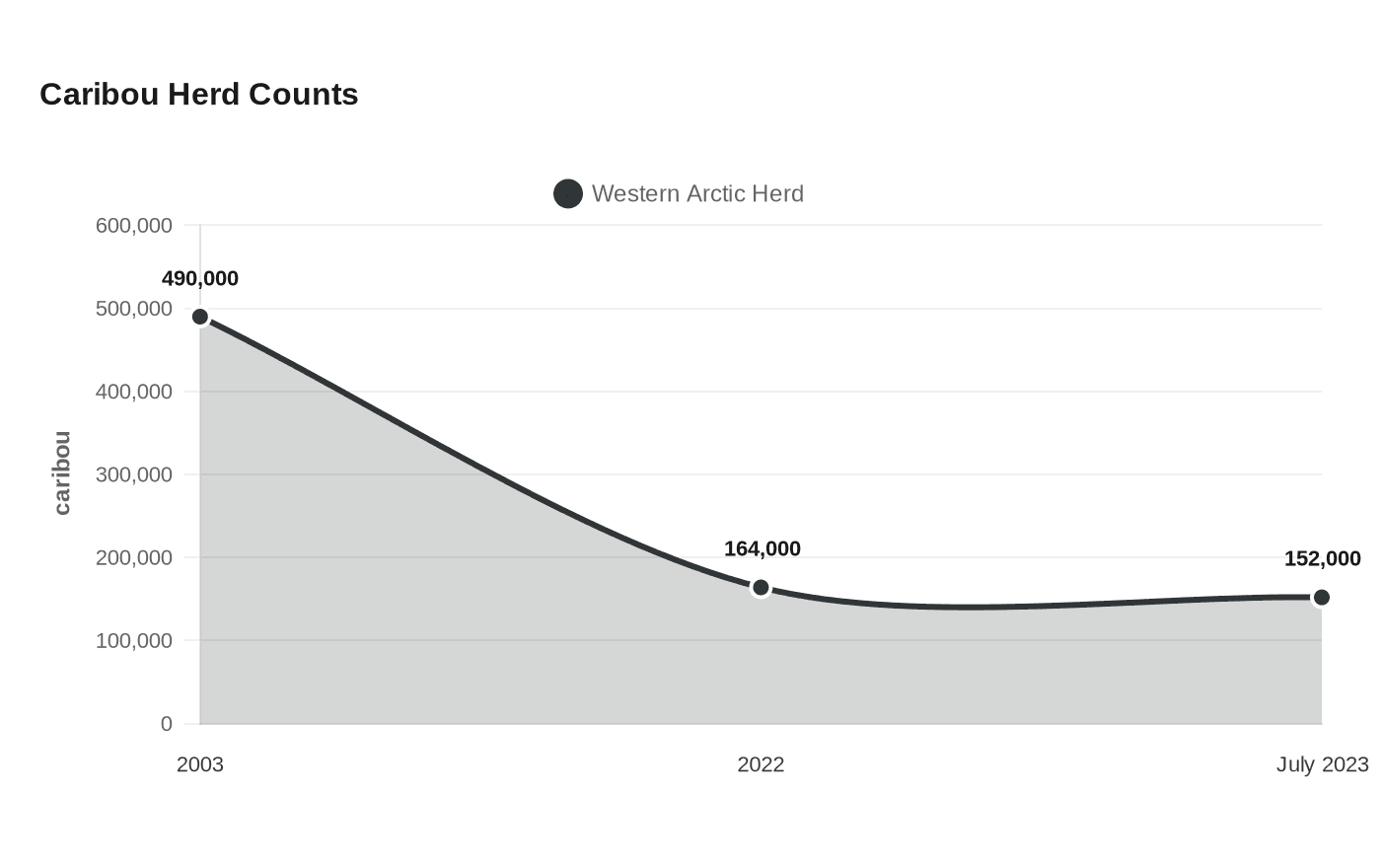
The pressure on the herd is not new. The Western Arctic Caribou Herd Working Group asked for the harvest limit change on January 29, saying the herd needed immediate protection to stabilize and recover. The group said the herd has fallen by nearly 70% over the past two decades and labeled it Critical, Declining in December 2025. Fish and Game counted 152,000 caribou in July 2023, down from 164,000 in 2022 and 100,000 fewer animals than in 2017. The herd peaked at 490,000 in 2003.
That decline matters well beyond wildlife management. Fish and Game says the Western Arctic herd has historically provided subsistence opportunity for up to 40 rural communities, and its management goals call for at least 200,000 animals and an annual harvest of 12,000 to 20,000. An Interior Department comment also noted that the herd does not generally occur in the southwestern portion of Unit 26A during the main cow-harvest period, but radio-collar and photocensus data show the area still matters to the herd’s life cycle, including calving. Regulators are now trying to protect that recovery path while keeping the subsistence base intact for the communities that rely on it.
This article was produced by Prism’s automated news system from verified source data, official records, and press releases, then run through automated quality and moderation checks before publishing. The system is built and supervised by the people who set the standards it runs under. Read our full AI policy.
Know something we missed? Have a correction or additional information?
Submit a Tip