NOAA, borough host webinar on Beaufort Sea whale survey findings
A three-year bowhead and beluga survey could shape subsistence whaling quotas, beluga conservation and trust in Arctic wildlife counts after a 1977 moratorium.
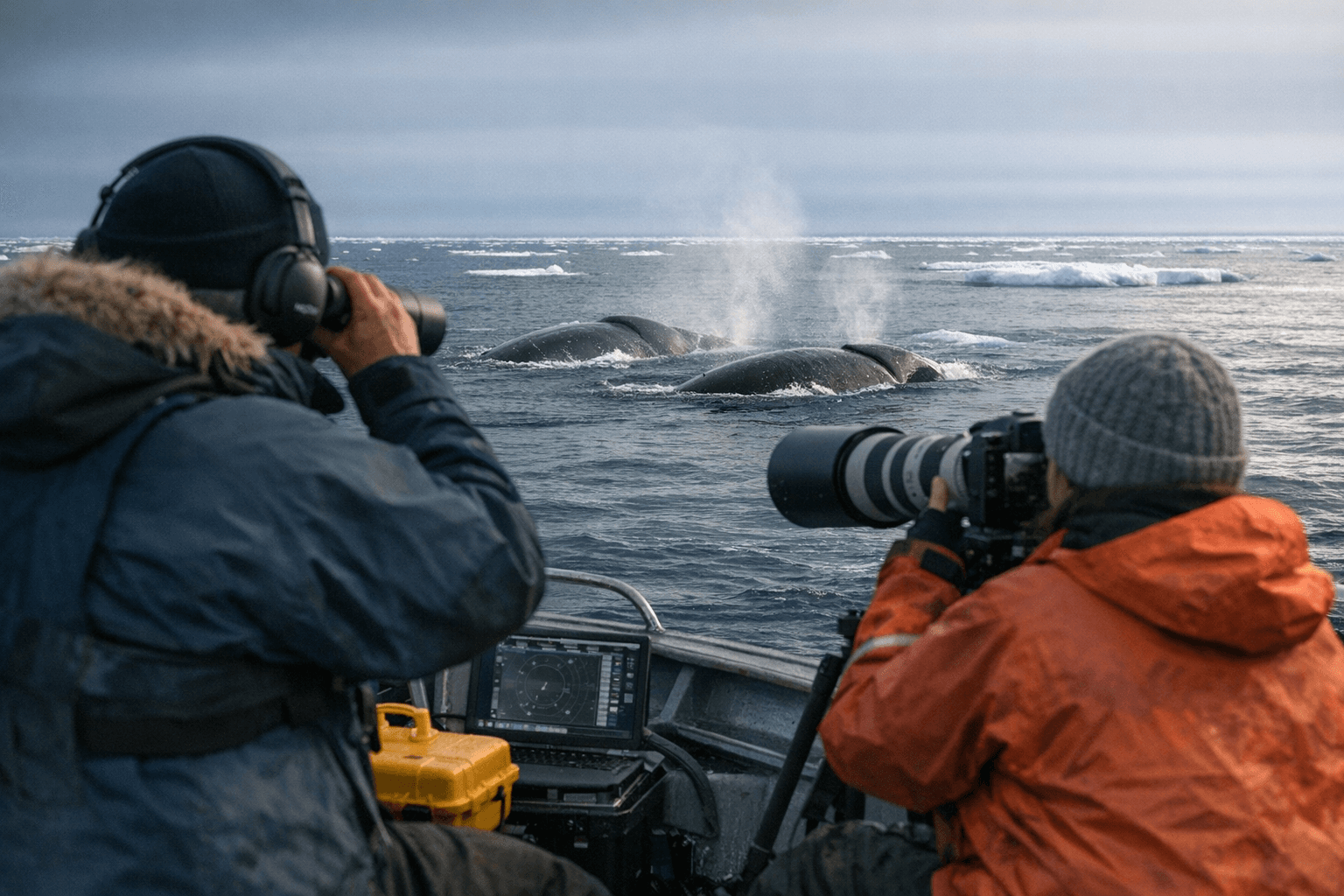
The numbers from a three-year bowhead and beluga survey could help determine how many whales North Slope and Canadian hunters can take, how the Beaufort Sea beluga stock is managed, and whether federal counts still match what whalers see on the ice. NOAA Fisheries and the North Slope Borough Department of Wildlife Management used an April 14 webinar to walk through findings from the 2025 aerial survey, which NOAA says is now being analyzed and will feed into quota and conservation decisions.
The survey, called the 2025 Bowhead and Beluga Distribution and Abundance Aerial Survey, ran from July 28 through Aug. 24, 2025, across the eastern Chukchi Sea, the Alaskan and Canadian Beaufort Seas, and Amundsen Gulf. NOAA says the project took three years of planning and was designed to meet International Whaling Commission requirements for updated abundance estimates at least once every 10 years. The data will be used to support bowhead whale harvest quotas and to assess the size and trend of the Beaufort Sea beluga population.
The work stretched across both sides of the border, with one aircraft based in Deadhorse and two based in Inuvik. Each survey team included at least two pilots, three scientists and a land-based engineer. NOAA Fisheries, the borough, the University of Washington Cooperative Institute for Climate, Ocean, and Ecosystem Studies, the Alaska Eskimo Whaling Commission, Fisheries and Oceans Canada, the Fisheries Joint Management Committee and the Inuvialuit Game Council all took part. NOAA’s field report says the Western Arctic stock of bowhead whales remains a critical subsistence resource for Alaska Native Iñupiat communities and is listed as endangered under the U.S. Endangered Species Act.
For North Slope residents, the deeper story is the long arc of bowhead science itself. The borough says the bowhead census project moved from NOAA to the Alaska Eskimo Whaling Commission in 1981 and then to the North Slope Borough in 1982, after the International Whaling Commission imposed a moratorium in 1977. That decision followed NOAA estimates of fewer than 1,000 bowheads in the Bering-Chukchi-Beaufort stock and 111 whale strikes that year. Borough materials also say elders and whaling captains pushed researchers toward acoustic methods because they believed scientists were missing whales traveling under the ice.
That history is why the 2025 survey matters beyond a single season’s count. The final results are expected to shape conservation, subsistence management and international quota decisions in a region where whale abundance is tied directly to food security, cultural continuity and the credibility of the data used to govern both.
Know something we missed? Have a correction or additional information?
Submit a Tip