North Slope Borough Integrated Behavioral Health Services Explained for Residents
Mental health and substance use care is available across the North Slope, with NSB IBH serving children through elders at 907-852-0366 x4105.
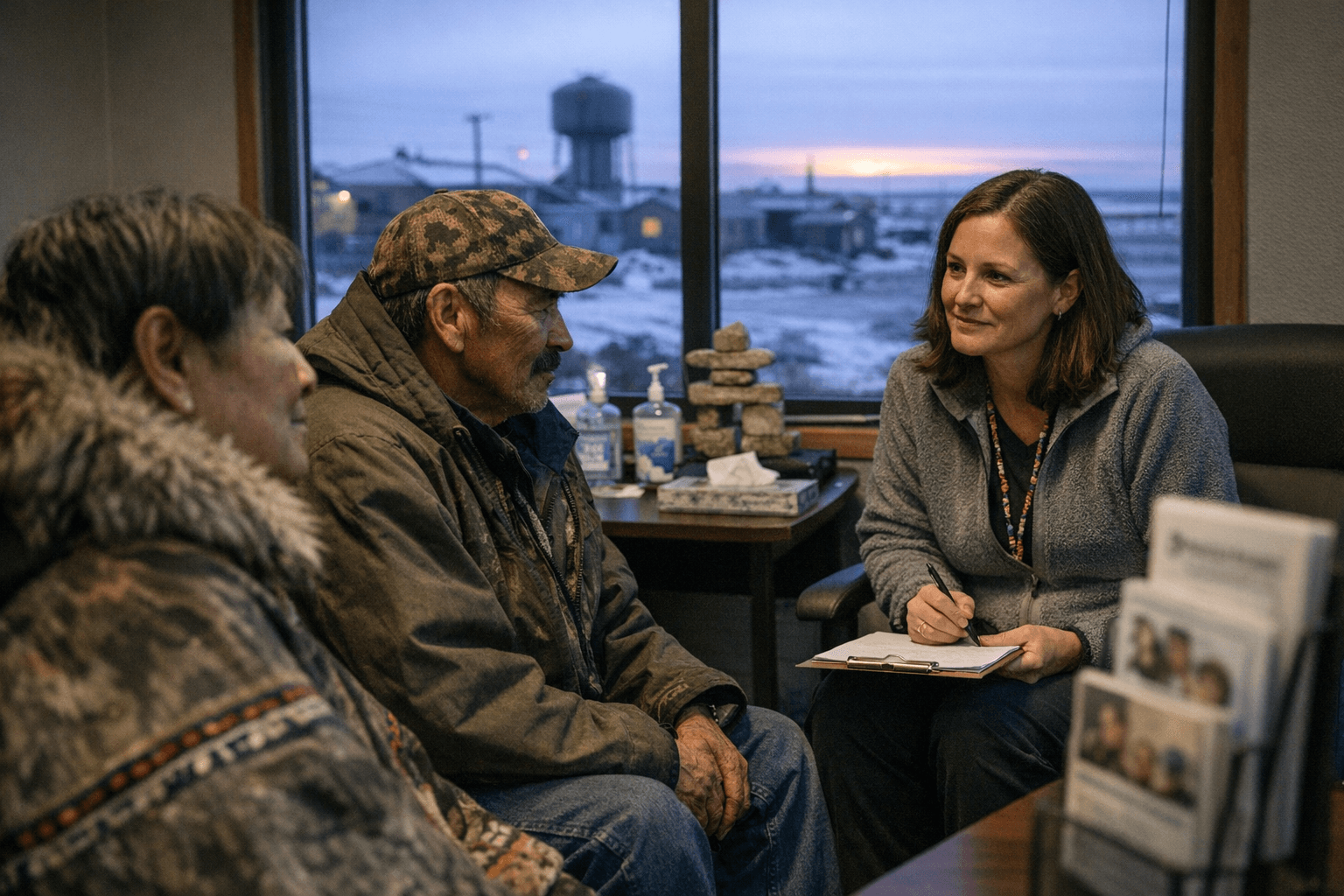
Getting behavioral health support in one of the most remote regions of the United States is not simple. The North Slope Borough spans roughly 95,000 square miles of Arctic terrain and is home to approximately 10,000 predominantly Alaska Native Inuit residents. Against that geographic reality, the North Slope Borough Integrated Behavioral Health program, known as NSB IBH, exists to make psychiatric treatment and substance use care accessible to anyone living across the borough, from Utqiagvik to the smallest outlying communities.
What NSB IBH Is and Who Runs It
NSB IBH operates as the Behavioral Health Division within the North Slope Borough's Health and Social Services Department. It is a government-funded program, meaning it is not a private clinic or outside contractor. The program's stated vision is straightforward: "A resilient and empowered generation." Its guiding values, as published on the borough's official website, are "Humility, Compassion, unity, Integrity, and Respect." That language reflects a program built around the idea that recovery is not just clinical but communal. As the borough's own welcome message states, "We believe that with the right treatment and support, recovery is possible."
Who Can Receive Services
NSB IBH serves a wide range of residents. Children, adolescents, adults, and families are all explicitly included in the program's scope. The borough describes it as providing intensive mental health services to people with "severe symptoms of mental illness, substance abuse (dual diagnosis) and/or emotional distress who are residents of the North Slope." That last phrase matters: you must reside on the North Slope to qualify for these services.
Certain populations receive particular attention. Pregnant women and individuals with co-occurring mental health and substance use disorders are identified as priority groups. Older adults, defined as residents 55 and older, receive services tailored to the age-specific challenges that accompany recovery and mental wellness in later life. Emergency psychiatric services are also available, meaning residents experiencing a mental health crisis are not left without an immediate point of contact.
What Services Are Available
The program covers both mental health treatment and substance use disorders, often simultaneously, which is essential in communities where those conditions frequently overlap. According to the borough's official materials, available services may include emergency psychiatric services, case management, outpatient counseling, and other psychiatric treatment. The program also encompasses inpatient services, though residents should contact NSB IBH directly to confirm current availability and capacity.
On the clinical side, the program draws on a range of therapeutic approaches. Directories listing the program describe services including psychiatric assessments, crisis stabilization, outpatient therapy, and case management. Specific therapeutic modalities referenced in public materials include cognitive behavioral therapy (CBT), dialectical behavior therapy (DBT), and eye movement desensitization and reprocessing (EMDR). One-on-one counseling is available for working through personal emotional and behavioral challenges in a private setting. Family therapy addresses communication patterns and relationship dynamics within the family unit. Twelve Step programming, which incorporates spirituality, community, and personal responsibility, is also part of the treatment framework.
Supportive medication is referenced as a component of care, though residents should speak directly with program staff about which medications may be relevant to their treatment plan.
Who Provides Care
According to the borough's own program page, most services are provided by board-certified psychiatrists, licensed clinical professionals, and certified counselors. The program emphasizes individualized care: treatment is designed around each person's specific diagnosis and circumstances, with the goal of building practical recovery skills alongside a broader sense of community and connection.
How to Access Services
The direct phone number for NSB IBH, as listed in the program's public directory, is 907-852-0366, extension 4105. That is the primary point of contact for new inquiries, questions about eligibility, and appointment scheduling. The borough's own website also encourages residents to call with questions about specific services.
Insurance coverage is described in public directories as available for at least a portion of treatment under most plans. The admissions process includes support for navigating payment options: "Our admissions team will work with you to explore the right payment options based on your needs, ensuring you get the best possible treatment." Residents who are uninsured or uncertain about their coverage should raise that directly with the program when calling, rather than assuming cost is a barrier.
A New Facility Taking Shape in Utqiagvik
One of the most significant developments in behavioral health infrastructure on the North Slope is a facility currently in the design phase in Utqiagvik. Architects Alaska is designing what the firm calls a "Public Safety and Integrated Behavioral Health Facility," a two-story, 101,000-square-foot structure intended to place the North Slope Borough's Public Safety Department and Behavioral Health Department under one roof.
The building's scale is substantial. The main level spans 74,000 square feet; the upper level covers approximately 27,000 square feet. Given the realities of Arctic conditions and power reliability, the facility will include three backup generators housed in specialized arctic modules. The Public Safety Department component will house the North Slope Police Station and a 25-cell jail. On the behavioral health side, the design calls for a 24-bed residential treatment facility focused on substance misuse, alongside an outpatient segment. Shared amenities include a dining area for staff and a multi-functional meeting space serving both police operational needs and community outreach.
The design is not simply functional. Architects Alaska describes the cultural intent explicitly: "Drawing inspiration from Inuit cultural motifs, the facility's architecture is poised to support operations deeply attuned to, and respectful of, Inuit traditions and values." The project is positioned as a response to broader national conversations about the relationship between law enforcement, justice, and behavioral health, aiming to chart a path where people with behavioral health challenges can, as the design brief puts it, "rekindle their ties with the community, aiding their healing process."
It is important to note that Architects Alaska's description uses future-tense language throughout, indicating the facility is in the design stage. Residents interested in its timeline, funding status, or anticipated opening should direct those questions to the North Slope Borough directly.
What This Means for North Slope Residents
Behavioral health challenges do not look the same in Utqiagvik as they do in Anchorage or Fairbanks. The North Slope's geographic isolation, its predominantly Alaska Native Inuit population, and the tight connections between social, cultural, and environmental conditions all shape how mental illness and substance use manifest and how treatment must be delivered. NSB IBH was built with that context in mind.
Whether you are a parent concerned about a teenager, an elder navigating the challenges that come with age and history, or someone personally dealing with a substance use disorder or mental health crisis, NSB IBH is the borough's primary point of care. The program number is 907-852-0366, extension 4105.
Know something we missed? Have a correction or additional information?
Submit a Tip