North Slope hospital anchors care, medevac lifeline across borough
Samuel Simmonds Memorial Hospital is the North Slope’s first stop for care and the launch point for medevac transfers when weather or distance push patients outward.
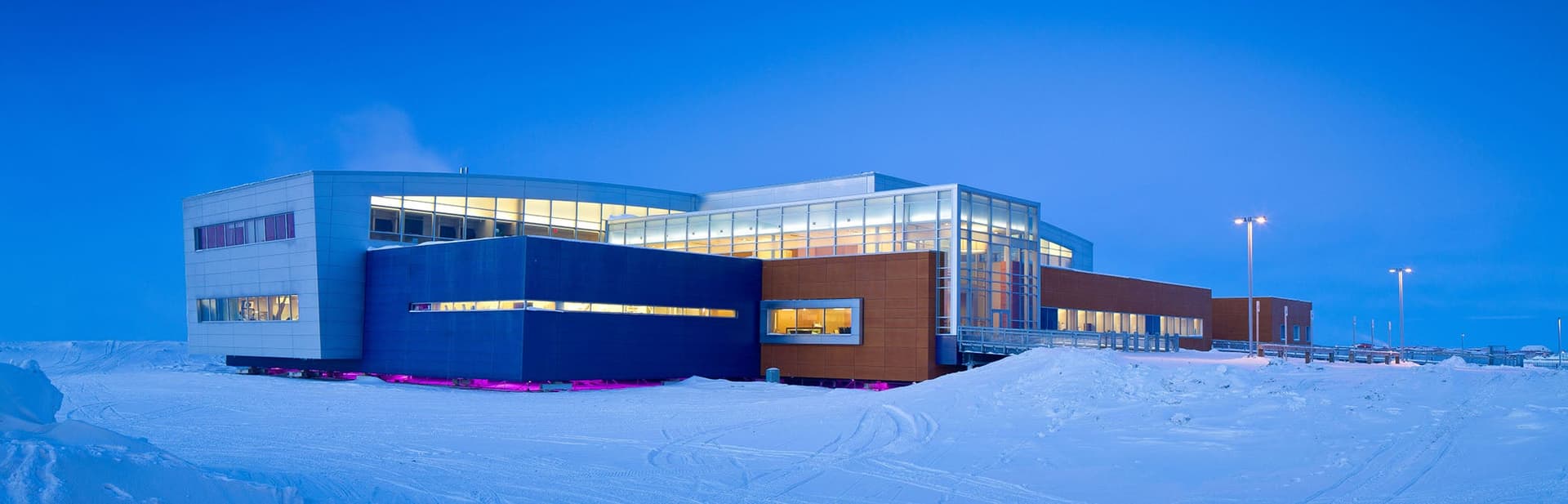
In Utqiagvik, Samuel Simmonds Memorial Hospital is where North Slope care begins and, when needed, where it is handed off to the rest of Alaska. It serves the local community and remote villages, while the borough’s medevac system makes it the anchor for transfers to Anchorage, Fairbanks, and facilities across the state. Residents spread across nearly 95,000 square miles can be stabilized close to home before weather, aircraft, or a long transfer chain dictate the next step.
A hospital built to serve a wide and remote region
Samuel Simmonds Memorial Hospital sits in one of the most remote service areas in the country, about 340 miles north of the Arctic Circle. The hospital is tied to a full array of health care services at local facilities and in remote villages, which makes it more than a single building in Utqiagvik. It is the central point where community care, village health needs, and referral medicine meet.
The hospital’s history reflects how long the North Slope has depended on a local medical base. Construction on the original Indian Health Service hospital in Barrow began in 1963, and the building was completed and occupied on December 15, 1965. The hospital name was chosen in a local contest on February 28, 1997, honoring Reverend Samuel Simmonds, a master carver, lay pastor, accountant, minister, counselor, healer, community activist, elder, husband, and father.
What residents can get close to home
Samuel Simmonds Memorial Hospital is both a trauma center and a general medical facility, which helps explain its role in daily North Slope life. ASNA lists it as a Level IV Trauma Center and a Joint Commission-accredited ten-bed hospital. An Indian Health Service profile lists it as a 14-bed general medical facility with 12 medical and surgical beds and 2 pediatric beds.
The hospital can handle emergency stabilization, basic inpatient treatment, trauma care at the Level IV level, and pediatric and medical-surgical admissions within its published bed count. But when a patient needs tertiary care, the next step is usually outside the borough, with Anchorage and Fairbanks serving as the major receiving hubs.
Hospital services are also paired with social services, assisted living, and support programs. Those programs help families with practical needs, educational help, medical travel, and funeral arrangements, which makes the hospital part of the region’s wider safety net rather than just its clinical center.
How the medevac chain keeps the borough connected
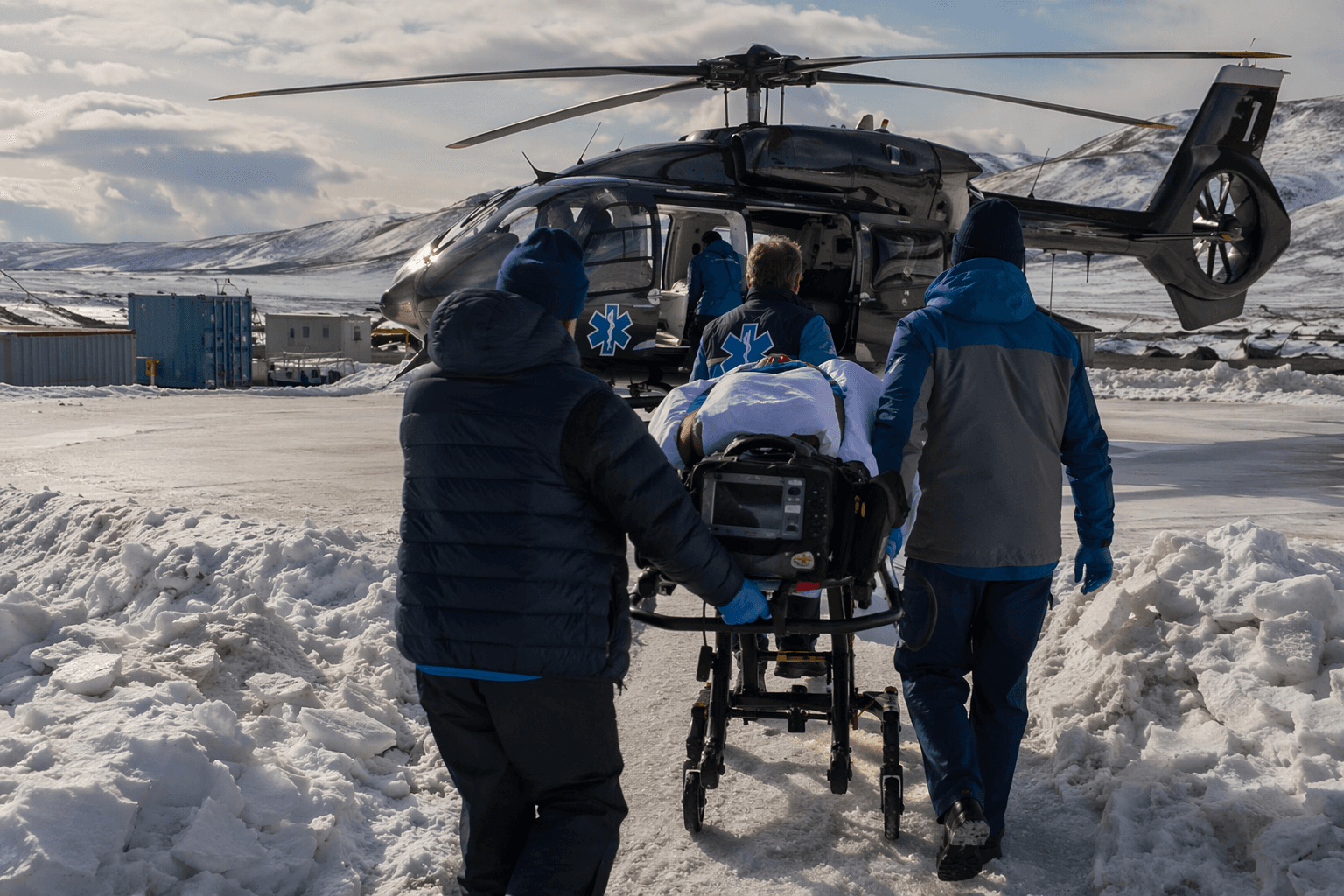
The North Slope Borough’s Fire Department Medevac Division works with Search and Rescue to move patients from villages to the critical access hospital in Utqiagvik or on to tertiary facilities in Anchorage or Fairbanks. The primary aircraft are a Pilatus PC-24 and a Beechcraft King Air 350, and the program can handle as many as 300 fixed-wing missions a year, along with helicopter medical missions when conditions or landing sites require them.
Daily life in the borough depends on aviation. Village air service is daily or weekly and weather permitting, which means routine travel can be delayed by conditions that are far outside a patient’s control. When that happens, the hospital and the medevac fleet become the practical bridge between a local clinic or village and a higher level of care.
The medevac division is a state-licensed critical care air ambulance service. It can transport adults and children, including patients who need ventilatory support or blood administration, which puts serious clinical capability into a region with no road link to the rest of the state. The aircraft and crew can also manage interfacility transfers between Samuel Simmonds Memorial Hospital and receiving facilities throughout Alaska.
Why the aircraft matter in the North Slope setting
When the borough took delivery of its PC-24 air ambulance in 2020, it did so for about 9,800 residents across nearly 95,000 square miles of harsh territory. In its medevac configuration, the PC-24 used in Barrow can carry two tandem stretchers and five passenger seats, according to Pilatus. That gives the medical team room to move patients who cannot wait for a commercial schedule or a clearer day.
A patient can be stabilized in Utqiagvik, transferred to a larger facility when needed, or moved between facilities elsewhere in Alaska.
This article was produced by Prism’s automated news system from verified source data, official records, and press releases, then run through automated quality and moderation checks before publishing. The system is built and supervised by the people who set the standards it runs under. Read our full AI policy.
Did this article answer your question?