State revenue forecast shows North Slope production rising, budget pressures remain
The Alaska Department of Revenue released its spring 2025 revenue forecast on December 15, 2025, projecting North Slope oil production to rise from roughly 457,000 barrels per day to about 517,800 barrels per day next fiscal year. Despite higher volumes driven by new and restarting projects, the forecast warns that oil will contribute a smaller share of general purpose revenue as the Permanent Fund transfer grows, leaving a sizable projected deficit under the governor's proposed spending plan.
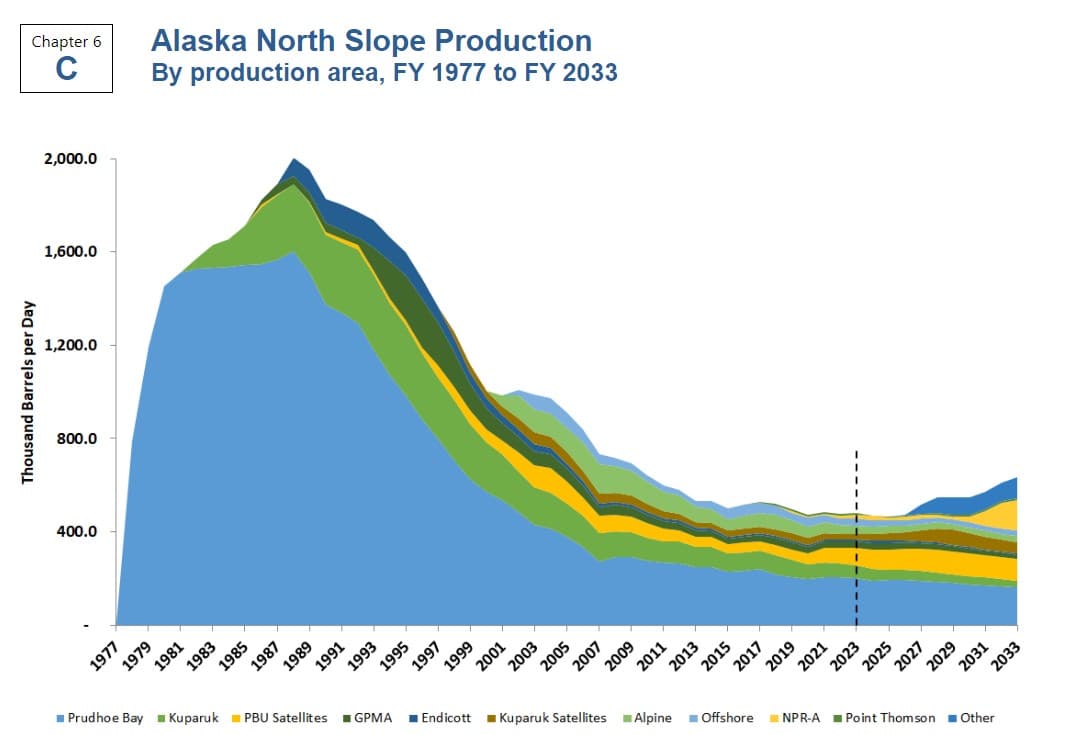
The state forecast delivered a mixed picture for North Slope communities. Production increases were highlighted as a near term bright spot, with average Alaska North Slope production rising to about 517,800 barrels per day next fiscal year from roughly 457,000 barrels per day. Those gains reflect new and restarting output on the North Slope, including activity on state land and projects such as Pikka.
At the same time the forecast underscored a key constraint on revenue gains. ANS oil prices are expected to average near the low sixty dollars per barrel in the coming year, which limits the fiscal benefit of increased volumes. The forecast projects that even with higher production, oil will account for a declining share of the state general purpose revenue mix as the Permanent Fund transfer grows larger and becomes the predominant source.
The revenue outlook carries immediate policy consequences. Under the governor's proposed spending plan the state faces a sizable projected deficit, signaling continued pressure on budget choices in the 2026 legislative session. Those choices are consequential for North Slope Borough priorities because discretionary state investments fund infrastructure projects, community grants and impact mitigation programs that serve local families and businesses.

Local leaders and residents should expect fiscal negotiations to affect timing and scope of North Slope investments. Increased production can relieve some pressure on local economies through jobs and activity tied to new projects, but the forecast makes clear that production alone will not reverse the longer term shift toward Permanent Fund transfers as the engine of state spending. That shift changes the institutional incentives that drive budget debates in Juneau and increases the role of statutory formulas and transfers in fiscal planning.
The Department of Revenue released technical tables and projections with the forecast, offering detailed numeric data for policymakers and municipal officials to use in budget planning and advocacy. For North Slope Borough stakeholders the forecast reinforces the need to monitor revenue projections closely and to engage in upcoming budget discussions that will determine funding for region specific priorities.
Know something we missed? Have a correction or additional information?
Submit a Tip