Supreme Court Case Could End Alaska's Lenient Mail Ballot Receipt Window
Atqasuk poll workers mailed ballots after phone lines failed in 2024 — now a Supreme Court ruling could eliminate the 10-day window that kept those votes alive.
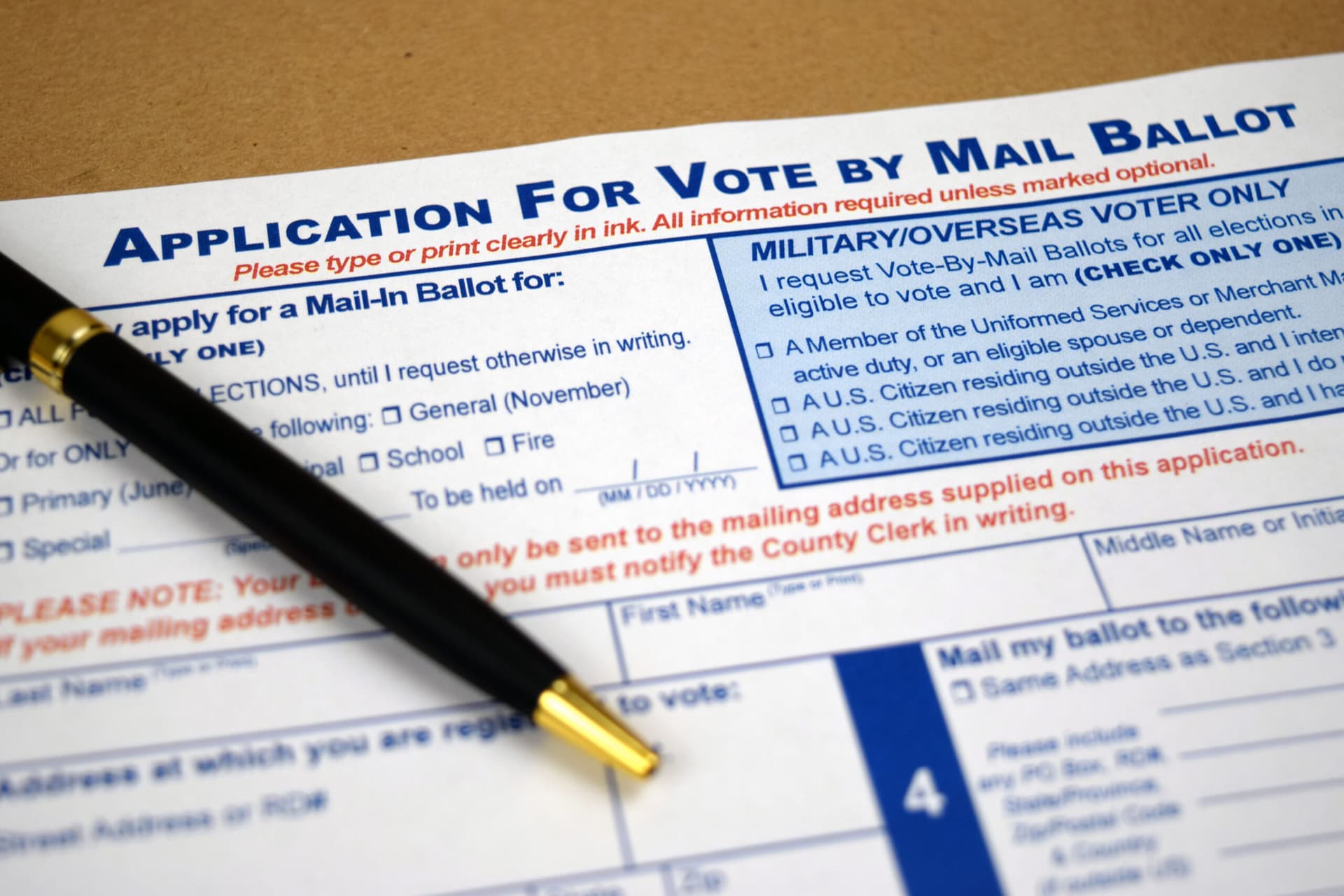
When Atqasuk poll workers finished counting votes on election night in 2024, they tried to relay their tallies by phone to the Alaska Division of Elections. The lines wouldn't connect. So they "chose what they saw as the next best solution — they placed the ballots and tally sheets into a secure package and mailed them to the Division, who did not receive them until nine days later."
That episode, now cited in a friend-of-court filing before the U.S. Supreme Court, captures exactly what is at stake in *Watson v. Republican National Committee*, a case that appeared poised, after oral arguments Monday, to overturn a Mississippi law that allows mail-in ballots to be counted as long as they are postmarked by, and then received within five business days of, Election Day. Because more than a dozen states have similar laws, the court's ruling, expected by late June or early July, could have significant implications for federal elections beginning as soon as November.
Alaska counts ballots if they are postmarked by Election Day and received within 10 days, or 15 days for overseas voters in general elections. A ruling that eliminates such grace periods would strike at the foundation of how votes are collected across the state's most isolated communities.
A court filing in the Mississippi case by Alaska Attorney General Stephen Cox and Solicitor General Jenna Lorence did not take sides but outlined geographic and logistical challenges to holding elections in Alaska. The ambiguity goes even deeper than transit times: "when certain ballots are actually 'received' is open to different interpretations, especially given the connectivity challenges for Alaska's far-flung boroughs," Cox and Lorence wrote.
The numbers from the 2022 general election illustrate the scale of that vulnerability. Between 55% and 78% of absentee ballots from the state House districts spanning from the Aleutian Islands up the western coast to the vast North Slope arrived at an election office after Election Day. Statewide, about 20% of all absentee ballots in that election were received after Election Day. Requiring ballots to be received by Election Day, advocates warned, would "disproportionately disenfranchise" Alaska Native voters.
Those statistics ground an amicus brief filed January 9, 2026, by the National Congress of American Indians, the Alaska Federation of Natives, and Native Vote Washington. Lawyers with the Native American Rights Fund and the Great Lakes Indigenous Law Center said in filings with the court that limited postal service in rural areas means that some ballots might not be postmarked until they reach Anchorage or Juneau, potentially placing them at legal risk even when voters did everything right on Election Day. Ben Mallott, president of the Alaska Federation of Natives, put the stakes plainly: "Allowing ballots mailed on Election Day to be counted ensures that Native communities' voices are heard and respected, despite the unique logistical challenges we face."

Rhonda Pitka, a poll worker and first chief in Beaver, a village along the Yukon River 110 miles north of Fairbanks, expressed the view shared by many rural election administrators. "These processes have been in place for a long time just to ensure that our ballots are counted," she said.
About 50,000 Alaskans voted by mail in the 2024 presidential election. "I think there's probably no other state where this ruling could have a more detrimental impact than ours," said Alaska's senior U.S. senator, Republican Lisa Murkowski. Murkowski sees the case as an effort to end voting by mail nationwide.
Inside the courtroom Monday, the divide among justices tracked the broader stakes. After just over two hours of oral argument, a majority of justices seemed to agree with the challengers that the Mississippi law conflicts with federal laws that set the Tuesday after the first Monday in November as "election day." Mississippi Solicitor General Scott Stewart, defending the state law, noted that the opposing side had yet to produce a single documented case of fraud attributable to late-arriving mail ballots. Justice Sonia Sotomayor, meanwhile, questioned whether courts should be resolving the issue at all: "The people who should decide this issue are not the courts, but Congress, the states and Congress," she said.
The Alaska Division of Elections said Monday it is monitoring the case closely. "At this stage, we are continuing preparations for the 2026 election cycle under the laws currently in effect," spokesperson Steve Kirch said in a statement. "If a ruling requires operational changes, we will work through those in coordination with the appropriate state entities to ensure compliance and to provide clear information to voters."
A decision is expected by late June or early July, leaving a compressed window for Alaska — whose capital, Juneau, is accessible only by air or water — to overhaul election procedures before November's midterms. For communities like Atqasuk, where even getting a phone call through on election night is not guaranteed, the margin for error is already razor thin.
Know something we missed? Have a correction or additional information?
Submit a Tip