Berlin-Ichthyosaur State Park preserves fossils and a mining ghost town
Berlin-Ichthyosaur State Park folds a ghost town and a Triassic fossil bed into one remote Nye County stop. It is one of the county’s clearest reminders that mining and deep-time science both shape local identity.
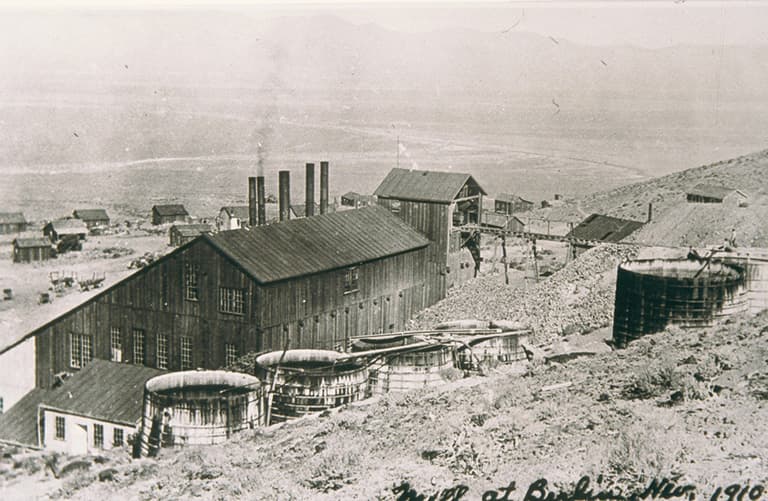
Berlin-Ichthyosaur State Park is one of Nye County’s rare places where two origin stories share the same ground: a preserved silver-mining town and a fossil bed from a warm inland sea that covered central Nevada 225 million years ago. The park does not just offer scenery. It preserves a working record of the county’s extraction economy, its historic settlement patterns, and the kind of landscape that still draws travelers beyond the usual Pahrump growth narrative.
A park built to protect two stories
Berlin-Ichthyosaur State Park was established in 1957 for a reason that still sets it apart in Nevada: it was created to protect and display North America’s most abundant concentration of the largest-known ichthyosaur fossils, while also preserving the mining town of Berlin and the Diana Mine. That dual mission gives the park a character few public lands can match. One stop captures both the industrial history of silver prospecting and the prehistoric history of an ancient marine ecosystem.
The park’s setting reinforces that identity. It sits on the western slope of the Shoshone Range, about 23 miles east of Gabbs, and the landscape around it remains rugged, dry, and remote. The state park itself covers 1,540 acres, with elevations ranging from 6,840 feet to 7,880 feet, which helps explain why Berlin still feels isolated rather than developed into a polished tourist stop.
From Union Canyon to a boomtown
The mining story begins in May 1863, when silver was first discovered near Union Canyon. The Union Mining District followed the next year, laying the groundwork for later claims in the area. Berlin itself was established in 1897, after the Berlin Mine opened in 1896 and the Nevada Company bought the mine and nearby claims in 1898.
The town’s name came from Berlin, Germany, the home of some of the prospectors, and the place quickly moved into its boom years. Berlin peaked from roughly 1898 to 1908, then faded after the Panic of 1907. One account says the town was empty by 1911, and that arc is part of what makes the site so compelling now: the boom came fast, and the abandonment came almost as quickly.
Historic-register documentation describes Berlin as a remnant of a turn-of-the-century mining town with twelve wood-frame buildings in varying states of repair. The Berlin Historic District was listed on the National Register of Historic Places on November 5, 1971, underscoring that this is not a themed reconstruction. It is the surviving fabric of a real company town.
What remains on the ground
Today, many of Berlin’s original buildings still stand, and some of the town’s original residents are interred in the cemetery. That cemetery matters as much as the buildings do. It turns the site from a scenic relic into a place where personal and family histories remain visible, even after the mine’s economy disappeared.
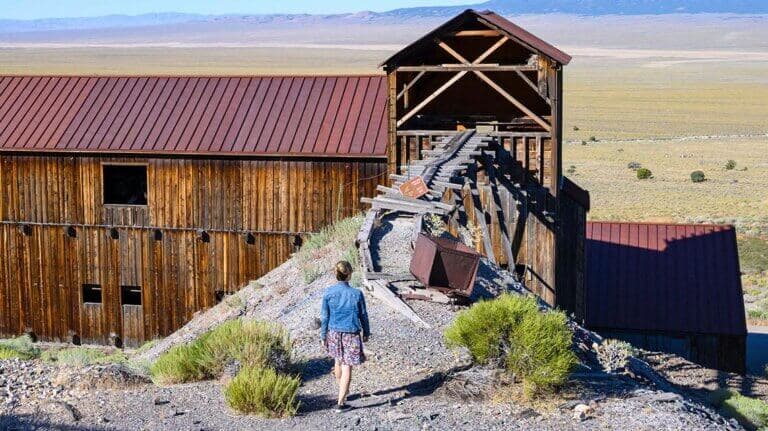
The preserved structures, open spaces, and weathered streets create the state of arrested decay that gives Berlin its atmosphere. Visitors are not looking at a replica. They are walking through the remains of a place that once held work, housing, death, and daily life in the same compact mining camp. The Diana Mine remains part of that preserved landscape, linking the ghost-town setting to the industrial purpose that created it.
The fossil house and the ancient sea
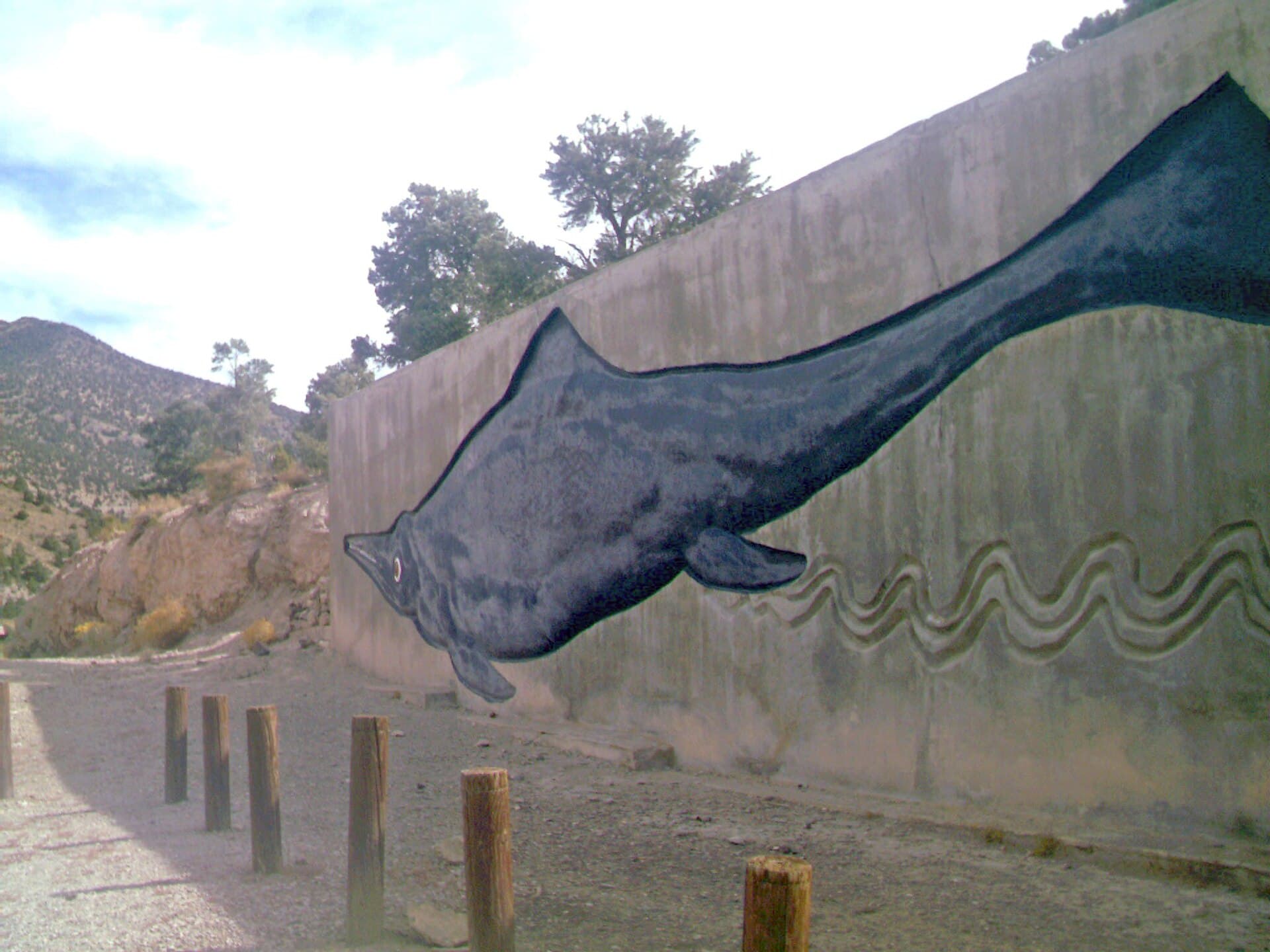
The park’s other half is no less unusual. The Fossil House protects and displays the ichthyosaur remains, the feature that made the park historically important enough to protect in the first place. The fossils point back to a time when a warm ocean covered central Nevada, long before the silver rush and long before the state line meant anything in the modern sense.
More than 80 interpretive signs and self-guided walking tours help visitors move between these layers of history. Fossil House tours run 40 minutes and are offered seasonally, including daily tours from Memorial Day through Labor Day. That format makes the site workable for short-stay travelers and for visitors who want more than a roadside pullout but less than a full-day museum schedule.
The setting around the park adds another layer. Big sagebrush, pinyon pine, and Utah juniper shape the landscape, while mule deer, jackrabbits, bluebirds, pinyon jays, chukar, lizards, gophers, and snakes fill out the Great Basin ecosystem. The result is a place where the living natural history and the preserved fossil record sit close together, rather than competing for attention.
Why Nye County should care
Berlin-Ichthyosaur State Park is more than a destination for fossil fans or ghost-town seekers. It is one of Nye County’s strongest heritage assets because it keeps two histories visible at once: the county’s mining past and its prehistoric past. In a county often discussed through growth in Pahrump, the park helps widen the story, showing that Nye’s identity also rests on places far outside the development corridor.
That matters economically as well as culturally. A remote stop about 23 miles from Gabbs naturally sends visitors through nearby communities for fuel, food, and supplies, and the park’s mix of self-guided trails and timed tours makes it the kind of place people plan around rather than merely pass through. For local officials and residents, the value is plain: this is a rare site that can keep drawing travelers to central Nye County if it is maintained well.
The preservation rules reflect that responsibility. Fossils, artifacts, rocks, plants, and historic structures may not be removed or disturbed. That protection is what keeps Berlin-Ichthyosaur State Park from slipping into the fate of so many Western boomtowns, where what was left behind was eventually stripped away. Here, the county still has something intact enough to tell both stories at once.
This article was produced by Prism’s automated news system from verified source data, official records, and press releases, then run through automated quality and moderation checks before publishing. The system is built and supervised by the people who set the standards it runs under. Read our full AI policy.
Did this article answer your question?