Big Dune’s singing sands draw visitors to Amargosa Valley
Big Dune is where Nye County’s OHV playground meets a rare beetle habitat, and the BLM is marking that line with fencing, access rules and education.

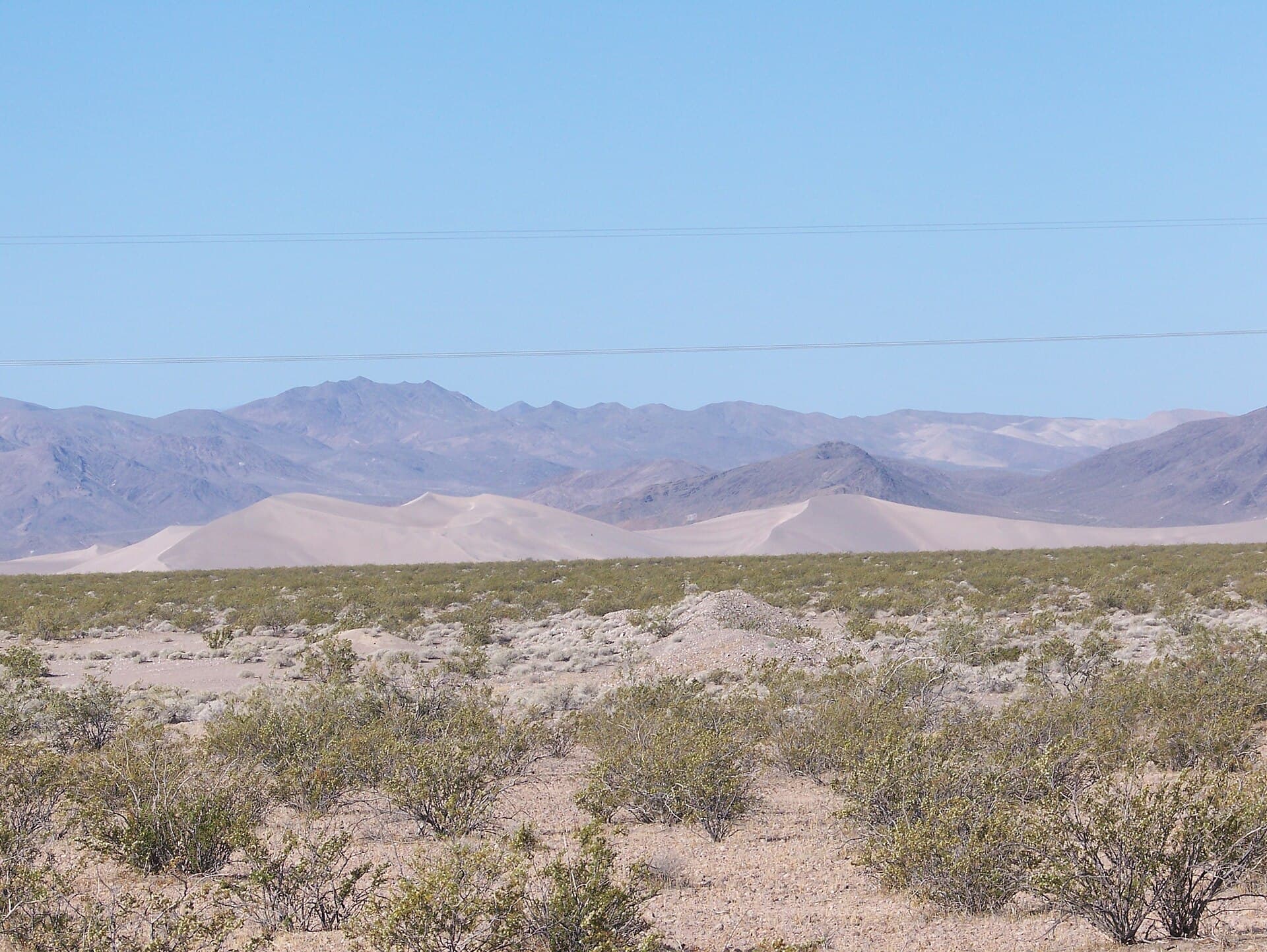
Big Dune in Amargosa Valley pulls double duty for Nye County: it is a five-square-mile field of sand that rises to about 500 feet, and it is also one of the county’s most unusual public-land stewardship challenges. Weekdays tend to bring locals, while weekends bring heavier off-road traffic from ATV riders, dune-buggy visitors and curious desert travelers moving between Beatty and Pahrump.
A rare dune field with a local following
Big Dune remains a relatively undiscovered recreation area, which is part of its appeal. The broad slopes give riders room to climb, descend and test machines against a landscape that feels remote even by Nye County standards. But the same open access that makes the dune popular also makes its edges vulnerable, especially where vehicles can leave the main travel area and enter habitat that supports a species found almost nowhere else.
The site’s draw is not limited to motorized recreation. Big Dune is one of Nevada’s three known singing sand dune sites, alongside Sand Mountain near Fallon and Crescent Dunes near Tonopah. Only about 30 singing dunes are known worldwide, according to Travel Nevada, which puts the Amargosa Valley dune in a very small category of landforms that are both scenic and scientifically unusual.
Why the sand sings
The sound is not a trick of wind alone. Singing sand can happen when dry grains avalanche in synchronized motion, creating the low, resonant tone that gives these dunes their name.
Where recreation collides with conservation
The land-use question at Big Dune became more visible in January 2023, when the Bureau of Land Management began installing buck-and-rail fencing on the north side of the dune. The fencing was aimed at protecting the densest population of Giuliani’s dune scarab, a species identified by the U.S. Fish & Wildlife Service that occurs at Big Dune and Lava Dune in the Amargosa Valley and nowhere else in the world.
That is the practical tension on the ground: Big Dune is still open for off-highway vehicle use, but not every square foot can be treated the same way. Joe Varner, then the acting Pahrump Field Manager, said the fencing was intended to protect the beetle while still leaving the vast majority of the dune available to OHV activity. For visitors, that means the access experience is not a blanket closure, but a targeted protection effort that places clear limits around the most sensitive habitat.
The immediate stakes are visible in how people behave at the site. Riders who stay on the open dune can keep using one of Nye County’s signature recreation areas. Riders who push into marked habitat risk damaging the very conditions that make the area unique.
Who manages the rules, maps and access
The BLM’s Pahrump Field Office is the local office handling recreation, maps, fire restrictions, OHV information and public involvement for the area. That makes it the practical point of contact for anyone planning a visit, especially if conditions change or if new protection measures are added.
A site like Big Dune can feel open and unregulated from a distance, but its use depends on a steady set of decisions about where vehicles can go, how habitat is marked and how people are informed before they arrive. The fencing on the north side is one example; the office’s work on maps and OHV information is another.
- Stay aware of the marked habitat area on the north side of the dune.
- Use the Pahrump Field Office for the latest recreation, fire and access information before heading out.
- Keep vehicles in open-use areas so the rare beetle habitat remains intact.
A desert landmark with a longer backstory
The 1985 film Cherry 2000 was filmed at Big Dune south of Beatty, giving the site a small but lasting place in Nevada’s pop-culture history.
Geology also shapes the story. A U.S. Geological Survey map covers the Quaternary and Tertiary deposits of the Big Dune quadrangle in Nye County and Inyo County, while the Amargosa Desert is a structurally complex basin with very thick valley fill. Those conditions help explain why the dune exists where it does and why it remains part of a much larger desert system, not an isolated feature.
This article was produced by Prism’s automated news system from verified source data, official records, and press releases, then run through automated quality and moderation checks before publishing. The system is built and supervised by the people who set the standards it runs under. Read our full AI policy.
Did this article answer your question?