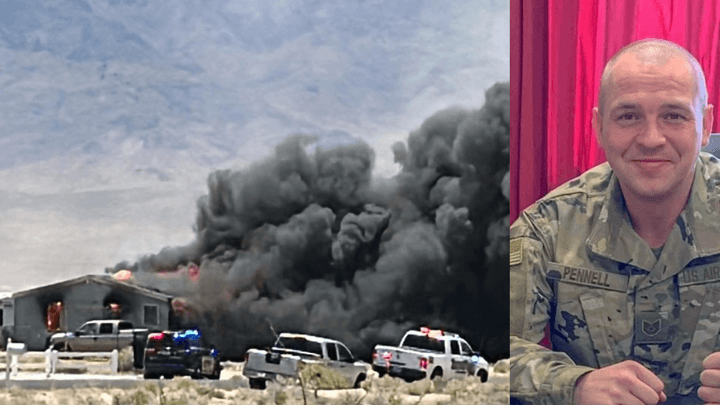
Five Peace Walkers Arrested for Trespass at Nevada Nuclear Test Site
Five peace demonstrators face misdemeanor trespass charges after crossing the white-line boundary at the Nevada Test Site's Mercury gate on Good Friday, forcing a Nye County arrest and booking process.
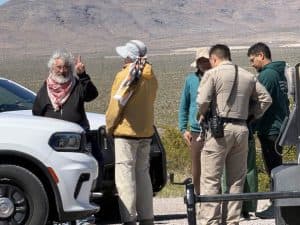
Brian Terrell of Maloy, Iowa, was among five Sacred Peace Walk participants taken into custody by Nye County sheriff's deputies after stepping across the painted white line at the Mercury gate to the Nevada National Security Site on Good Friday, April 3. Samuel Chawla-Rios of Princeton, New Jersey; Anthony Donovan of New York; Markayla Love of Memphis, Tennessee; and Barbara West of Corvallis, Oregon crossed with him. All five were charged with trespass.
The white line at the Mercury gate, located at the US Highway 95 Mercury exit roughly 65 miles northwest of Las Vegas in northern Nye County, marks the legal threshold between public access and federally restricted NNSS property. Signage at the entry road makes the boundary explicit: anyone stepping across it enters restricted federal land and triggers a coordinated response between Nye County deputies and National Nuclear Security Administration security personnel at the site. Those arrested were processed and cited following the midday crossing; the cases now move through the county's court system.
The arrests came at the end of a six-day Sacred Peace Walk that began March 29 at the Atomic National Testing Museum on the Las Vegas Strip. Organized by the Nevada Desert Experience and allied faith-based groups, the roughly 60-mile pilgrimage through the Mojave brought participants across the traditional lands of the Western Shoshone and Paiute peoples before reaching the historic Peace Camp adjacent to the Mercury gate. On the morning of April 3, participants gathered for an interfaith Sunrise Ceremony before completing a Stations of the Cross procession from the Peace Camp to the entry road.
The five who crossed did so knowing the legal consequences. For more than three decades, Nye County authorities did not prosecute activists arrested at the NNSS, typically releasing those cited at the scene. That practice ended in 2018, when local authorities resumed charging boundary crossers with trespass, with a first offense drawing a warning and subsequent crossings resulting in prosecution. The policy shift has reshaped the calculus for Sacred Peace Walk participants, and it adds a more substantive caseload to Nye County's court system each spring.
The demonstrators' grievances center on the site's history: the NNSS, established on Western Shoshone land, was the primary testing ground for American nuclear devices from 1951 to 1992, hosting 928 nuclear tests. Participants argue that subcritical weapons tests and ongoing military activity at the site extend that legacy, and the Nevada Desert Experience has organized annual peace walks to the Mercury gate since 1996.
For Nye County's Sheriff's Office, five separate arrests require individual documentation, holding, and scheduling of appearances in a county that sits several hours from the nearest major federal court. The annual pattern is predictable; the paperwork is not trivial.
Here is the formatted final output:
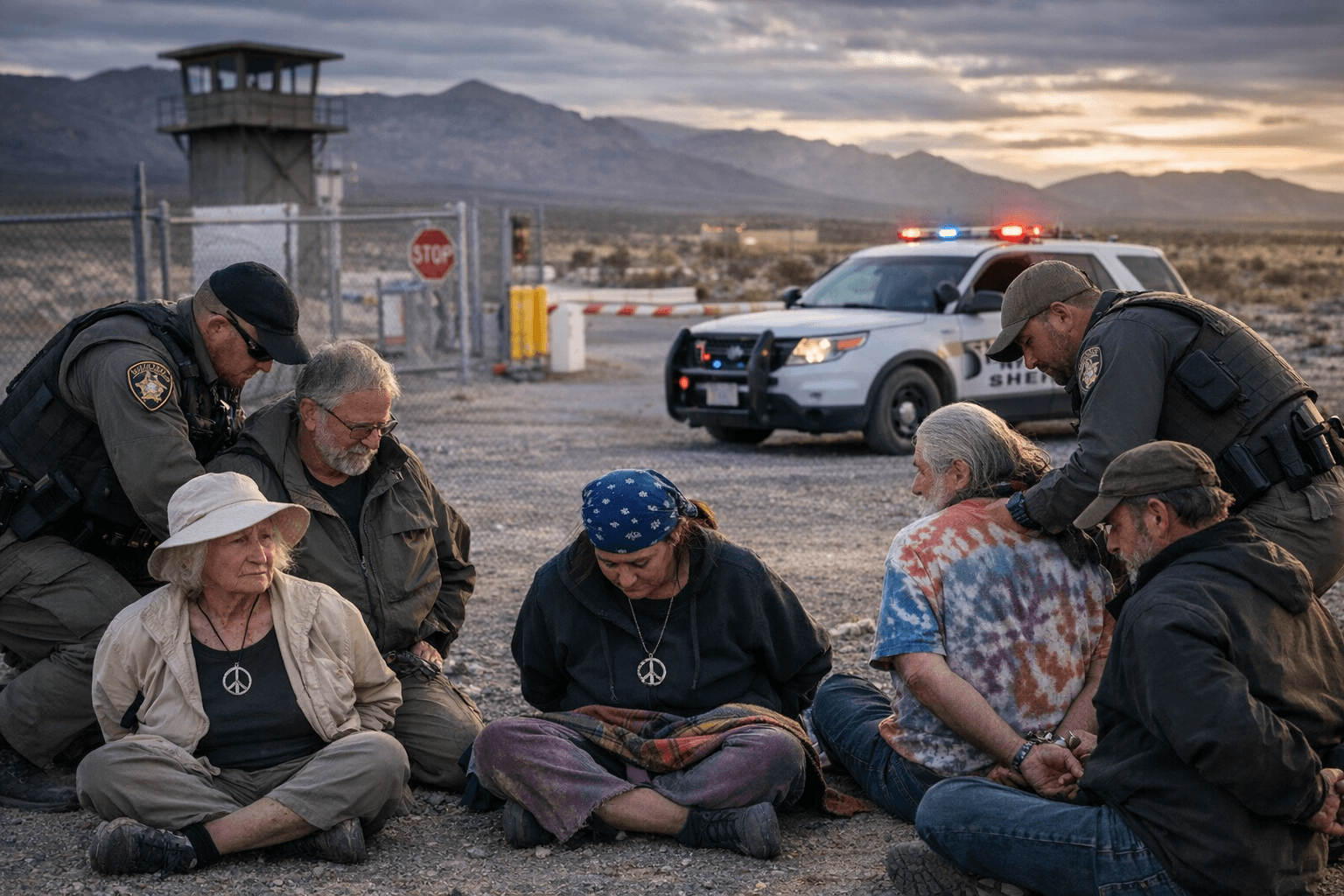
SUMMARY: Five demonstrators face trespass charges after crossing the white-line boundary at the Nevada Test Site's Mercury gate on Good Friday, with Nye County deputies booking all five and sending cases to local court.
CONTENT:
Brian Terrell of Maloy, Iowa, was among five Sacred Peace Walk participants taken into custody by Nye County sheriff's deputies after stepping across the painted white line at the Mercury gate to the Nevada National Security Site on Good Friday, April 3. Samuel Chawla-Rios of Princeton, New Jersey; Anthony Donovan of New York; Markayla Love of Memphis, Tennessee; and Barbara West of Corvallis, Oregon crossed with him. All five were charged with trespass.
The white line at the Mercury gate, located at the US Highway 95 Mercury exit roughly 65 miles northwest of Las Vegas in northern Nye County, marks the legal threshold between public access and federally restricted NNSS property. Signage at the entry road makes the boundary explicit: stepping across it triggers a coordinated response between Nye County deputies and National Nuclear Security Administration security personnel on site. The five were processed and cited following the midday crossing; their cases now move through the county's court system.
The arrests came at the end of a six-day Sacred Peace Walk that began March 29 at the Atomic National Testing Museum on the Las Vegas Strip. Organized by the Nevada Desert Experience and allied faith-based groups, the roughly 60-mile pilgrimage through the Mojave crossed the traditional lands of the Western Shoshone and Paiute peoples before reaching the historic Peace Camp adjacent to the Mercury gate. On the morning of April 3, participants gathered for an interfaith Sunrise Ceremony before completing a Stations of the Cross procession from the Peace Camp to the entry road.
The five who crossed did so with full knowledge of the legal consequences. For more than three decades, Nye County authorities did not prosecute activists arrested at the NNSS, typically releasing those cited at the scene. That practice ended in 2018, when local authorities resumed charging boundary crossers with trespass, a first offense drawing a warning and subsequent crossings resulting in prosecution. The policy shift reshaped the calculus for Sacred Peace Walk participants and added a recurring caseload to Nye County's court docket each spring.
The demonstrators' grievances center on the site's recorded history: the NNSS, established on Western Shoshone land, served as the primary testing ground for American nuclear devices from 1951 to 1992 and hosted 928 nuclear tests. The Nevada Desert Experience argues that subcritical weapons tests and ongoing military activity at the site extend that legacy, and the organization has organized annual peace walks to the Mercury gate since 1996.
For the Nye County Sheriff's Office, five separate arrests mean five individual bookings, citations, and court scheduling obligations in a county that sits far from the nearest major population center. The annual pattern is predictable; the administrative burden is real, and with the 2018 prosecution policy now firmly in place, each Good Friday crossing carries consequences that follow participants home across four states.
This article was produced by Prism’s automated news system from verified source data, official records, and press releases, then run through automated quality and moderation checks before publishing. The system is built and supervised by the people who set the standards it runs under. Read our full AI policy.
Did this article answer your question?