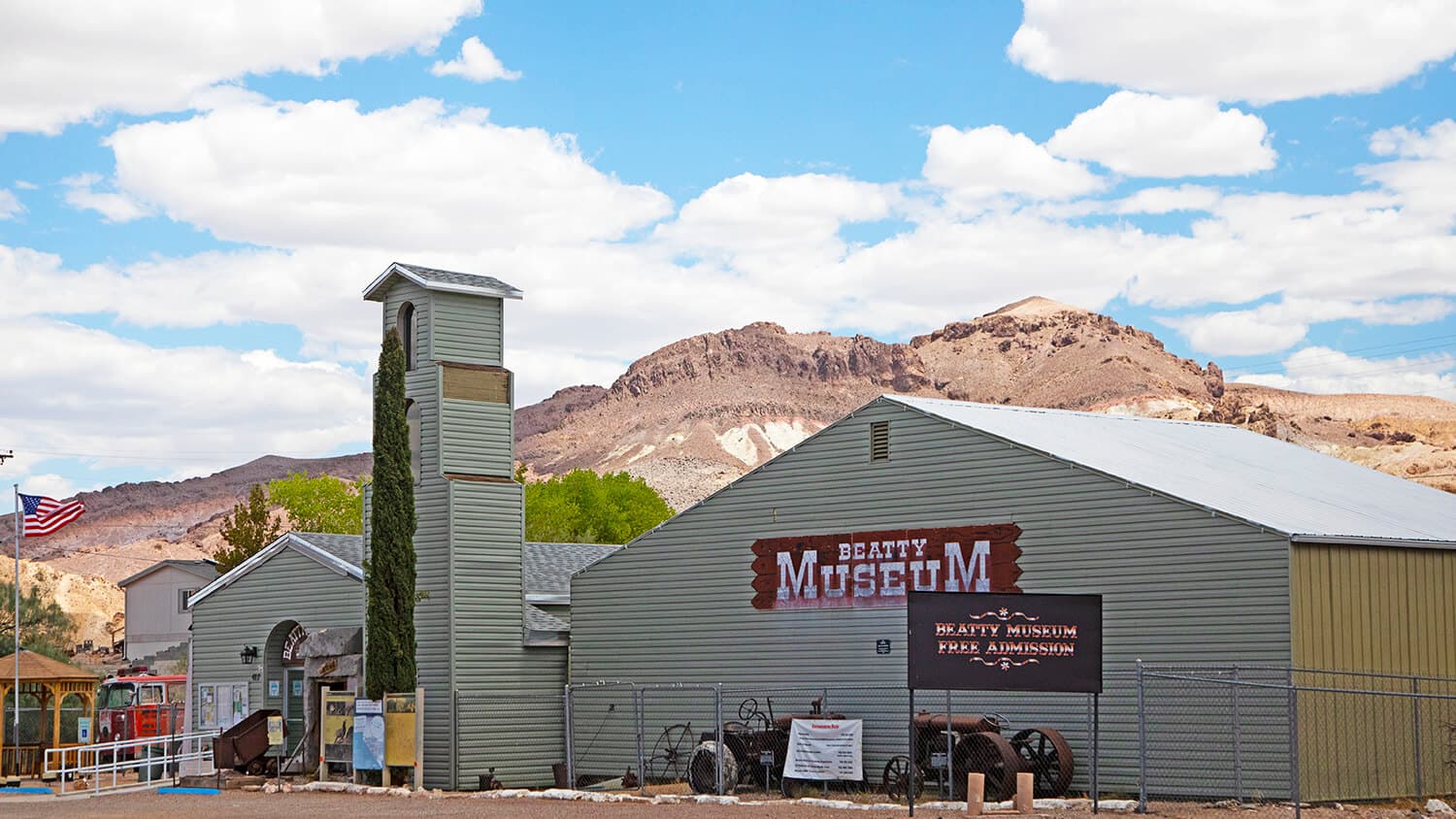
Goldwell Open Air Museum blends desert art and ghost-town tourism
Goldwell is more than a sculpture park: its 24/7 desert setting pulls Beatty into the Rhyolite-Death Valley traffic stream and keeps visitors spending nearby.
Goldwell Open Air Museum sits where Beatty’s tourism economy is easiest to see: on State Highway 374, about 5 miles west of town, in the same corridor that carries travelers toward Rhyolite and the eastern entrance to Death Valley National Park. The result is not just an art stop, but a roadside destination that can turn passing traffic into fuel purchases, meals, and overnight stays in Beatty. In Nye County, where growth often gets framed through Pahrump, Goldwell points to a different development path built on desert heritage, open space, and a recognizable sense of place.
Goldwell’s place in the Beatty corridor
The museum describes itself as an 8-acre sculpture park with seven major works, and its location does a lot of the work for it. The grounds are open 24 hours a day, seven days a week, while the visitor center and gift shop are generally open Monday through Saturday from 10 a.m. to 4 p.m., with summer closures sometimes running earlier because of heat. That mix of constant access and limited staffed hours fits the realities of the Amargosa Desert and makes the site easy to fold into a road trip, whether someone is coming from Beatty, Rhyolite, or Death Valley.
Goldwell also benefits from being close enough to matter and far enough to feel isolated. It is walking distance from the ghost town of Rhyolite and about 4 miles from the eastern entrance of Death Valley National Park, which puts it at the hinge point between boomtown history and park-bound travel. For Beatty, that matters because visitors who stop for one attraction are already in the zone where a second stop, a meal, or a tank of gas is a natural next move.
How the museum started, and why the first piece still defines it
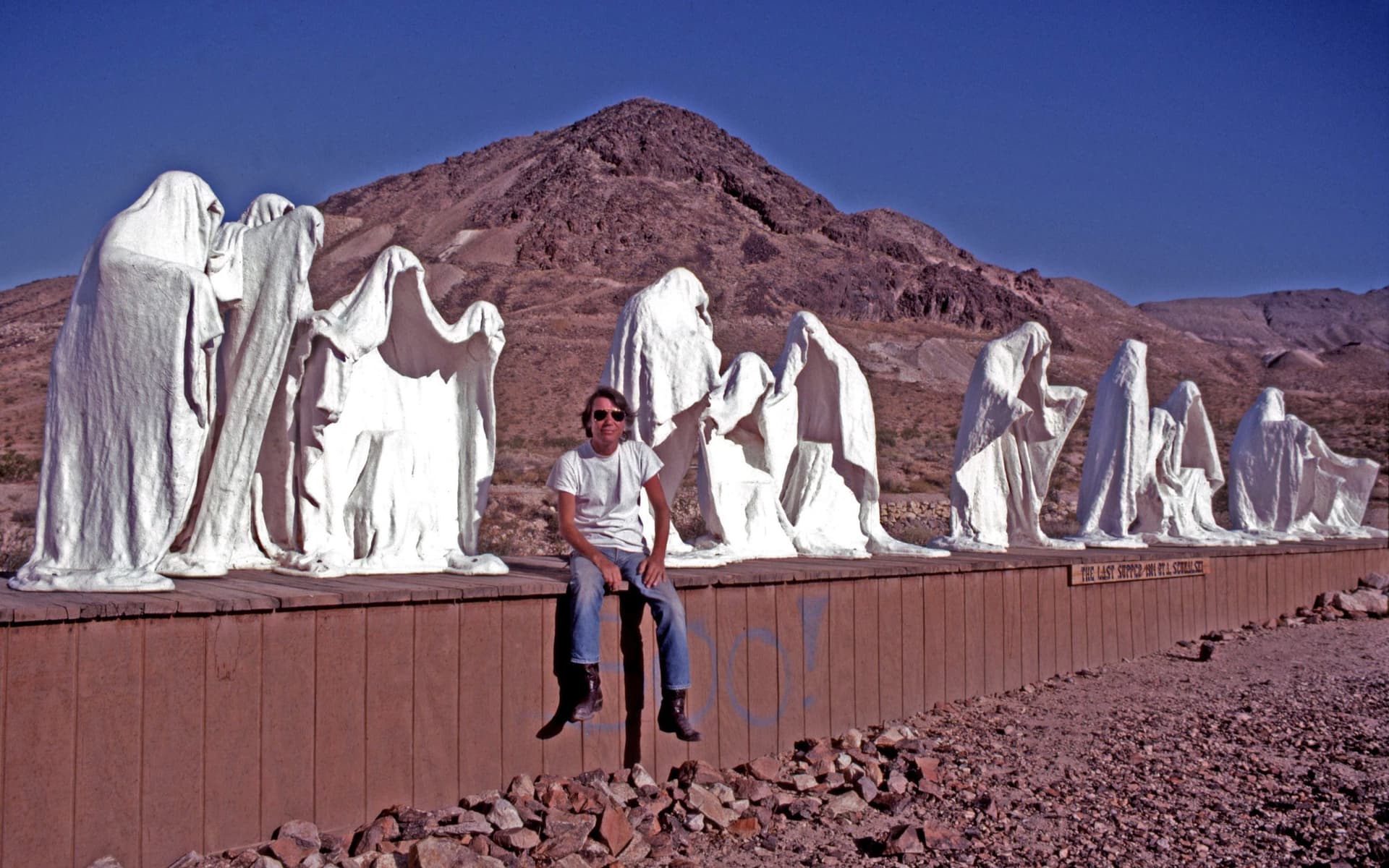
Goldwell says the project came to fruition in 1984, when Belgian artist Albert Szukalski helped launch the site’s original concept in the desert. The museum calls The Last Supper its “genesis” piece, and the work began as a short-term idea that was supposed to last only two years before becoming the foundation of the park’s permanent identity. The history matters because it explains why the site feels both improvised and enduring at the same time.
Szukalski created the life-size ghost figures by wrapping live models in fabric soaked in wet plaster, then arranging them in Leonardo da Vinci’s composition. That origin story gives Goldwell its signature look: art that is unmistakably tied to the desert, but also built from a specific technique and a specific moment in 1984. The museum says the original collection consisted of five sculptures, and the site has since expanded into a broader outdoor park without losing the stark, handmade feel of that first work.

The collection also gives the museum more than one visual anchor. Dr. Hugo Heyrman’s Lady Desert: The Venus of Nevada, created in 1992, is described by the museum as one of its most photographed works. Other named pieces include Tribute to Shorty Harris, Icara, Serving Ghost, Rhyolite’s District of Shadows, 1000 in 1 Cranes, and Portone, which helps the park read less like a single roadside curiosity and more like a small, curated landscape of desert art.
Why Rhyolite and Death Valley make the site stronger
Goldwell works because it sits inside a larger story about what drew people to this corner of Nye County in the first place. Travel Nevada says Rhyolite was founded after Frank “Shorty” Harris and Ernest “Ed” Cross discovered high-grade gold ore in 1904, and the Rhyolite Train Depot once saw up to 50 freight cars a day. That history gives the ruins next door a scale that today’s visitors can still feel, even as the town itself has gone quiet.
The museum’s setting also connects Beatty to a different kind of tourism flow: Death Valley traffic. Because Goldwell sits on the road leading toward the park, it benefits from travelers who are already moving through the region and looking for something specific, quick, and memorable. The museum’s mission, which centers on creativity, human curiosity, and appreciation of the Amargosa Desert’s landscape and history, fits that route well because it gives people a reason to slow down in a corridor that otherwise invites people to keep driving.
For Beatty, that is the economic value of Goldwell. The site does not need to function like a big-city attraction to matter locally. Its value comes from conversion, turning vehicles into visitors and visitors into customers for the businesses that serve the town’s small but important tourism base.
What to expect when you go
A visit works best when it is built around the desert clock and the road network that defines the area. The museum is easy to reach from Beatty, and the combination of open grounds, a limited-hours visitor center, and nearby Rhyolite means you can plan it as a short stop or a longer circuit through the ghost-town corridor.

A practical visit looks like this:
- Goldwell is about 5 miles west of Beatty on State Highway 374.
- The grounds are open 24/7.
- The visitor center and gift shop are generally open Monday through Saturday from 10 a.m. to 4 p.m.
- Summer hours can close earlier because of heat.
- Rhyolite is close enough to combine with the museum on the same trip.
- Death Valley National Park’s eastern entrance is about 4 miles away.
That makes timing important. Midday heat can shorten the useful window for walking the grounds, while the 24-hour access gives the park a different character after sunset, when the desert quiet takes over and the sculptures read almost like markers in open space.
A durable destination, not a one-off stop
Goldwell’s staying power is part of its economic story. The museum announced plans in 2024 for a 40th anniversary celebration, which underscored how long the site has lasted and how firmly it has settled into the Beatty-Rhyolite corridor. Its projects also have support from the Nevada Arts Council, the National Endowment for the Arts, the Nevada Humanities Committee, the Nevada Commission on Tourism, and the Institute of Museum and Library Services, showing that the park sits at the intersection of private stewardship and broader public cultural backing.
That mix helps explain why Goldwell matters beyond the art itself. It gives Beatty a place that stands out in Nye County, ties the town to Rhyolite’s boom-and-bust history, and captures some of the traffic bound for Death Valley. In a county where development often gets measured in bigger, louder places, Goldwell shows how a small desert destination can still shape where people stop, spend, and remember the landscape.
This article was produced by Prism’s automated news system from verified source data, official records, and press releases, then run through automated quality and moderation checks before publishing. The system is built and supervised by the people who set the standards it runs under. Read our full AI policy.
Did this article answer your question?