Pahrump’s desert wineries put Nye County on the wine map
Two award-winning wineries, a rum tasting room and easy access from Las Vegas have turned Pahrump into Nye County’s most credible beverage day trip.
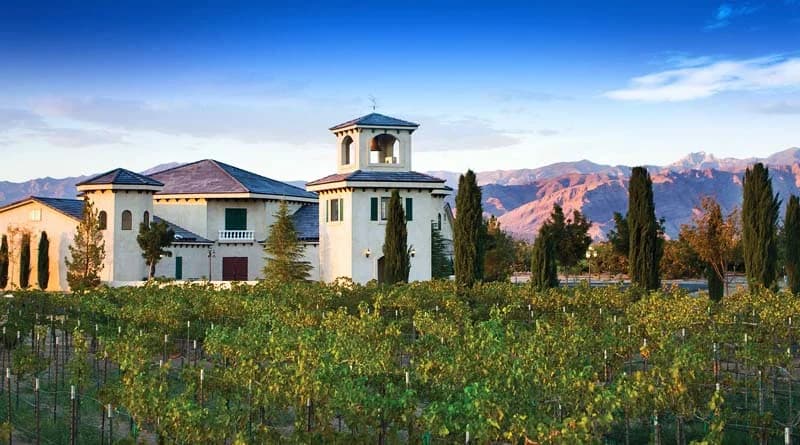
Pahrump’s wine corridor has become more than a curiosity on the edge of Las Vegas: it is a compact beverage circuit with two award-winning wineries, a rum tasting room and road access that makes a same-day visit easy. Pahrump Valley Winery sits at 3810 Winery Rd., Sanders Family Winery at 3780 E. Kellogg Rd., and the town’s broader visitor map now reaches to Artesian Cellars & Vineyard and Desert Cane Distillery. That cluster keeps travelers in Nye County long enough to spend on tastings, dinners and overnight stays instead of treating the valley as a pass-through.
How Pahrump’s wine story took root
The valley’s wine identity did not appear overnight. Visit Pahrump says the first winery in Pahrump was bonded in 1930, but it was never developed, leaving the town without a real commercial base until much later. The modern scene began when longtime resident Jack Sanders founded Pahrump Valley Winery in 1990, then sold it in 2002 to Bill and Gretchen Loken before opening Sanders Family Winery in 2009.
That sequence matters because it shows how local ownership and continuity built the market one tasting room at a time. Visit Pahrump says both wineries continue to win awards, giving the town a first-class wine identity that is rooted in actual production, not just branding. In a desert county where many visitors only know Pahrump as a road stop, that kind of durable business history helps explain why the town can support more than one wine stop.
Pahrump Valley Winery’s profile shows how small-scale production can still anchor a destination. The winery is described as established in 1990, producing less than 10,000 cases a year and having won more than 250 awards since 2004. A Vegas PBS Outdoor Nevada segment described the winery as making thousands of cases each year from just a few acres of vineyard, a useful reminder that desert agriculture here works on a compact footprint rather than on broad-acre farming.
Why the location works for visitors and operators
Pahrump sits just west of Las Vegas in Nye County, between the Spring Mountains to the east and the Nopah Range to the west. Visit Pahrump says that geography makes the town an easy drive from Las Vegas, Death Valley National Park and the Dumont Dunes, which gives the beverage scene a built-in audience of day-trippers, park travelers and off-road visitors.
That location is part of the business case. Travelers who are already heading toward the park, the dunes or the Las Vegas metro area can turn a single drive into a longer stop without adding much distance. The town’s wine and spirits stops are close enough to each other to work as a car-friendly circuit, which is exactly the kind of setup that keeps visitor spending local rather than scattered along a highway corridor.
The “Winery Road” address itself is telling. It signals a cluster, not an isolated attraction, and clusters are what make destination districts resilient. A traveler can land in Pahrump, move between wineries, then keep the evening in town instead of treating each stop as a quick tasting and a gas-station exit.
A practical beverage route through the valley
A good Pahrump tasting day starts on the west side of town with the two established wineries. Pahrump Valley Winery at 3810 Winery Rd. and Sanders Family Winery at 3780 E. Kellogg Rd. give the route its anchor, and their award histories give visitors a reason to plan around them rather than drop in casually.
From there, Artesian Cellars & Vineyard broadens the trip beyond a standard wine stop. Travel Nevada identifies it as a Pahrump winery and attraction, and the business says it is taking online reservations, recommends booking ahead and offers catering. Those details matter because they show a venue built for longer stays and planned visits, not just walk-in traffic. Catering also points to an event-friendly model that can support private gatherings and group outings, which helps fill the calendar beyond the normal weekend tasting rush.
Desert Cane Distillery adds a different lane to the same local circuit. Travel Nevada describes it as a crafted rum tasting room in Pahrump, and the distillery lists its address as 921 Nevada Highway 160, suite 406, Pahrump, NV 89048. That stop widens the experience beyond wine, which is important for a town trying to keep different kinds of visitors in town for longer periods. A mixed lineup of wine and rum gives couples, friend groups and repeat visitors more reasons to build an afternoon or an entire weekend around Pahrump.
What the circuit means for Nye County’s visitor economy
The value of this beverage scene is not just that it exists, but that it changes how people use the town. A visitor who comes for a tasting at one winery is more likely to eat locally, look for a room and stay through the evening if the next stop is another winery or a distillery across town. That is the difference between a quick transaction and a local spending loop.
For Pahrump, the payoff is visible in how the town fits into broader travel patterns. Las Vegas residents can treat it as a day trip. Travelers to Death Valley can use it as a softer landing before or after the park. Visitors bound for Dumont Dunes can build a stop around the tasting rooms instead of racing through on Highway 160. Each of those trips pushes more traffic to local businesses, and that traffic is what gives a desert beverage scene staying power.
Pahrump’s wineries and distillery do more than fill a map with tasting pins. They give Nye County a destination identity that is easy to reach, easy to understand and strong enough to keep visitors spending in town long after the first pour.
This article was produced by Prism’s automated news system from verified source data, official records, and press releases, then run through automated quality and moderation checks before publishing. The system is built and supervised by the people who set the standards it runs under. Read our full AI policy.
Did this article answer your question?