Tonopah became Nye County seat as mining boom shifted power
Tonopah's county-seat win pulled Nye County's power, records and court business to the mining town. The McCulloch Street courthouse still marks that shift.
Tonopah did not become important in Nye County because of one handsome building. It became important because mining turned a camp into the place where county power, legal business and investment gathered, and the county-seat move from Belmont in May 1905 made that shift official. By 1906, Tonopah had become Nye County’s administrative heart, and that decision still explains why the town sits so prominently in the county’s civic memory.
How mining moved the county seat
The turning point came in May 1900, when Jim Butler, then the Nye County district attorney, camped in the Tonopah area and is credited in Nevada State Historic Preservation Office material with the discovery that helped end a twenty-year slump in Nevada’s economy. Tonopah and nearby Goldfield were part of the Central Nevada precious metals rush that began the same year, and the county-seat move followed the money and population that mining brought.
That was not a symbolic change alone. When a county seat moves, the place that gets chosen becomes the center for commissioners’ meetings, public records, legal filings and other basic government work. In a county as large and thinly populated as Nye, putting those functions in Tonopah meant residents from across the county had a different place to travel for county business, and it helped fix the town as the practical hub for civic life.
Tasker Oddie, then a state senator, was involved in the 1905 move, and that detail matters because it shows the decision was part of the broader political response to Tonopah’s rapid rise. The move did not just recognize a boom that had already happened. It helped direct future investment, public attention and administrative authority toward the town that had become the economic center of the district.
What Belmont represented before 1905
Belmont’s role in Nye County predates Tonopah’s rise by nearly four decades. Historical materials from Friends of the Belmont Courthouse say the town was established in 1865 after silver ore discoveries and served as the Nye County seat from 1867 to 1905. At about 7,400 feet in elevation, Belmont sat in a high desert setting that reflected the county’s early mining geography as much as its politics.
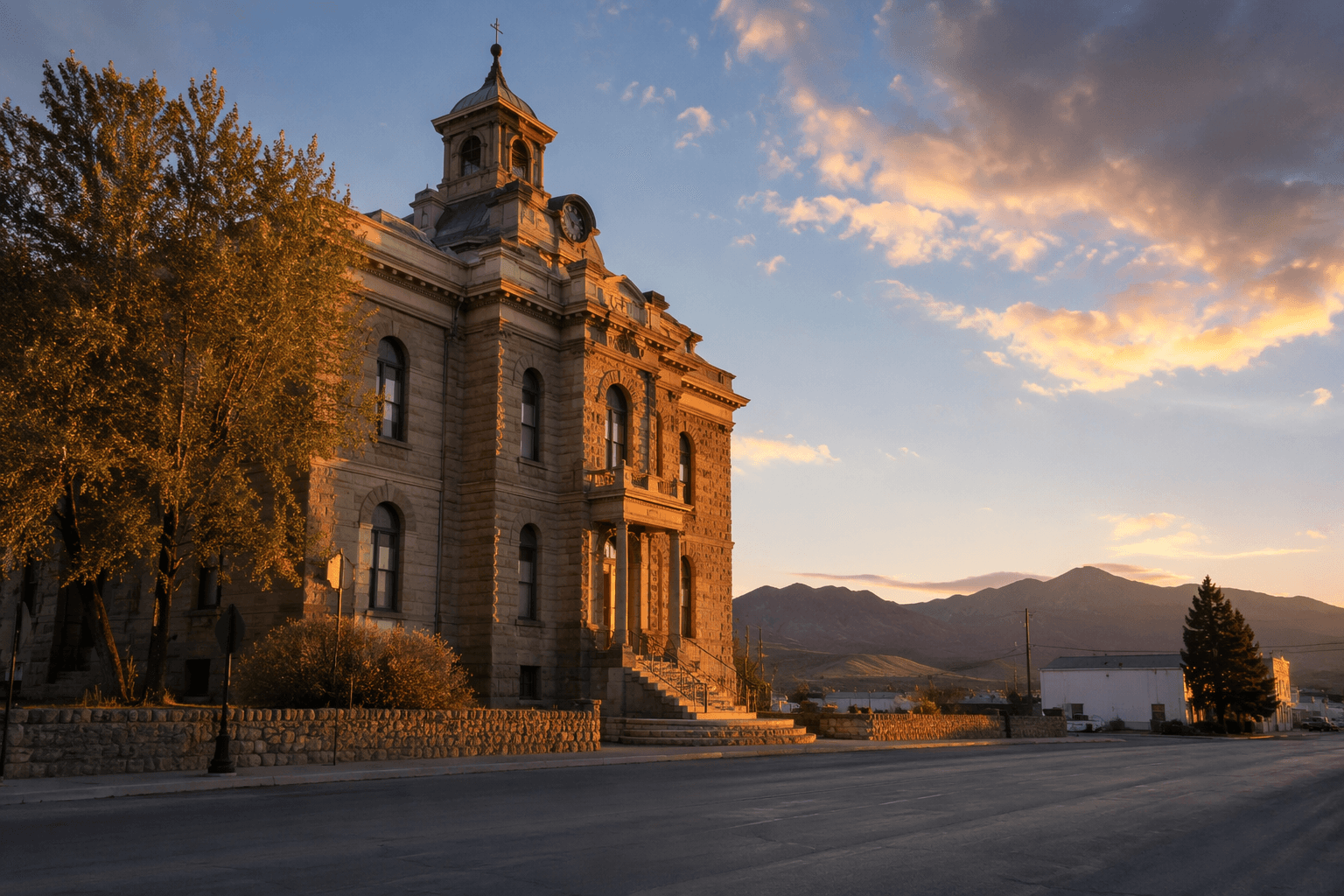
A 1902 photograph in UNLV Special Collections and Archives captures the Nye County courthouse in Belmont only a few years before the seat moved, a reminder that county government was still centered there well after the town’s first boom. That image and the Belmont history materials together show a familiar Nevada pattern: mining towns rise quickly, become seats of government, and then lose that status when ore bodies, rail links and population shift elsewhere.
Friends of the Belmont Courthouse note that the town’s decline has to be understood through the boom-and-bust cycle that shaped so many mining communities in the state. Belmont was not erased by history. It was simply overtaken by a newer strike and the administrative logic that followed it. In Nye County, Tonopah became the place where that logic was made permanent.
The courthouse on McCulloch Street
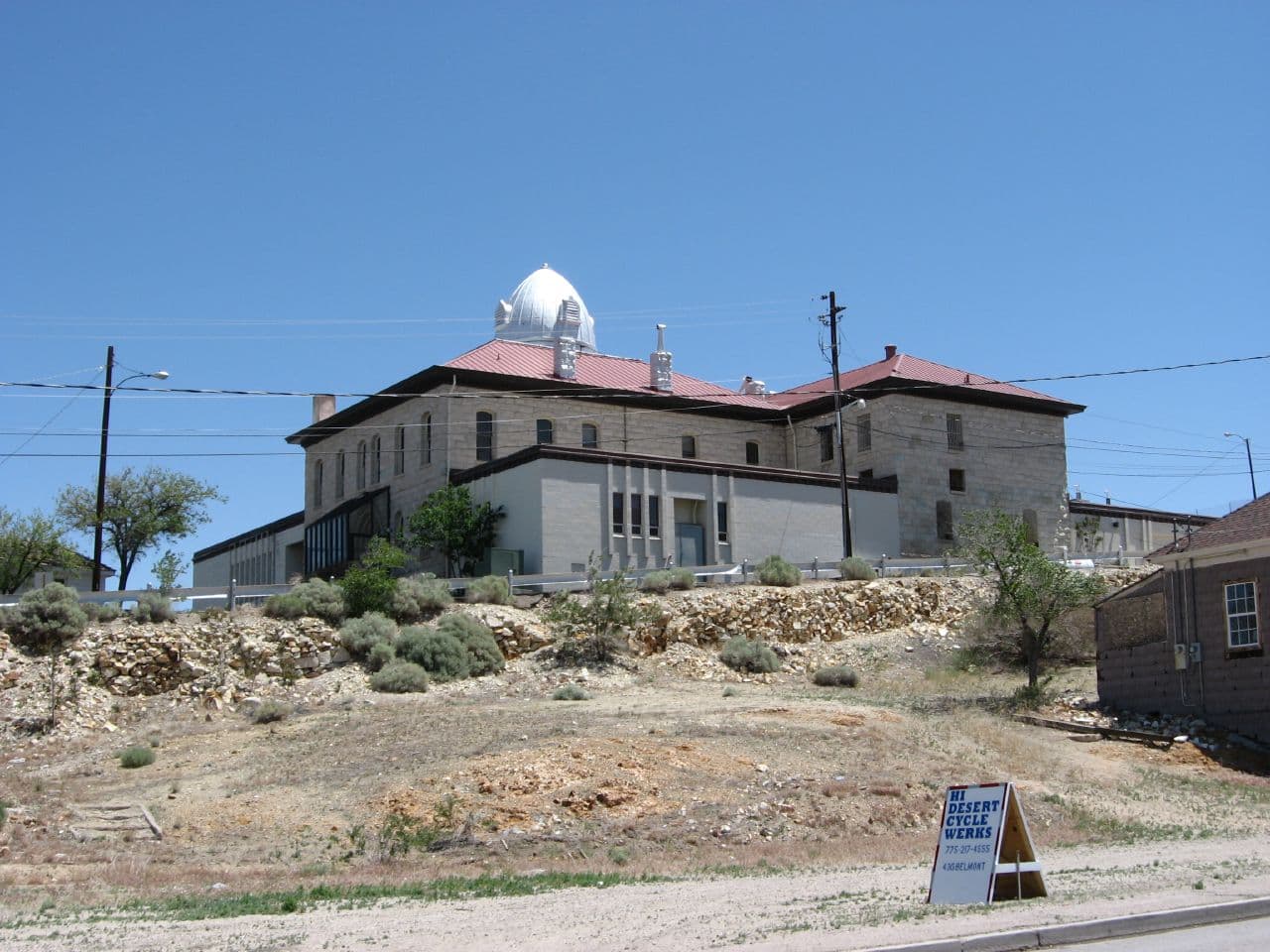
The building that best expresses that change is the Historic Nye County Courthouse on McCulloch Street in Tonopah. The county historic property survey from September 1980 lists the building as property inventory TON-123 and identifies its historic use as governmental office. That classification tells the story plainly: this was not just an old public building, but the place where county government did its work.
Historic Main Street Tonopah describes the courthouse as the largest stone structure built in Tonopah, and says it is significant for its association with government and politics in Tonopah and Nye County during the 20th century mining boom. The old courthouse was erected in 1905 by the Continental Construction Company at a cost of $27,965.00, a figure that helps place the building in the material world of an era when a county seat needed a permanent, durable center.
The county’s own historical marker in Tonopah refers to it simply as the County Court House marker, a stripped-down label that suits the building’s original purpose. This was the place where county identity became visible through hearings, records, property matters and public meetings. In that sense, the courthouse is the clearest physical reminder that Tonopah’s rise was not only about mineral wealth. It was also about where power was housed.
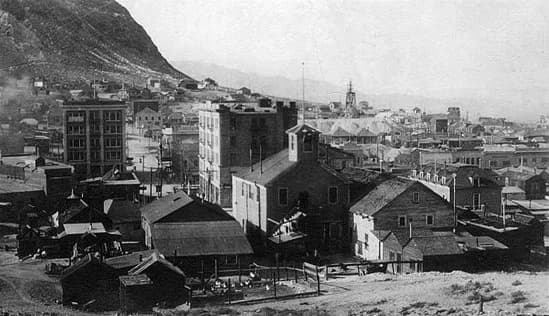
The building’s recognition did not end with local memory. The old Nye County Courthouse was placed on the National Register of Historic Places in 1982, reflecting the broader importance of the site as a landmark of government, politics and mining-era transformation in central Nevada.
Why the legacy still matters in Nye County
For Nye County residents, the Tonopah county-seat move is more than a date in a history book. It explains why the county’s institutional center ended up where it did, and why Tonopah still carries such weight in the county’s civic story. The same forces that drew Jim Butler to the area in 1900, mining wealth, population growth and the need to put government close to where activity was concentrated, pushed county authority westward from Belmont and into Tonopah.
That legacy matters because county-seat decisions shape daily life long after the original boom fades. They determine where records are stored, where legal disputes are heard and where residents go when they need county government. In Nye County, the move to Tonopah concentrated those functions in a mining town that had just risen fast enough to outrank the older center at Belmont.
The courthouse on McCulloch Street still stands as the most direct reminder of that shift. It marks the moment when Nye County’s political center moved with the ore, and when a mining camp became the town that defined the county’s public identity.
This article was produced by Prism’s automated news system from verified source data, official records, and press releases, then run through automated quality and moderation checks before publishing. The system is built and supervised by the people who set the standards it runs under. Read our full AI policy.
Did this article answer your question?