Tonopah church marks 120 years with historical marker unveiling
St. Mark’s P.E. Church marked 120 years in Tonopah with an open house and historical marker unveiling at 210 University Street.
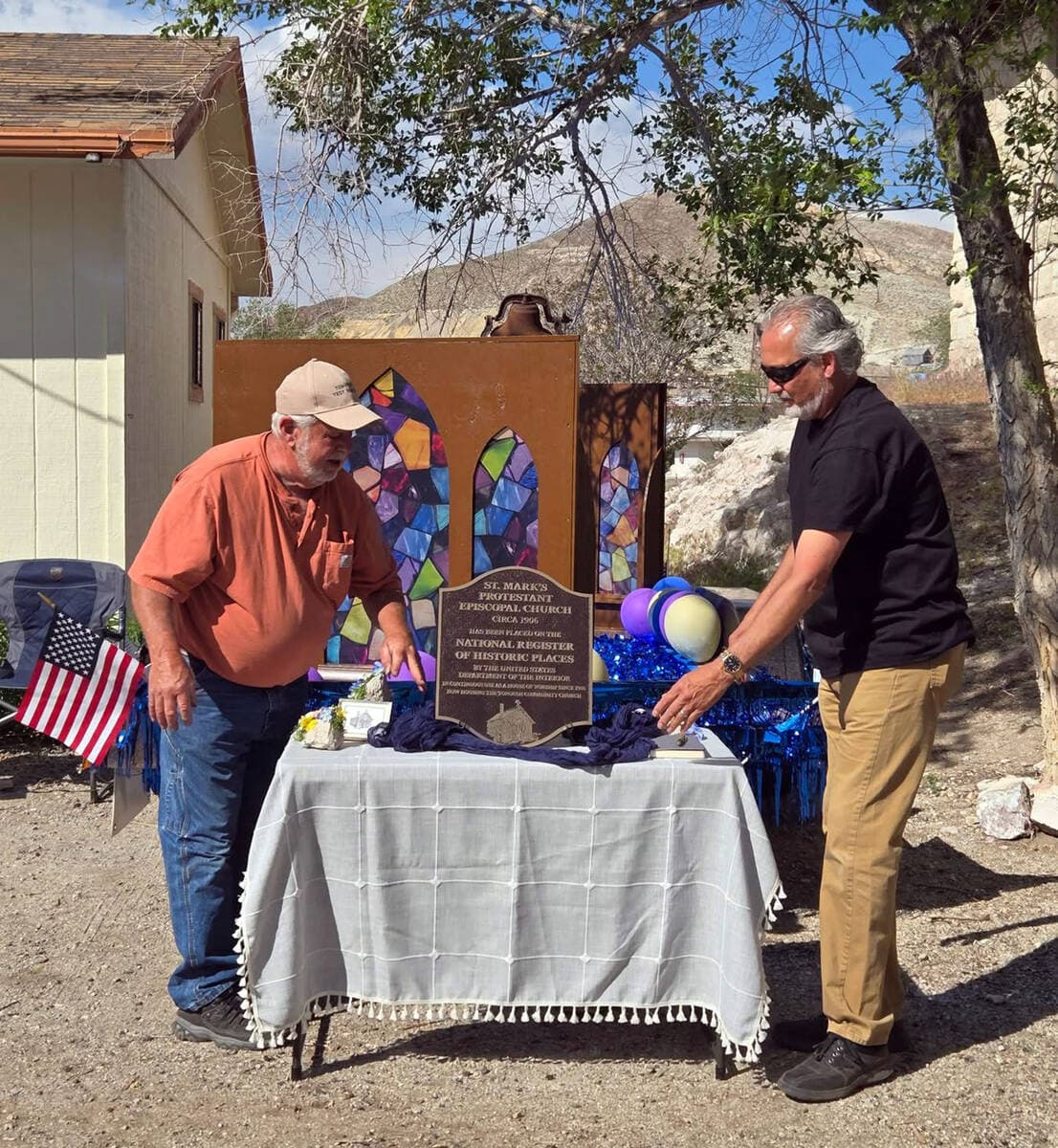
St. Mark’s P.E. Church marked 120 years in Tonopah with a historical marker unveiling at 210 University Street, underscoring how one church has stayed visible through the town’s booms, busts and population shifts. Tonopah Community Church, which owns the historic building, opened it to the public on Saturday, May 23, turning the milestone into a community gathering during Jim Butler Days weekend.
The church’s cornerstone was laid in 1906, and the building was constructed from 1906 to 1907. In the century since, it has remained a place of worship and a steady part of Tonopah’s civic identity, never shuttering its doors, even as the mining town changed around it. The structure was added to the National Register of Historic Places on May 20, 1982, recognizing what local historians describe as one of the town’s best-built stone landmarks.
Its architectural details help explain why it has lasted so long in the public memory. Sources describe St. Mark’s as Gothic Revival, with rock-faced granite ashlar walls and a raised stone basement. Local architect G. B. Lyons and local stonemason E. E. Burdick collaborated on the church, adding to its reputation as one of the finest stone buildings in Tonopah. That craftsmanship gave the building more than a utilitarian role: it became a recognizable piece of the town’s visual history.

The celebration itself was designed to bring that history into the open. Tonopah Community Church promoted the occasion during the Jim Butler Days Parade with a float that featured stained-glass imagery and children, a scene that tied the church’s older story to a town tradition rooted in Memorial Day weekend. Inside the church, residents and visitors could see the stonework, learn about the historic marker and take part in the open house.
Pastor Jim Galli and congregant Kirk Greber helped reveal the marker, while lunch and refreshments were offered to those who attended. The event framed St. Mark’s as more than a preserved building. It showed how a rural Nevada church can still serve as a living institution, carrying Tonopah’s history forward while continuing to meet the needs of the community that built it.
This article was produced by Prism’s automated news system from verified source data, official records, and press releases, then run through automated quality and moderation checks before publishing. The system is built and supervised by the people who set the standards it runs under. Read our full AI policy.
Did this article answer your question?