Tybo ghost town preserves mining ruins and charcoal kilns in Nye County
Tybo is more than a ghost town: its hoist house, headframe and charcoal kilns still map the mining economy that once drew 1,000 people into the Hot Creek Mountains.
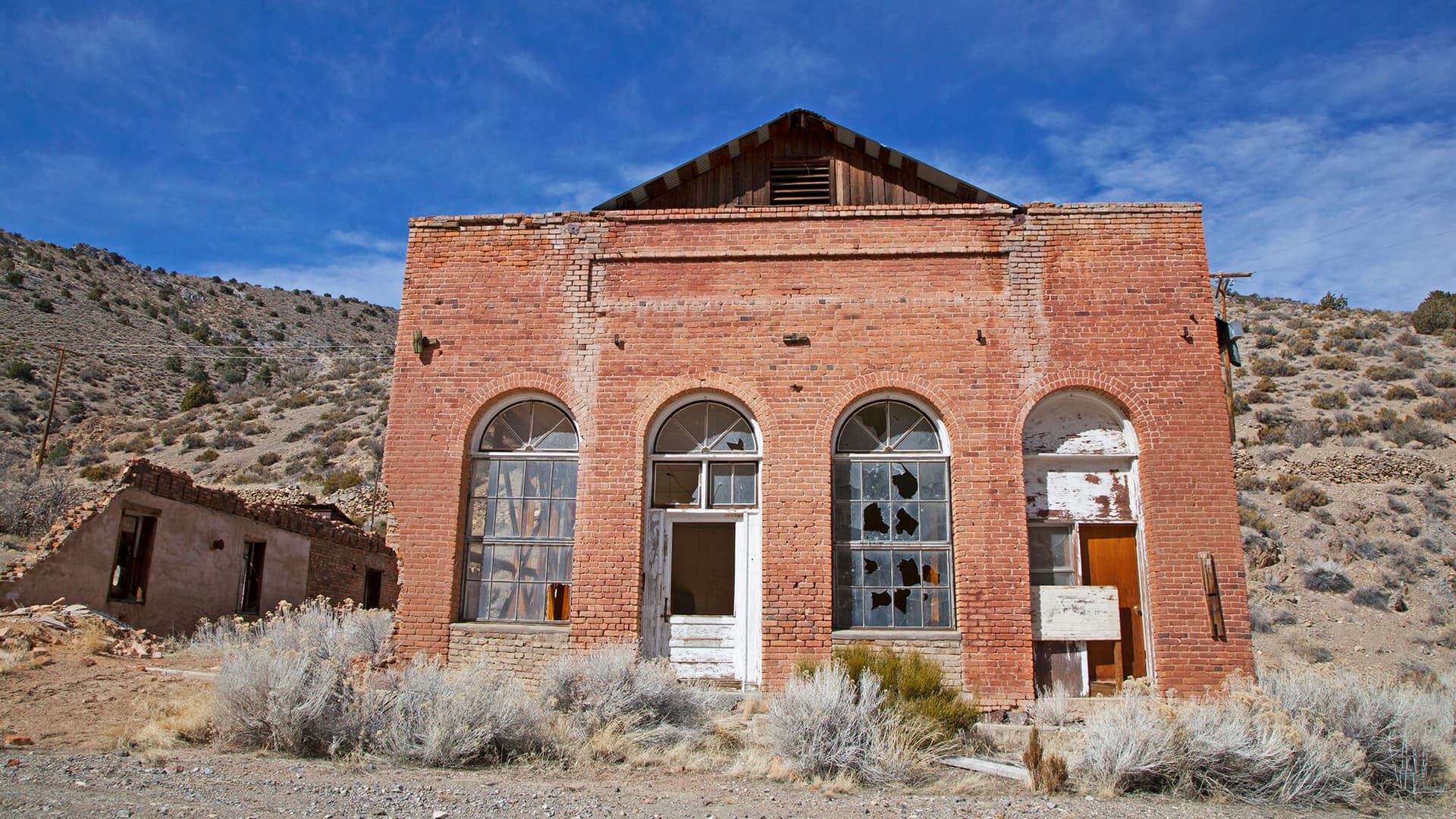
Tybo first took shape in 1870 after ore discoveries in the Hot Creek Mountains drew prospectors into a landscape that had long belonged to the Shoshone. The town’s name is a Shoshone term meaning white man’s district, a phrase that captures the force of mining expansion as it pushed into the region and remade the land around it.
By 1874, Tybo had grown into a town of about 1,000 people. Irish, Cornish and Chinese residents made up much of that population, a reminder that the camp was never a generic outpost but a layered boomtown built by people from different backgrounds who came for the same economic gamble. That mix matters when you stand on the site now: Tybo was not only a place where ore was found, but a place where labor, migration and access to mineral wealth were all concentrated in one remote basin.
The town’s rise also helps explain why the remaining structures matter. Mining settlements in the Nevada desert often disappeared almost completely once the ore played out or the capital moved on. Tybo is different because enough of the industrial footprint remains to show where people lived, where they processed ore and how the camp was organized around extraction.
What still stands on the ground
Tybo’s strongest draw is not a single building but the collection of remnants spread across the site. Visitors can still find the original hoist house and headframe of the Tonopah Consolidated Mining Company, along with Wells Fargo office ruins, miner cabins, milling sites, charcoal kilns and other traces of the camp’s working past. Taken together, those pieces make the area feel less like a ghost-town label and more like an outdoor museum of mining infrastructure.
The charcoal kilns are among the most striking remains. The National Register form for the Tybo Charcoal Kilns describes them as about 30 feet high and 25 feet in diameter, built from native rock and mud with iron straps reinforcing the openings. That kind of detail matters because it shows the fuel side of the mining economy, not just the extraction side. Ore did not move from shaft to wealth on its own. It had to be hauled, processed and fed by fuel, and the kilns show the industrial chain that made the camp possible.
The surviving hoist house and headframe are equally important because they give the site a vertical landmark, the kind that once marked the working center of a mine from far across the desert. The cabin ruins and milling areas fill in the human and mechanical geography around them. In a county with a long mining record, Tybo stands out because so much of that landscape is still legible in place.
Why Tybo works as a real visit, not just a photo stop
Tybo is best approached as a historic site with actual land-management conditions, not as a polished attraction. It remains accessible year-round, but seasonal weather can close it, so road and site conditions matter before any trip. Checking with the BLM Tonopah Field Office before heading out is part of responsible access, especially in a place where weather can change how far a vehicle can safely go and how much of the site can be visited comfortably.
That practical detail matters because Tybo’s value depends on preservation as much as on visibility. The ruins are still standing because they have not been turned into a rebuilt attraction. They are exposed to the same desert conditions that eroded and scattered so many other mining camps across Nye County. The site’s character comes from that tension: it is intact enough to teach, but fragile enough to need care.
Tybo also has the kind of seasonal human presence that often defines remote Nevada places. A few seasonal residents still keep watch over one of the county’s most intact mining landscapes, which helps explain why the site has endured in such recognizable form. That limited presence is not the same as full-time development or formal interpretation, but it does mean Tybo is not abandoned in the casual sense. It is watched, used and still part of a living county land base.
A preservation challenge and a heritage-tourism asset
Tybo’s intact ruins are an underused tourism draw precisely because they are not overbuilt. People who come to Nye County looking for more than a roadside anecdote can see the economic logic of the place in one stop: the mine, the mill, the office, the cabins and the kilns. Few ghost towns preserve that much of the working system in a single setting.
At the same time, that same completeness makes Tybo a preservation challenge. The more structure remains, the more there is to protect from weather, casual damage and the slow wear that comes with being a public-facing historic site in the desert. In practical terms, that means access, stewardship and interpretation have to be balanced carefully. A site that teaches the history of mining by leaving the evidence in place also asks visitors to leave it in place for the next person.
For Nye County, Tybo is valuable because it connects history to land use in a direct way. The town shows what mining once meant economically, how immigrant labor built a boom in an isolated mountain range and how the physical remnants of that economy still shape the county’s historic landscape. Tybo is not just what remains after a town vanished. It is what remains of the system that made the town possible.
This article was produced by Prism’s automated news system from verified source data, official records, and press releases, then run through automated quality and moderation checks before publishing. The system is built and supervised by the people who set the standards it runs under. Read our full AI policy.
Did this article answer your question?