Viva Gold Advances Tonopah Gold Project With New Feasibility Study Plans
Viva Gold's Tonopah project carries a $363.6M after-tax value at today's gold prices, but BLM work plans, a new feasibility study, and multi-year permitting separate the company's pitch from a mine.
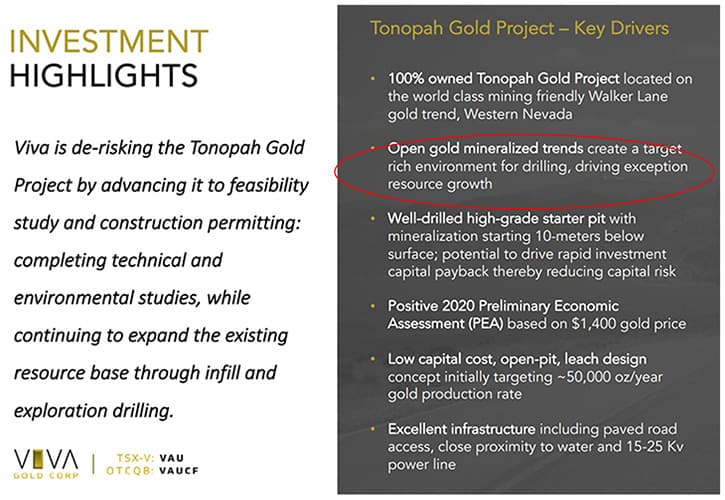
An investor presentation from Viva Gold Corp. published April 1 framed the Tonopah Gold Project as a deposit ready to sprint toward permitting. The company's own regulatory filings and study timelines tell a more layered story.
Viva Gold, trading on the TSX Venture Exchange as VAU, had already moved before the deck appeared. On February 18, CEO James Hesketh announced the company had commenced a comprehensive technical study for the 100%-owned project, located about 20 minutes northeast of the town of Tonopah in the Walker Lane mineral belt. Hesketh, a 40-year mining veteran who has led the development and construction of eight mines worldwide, confirmed the study is expected to reach a pre-feasibility level, with certain components targeted to meet full feasibility standards.
The economics that make the project worth studying are substantial. A PEA prepared by WSP Canada Inc. and Reno-based Kappes, Cassiday Associates and released in July 2025 pegged the after-tax net present value at $111.6 million at a gold price of $2,400 per ounce, rising to $363.6 million at $3,200 per ounce. The deposit covers 444 unpatented lode mining claims across 8,762 acres.
What stands between those numbers and a producing mine is considerable. In January, Viva submitted Work Plan 44 to the Bureau of Land Management, seeking approval for up to 23 new drill locations as part of a 2,500-metre reverse-circulation campaign designed to convert inferred ounces to measured-and-indicated categories required for the pre-feasibility workflow. Existing environmental authorizations already cover 30.4 hectares of surface disturbance, and a quarterly groundwater sampling program is active at the site. Water access is less of an unknown than at many desert Nevada projects: Tonopah Public Utility's pipeline crosses the company's mining claims, making commercial purchase a viable early-phase option without an independent well. Grid power is also described as near the site.

Still, the April presentation's stated goals of rapidly initiating permitting, accelerating mine development, and growing the resource through drilling compress into slides what Nevada permitting actually involves: BLM environmental reviews, state water and reclamation filings, and potential Nye County land-use coordination that collectively unfold over years. A pre-feasibility study alone typically requires twelve months or more to complete.
For Tonopah, the near-term evidence of the project's progress looks like drilling contractors, groundwater consultants, and BLM reviewers, not sustained mine employment. Equipment, fuel, and lodging from a multi-year study program represent a real if modest economic footprint. Whether a construction decision follows the pre-feasibility study depends on results, commodity prices, and project financing that Viva has not yet secured. The company is making the right technical moves; the gap between investor presentation and operating mine in Nye County remains measured in regulatory milestones, not months.
This article was produced by Prism’s automated news system from verified source data, official records, and press releases, then run through automated quality and moderation checks before publishing. The system is built and supervised by the people who set the standards it runs under. Read our full AI policy.
Did this article answer your question?