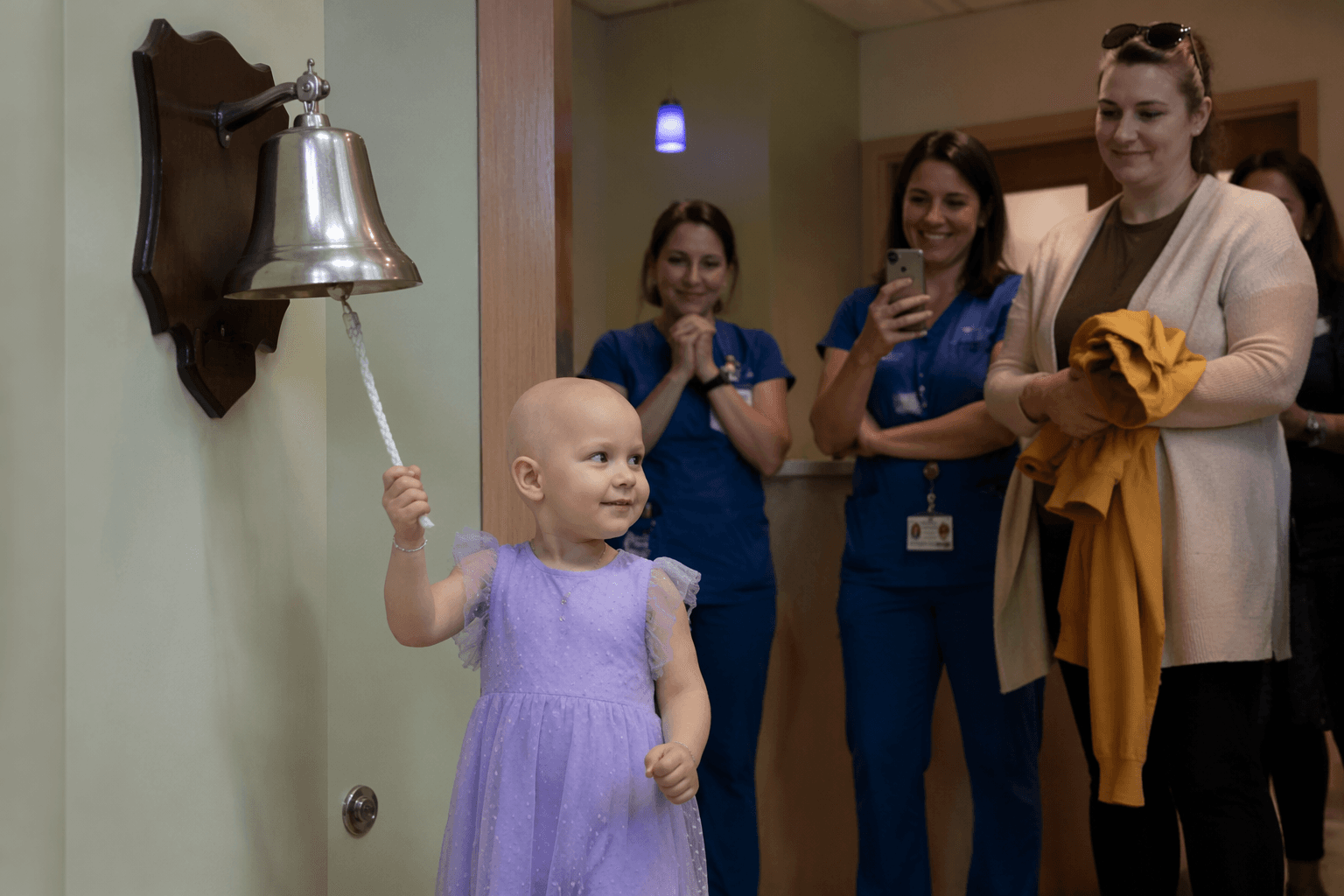
3-year-old Everleigh Starr Bylow rings bell after beating cancer
A 3-year-old from Ogdensburg rang the cancer bell at Upstate Cancer Center after a year of treatment, ending a stage four neuroblastoma fight.

Everleigh Starr Bylow, a 3-year-old from Ogdensburg, rang the cancer bell at Upstate Cancer Center in Syracuse after a year of treatment for neuroblastoma. Doctors can no longer find any cancer.
Bylow was diagnosed on April 28, 2025, after limping and pain led to the discovery of stage four neuroblastoma. Her months of care brought repeated trips from Ogdensburg to Syracuse for chemotherapy and immunotherapy, and her recovery also included learning how to walk again.
The July 2 bell-ringing drew more than a dozen relatives, along with members of the media from Syracuse and Watertown. Her father said the family is extremely proud of her, and her grandmother said Everleigh has been a strong little 3-year-old who dances when she gets home.
SUNY Upstate calls the Upstate Cancer Center the region’s most comprehensive cancer care resource, and the pediatric cancer program is the sole provider of care to infants, children, adolescents and young adults with cancer and blood disorders in Central New York. The center is at 750 East Adams Street in Syracuse.
For families such as the Bylows, that care comes with a burden that extends beyond the treatment room. The drives between Ogdensburg and Syracuse mean long days on the road, repeated appointments and the emotional strain of watching a child move through chemotherapy, immunotherapy and recovery.
The National Cancer Institute defines neuroblastoma as a cancer of immature nerve cells that most often affects very young children. It usually begins in the adrenal glands, but it can also form in the neck, chest, abdomen or spine, and treatment depends on risk category. Options can include surgery, chemotherapy, radiation therapy, stem cell rescue or transplant, targeted therapy and, in some cases, immunotherapy. Immunotherapy has improved survival for children newly diagnosed with the disease.
This article was produced by Prism’s automated news system from verified source data, official records, and press releases, then run through automated quality and moderation checks before publishing. The system is built and supervised by the people who set the standards it runs under. Read our full AI policy.
Did this article answer your question?