New York settles Syracuse landlord lead hazard case, children exposed
Seven Syracuse children had elevated blood lead levels in homes tied to father-son landlords, pushing New York to settle a long-running lead hazard case.

Seven Syracuse children had elevated blood lead levels in apartments owned by Brian A. Murphy and Harry Murphy, a case that again puts the city’s older housing stock at the center of a renter-protection fight.
Attorney General Letitia James announced the settlement on April 20, after her office said it had investigated the father-son landlords since September 2023. The state said the Murphys owned and managed dozens of rental properties built before 1978, and that at least 23 of their properties were cited between 2017 and 2025 for deteriorating paint and other lead hazards, producing hundreds of violations.
The agreement requires the Murphys to create a tenant relief fund, identify and eliminate lead hazards at properties with a history of violations, bring those homes into compliance with housing and lead-safety laws, and submit to strict oversight. Secondary reporting said they must put $35,000 into the tenant relief fund and spend at least $80,000 on inspections and remediation, with an additional $80,000 penalty if they fail to comply.
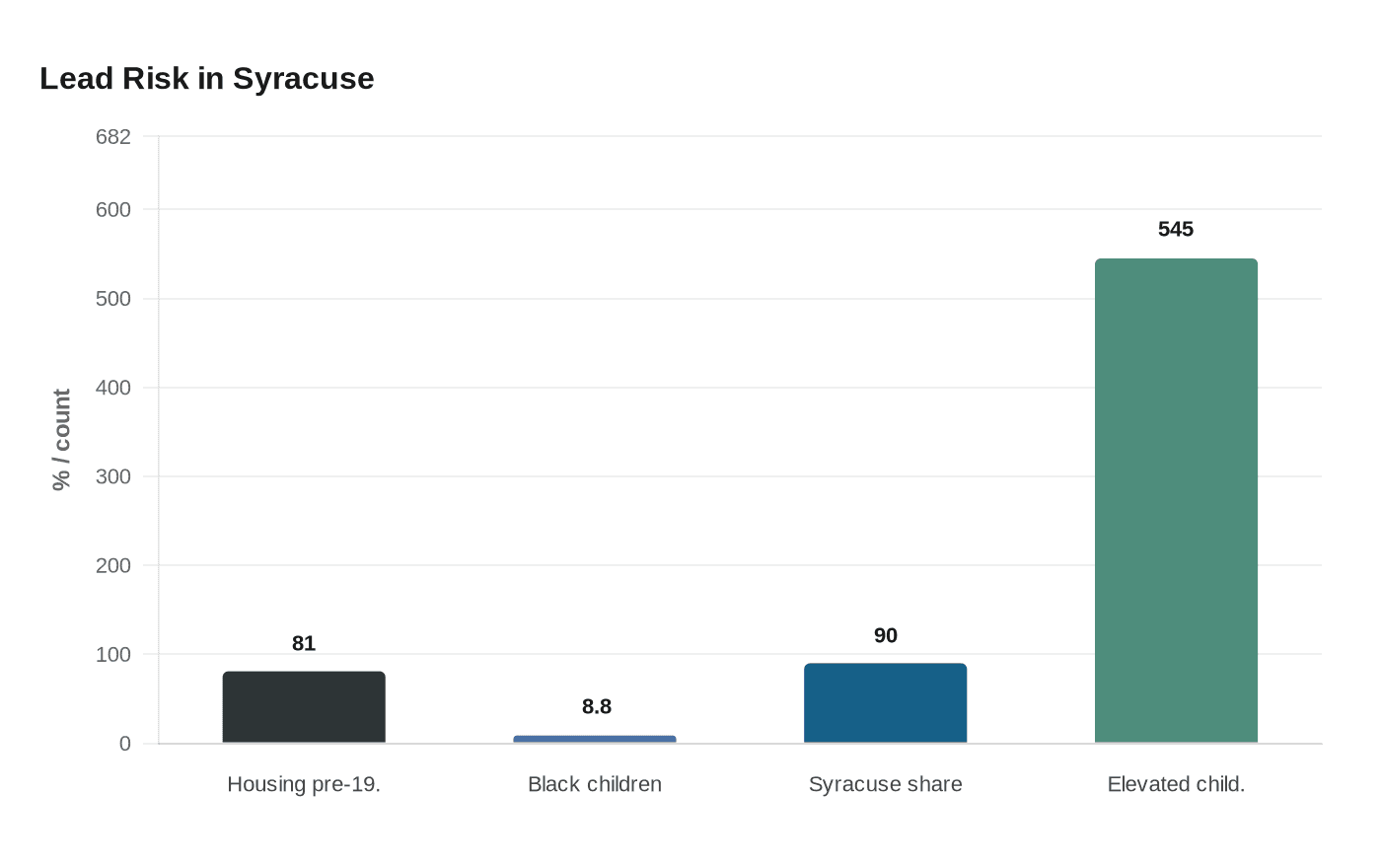
For Syracuse families, the case lands in a city where lead risk remains tied to age, poverty and race. The attorney general’s office said 81 percent of Syracuse housing stock was built before New York banned lead-based paint in 1970. In 2024, 545 children in Onondaga County had elevated blood lead levels, and 90 percent lived in Syracuse. The state also said about 8.8 percent of Black children tested in Onondaga County had elevated blood lead levels, compared with less than 2 percent of white children tested.
Tenants in older Syracuse homes should pay close attention to peeling or chipping paint, especially around windows, doors and porches, where friction can create lead dust. Deteriorating paint, bare soil near the drip line and dust tracked onto floors are warning signs that should be photographed, dated and reported. The city’s lead rules presume lead paint is present in residential buildings built before 1978, and owners are required to use lead-safe work practices, clear the hazard and pass final inspection once violations are found.
If landlords ignore the problem, residents can turn to the City of Syracuse Lead Hazard Control Office, the Onondaga County Health Department’s Lead Poisoning Prevention Program and the New York State Attorney General’s housing complaint process. The county health department also tracks local lead data, a reminder that this is not a finished chapter but an active public-health problem in Syracuse neighborhoods.
The Murphys’ case follows a 2024 Syracuse lead settlement-in-principle involving another landlord and at least 16 poisoned children, including 11 children of color. Together, the cases show how enforcement is still being used to push repairs after children are exposed, when the larger goal remains prevention before the damage is done.
This article was produced by Prism’s automated news system from verified source data, official records, and press releases, then run through automated quality and moderation checks before publishing. The system is built and supervised by the people who set the standards it runs under. Read our full AI policy.
Did this article answer your question?