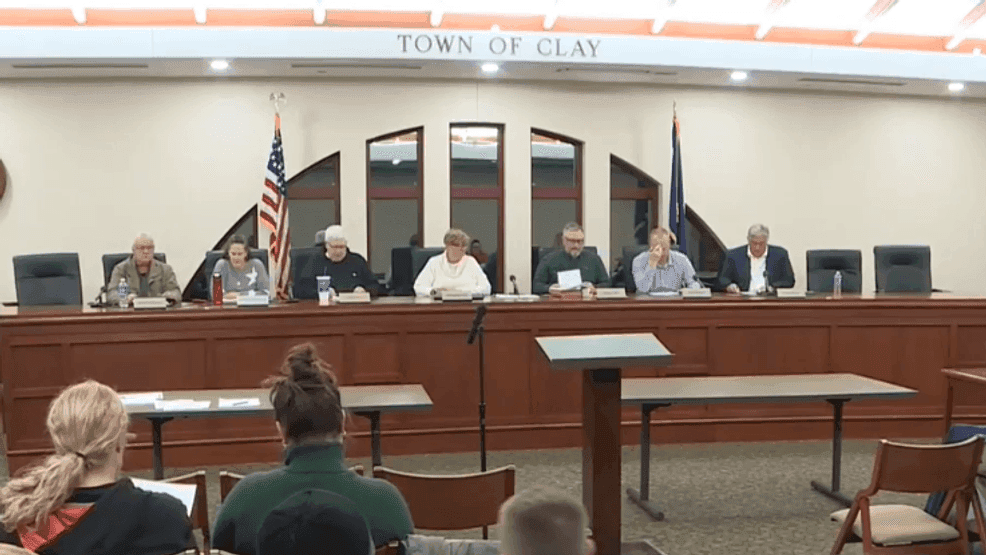
Onondaga County responders train for active shooter and bomb threats
Onondaga County responders are drilling for the kind of multi-site attack that can overwhelm local agencies in minutes. The exercise also spotlights bomb-threat readiness, funding needs and the pressure on schools and venues.
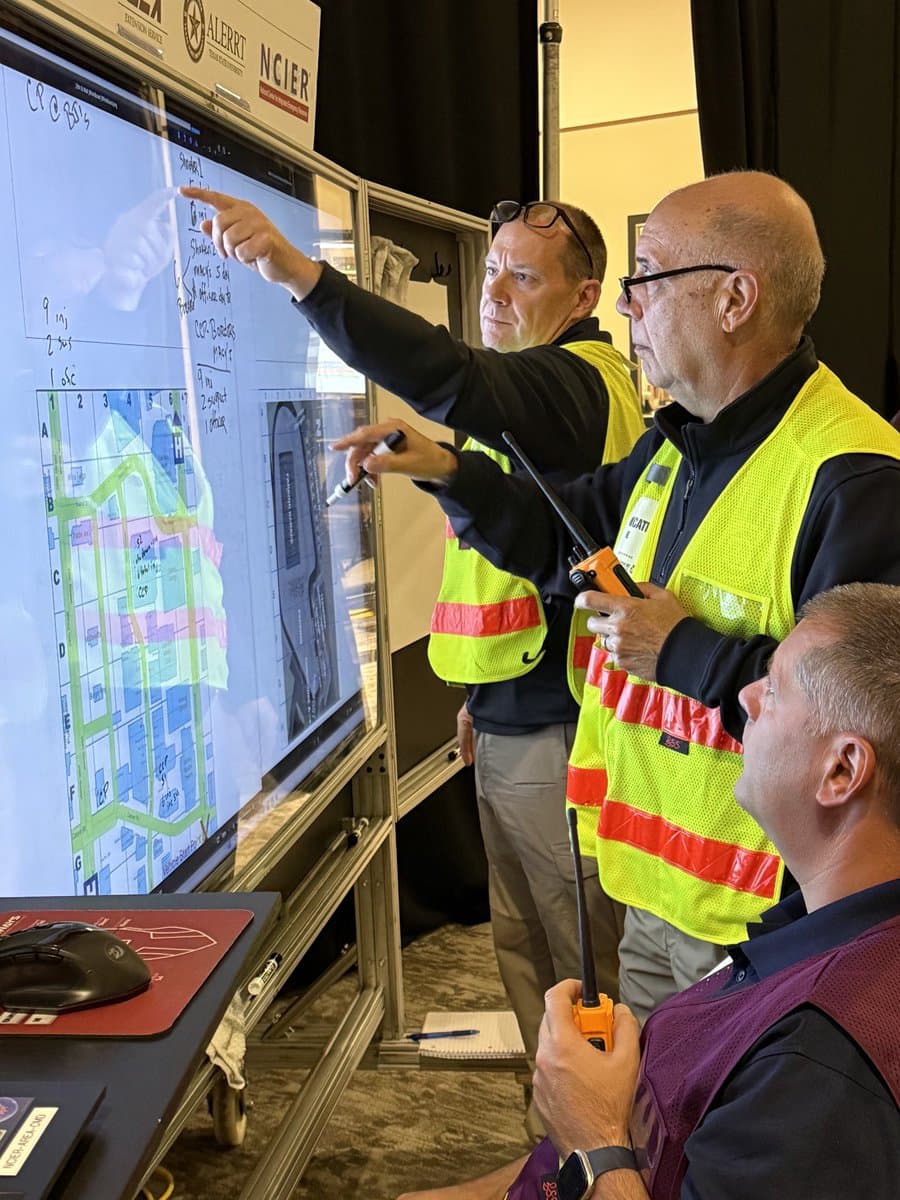
If a shooter and a bomb threat hit more than one place in Onondaga County at once, the difference between confusion and control would come down to communication, speed and coordination. That is the practical test behind ASIM 353, a three-day exercise in which responders worked through multi-site active-shooter scenarios, improvised explosive device threats and coordinated response tactics.
The drill matters because it reflects the kind of incident that strains every layer of local public safety at the same time. Police have to identify the threat, fire and EMS have to stage without getting in the way, bomb technicians have to decide whether a device threat is real, and county emergency managers have to keep agencies moving on the same map. In a county that includes Syracuse, large public venues, schools, hospitals and busy recreation sites, the question is not whether a response arrives. It is whether the response arrives in a way that keeps the next site from becoming another scene.
What the ASIM 353 exercise was built to test
Onondaga County Emergency Management shared details of the ASIM 353 training program as a multi-day event built around active-shooter response and explosive-device threats. The focus on more than one location is important, because a single building lockdown and a multi-site attack demand very different decisions from law enforcement and emergency medical crews.
The value of a drill like this is in the handoffs. Officers need to move from one scene to another without losing command structure, dispatchers need to keep up with changing locations, and specialty teams need to know when to enter and when to wait. For hospitals and schools, the impact is direct: staff have to understand how lockdowns, access control and evacuation routes fit into a countywide response rather than a single-facility plan.
Why the county keeps returning to active-shooter training
Onondaga County has spent years treating active-shooter readiness as a routine part of public safety. A countywide exercise at the War Memorial on November 19, 2019 brought together the Syracuse Police Department, the Onondaga County Sheriff’s Office, the Syracuse Fire Department and other agencies for a large-scale drill. County Executive Ryan McMahon announced that exercise as part of the county’s broader preparedness work.

Sheriff Eugene Conway has said his department is constantly training for active-shooter worst-case scenarios. He has also encouraged deputies to learn the facilities, exits, expansions and staff contacts in the places they patrol. That detail matters because the first minutes of an attack are shaped by local geography as much as by tactics. A deputy who knows the back exits of a school, the service corridors of a hospital or the access points at a major venue can make faster decisions than one arriving cold.
The county’s own training history shows how much this work depends on repetition. These drills are not one-off spectacles. They are part of the county’s effort to keep city and county agencies operating from the same playbook when the scene is changing by the minute.
How the 2025 Onondaga Park pool shooting changed the conversation
The urgency sharpened after the fatal shooting at Onondaga Park pool on June 25, 2025, when 15-year-old Adhon Thomas was killed. Syracuse later said active-shooter training would be added to lifeguard training after lifeguards helped provide CPR and life-saving techniques at the scene.
That change shows how public safety training is no longer limited to police, fire and EMS. It now reaches the people who are first to see trouble at a pool, school, rec center or stadium gate. Lifeguards, teachers, nurses and venue staff are often the first layer of response, and their actions can buy the time that police and medics need to arrive.
For Onondaga County families, that means the lesson from one tragedy extends far beyond the pool itself. The same expectation now touches summer recreation sites, school campuses, hospital entrances and downtown gathering places. If a threat unfolds quickly, the county’s plan depends on whether ordinary staff know how to clear people, preserve access for responders and keep communication lines open.
What still depends on funding and specialist teams
The county’s readiness also depends on money. In April 2026, Syracuse and Onondaga County received part of a $10.5 million State Homeland Security Program funding package, and that money included support for bomb squads and tactical teams. That funding matters because the ASIM 353 exercise is not only about armed offenders. It is also about the explosive-device side of an incident, where specialized gear, trained technicians and coordinated scene control are essential.
That financial context is important for local accountability. Bomb squads and tactical teams are costly to staff, equip and sustain, and their work becomes even more central when a threat spans more than one site. If county officials want faster and cleaner response times, those teams need reliable support, not just one-time drills.
The Onondaga County Department of Emergency Management is the backbone of much of this work. It has historically coordinated training for volunteer fire service agencies and EMS providers, and prior reporting described the department as having a staff of seven. That is a small office for a countywide mission, especially when its job is to help align police, fire, EMS and specialty units across Syracuse and Onondaga County.
What schools, hospitals and major venues should take from the drill
The most useful part of a training like ASIM 353 is that it forces institutions to see themselves inside the response plan. Schools need to know how lockdowns and reunification would work if the threat were on campus or nearby. Hospitals need to understand how to secure entrances, reroute arrivals and protect emergency departments if the scene shifts. Major venues, including places like the War Memorial, need to think through crowd movement, access for first responders and how quickly a normal event can become a public-safety emergency.
That is why the county’s training history matters beyond the drill itself. The War Memorial exercise, the sheriff’s ongoing worst-case planning, the changes at lifeguard training after the Onondaga Park pool shooting and the Homeland Security funding for bomb squads and tactical teams all point to the same conclusion: Onondaga County is building a response system meant for fast-moving, overlapping threats. The remaining test is whether those layers hold when the next alarm is real.
This article was produced by Prism’s automated news system from verified source data, official records, and press releases, then run through automated quality and moderation checks before publishing. The system is built and supervised by the people who set the standards it runs under. Read our full AI policy.
Did this article answer your question?