Skä•noñh Center spotlights Onondaga Nation history in Liverpool
Liverpool’s Skä•noñh Center gives Onondaga County families, teachers, and civic groups a practical baseline for Haudenosaunee history, treaties, and local context.
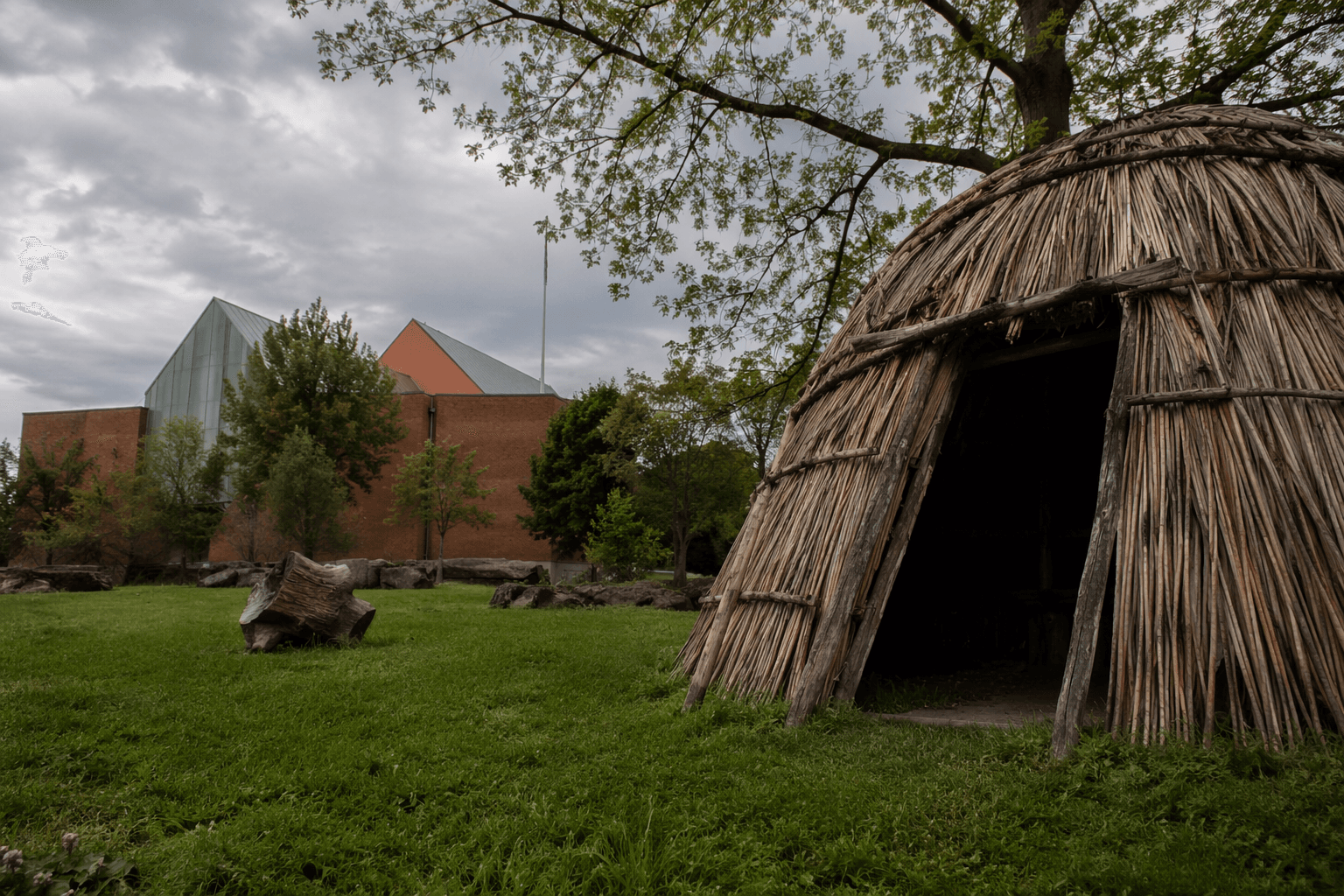
The easiest place in Onondaga County to build a working understanding of Haudenosaunee history is the Skä•noñh Center in Liverpool, where the story of central New York is told from the perspective of the Onondaga Nation. For residents who want more than a general county-history overview, it offers a clear, local starting point on sovereignty, diplomacy, and the living history that still shapes this region.
Why this Liverpool museum matters
The center is operated by the Onondaga Historical Association, the Syracuse-based organization founded in 1863 to preserve and share the history of Onondaga County and Central New York. Its approach is not a broad, generic Iroquois survey. The center presents Haudenosaunee history and values from the perspective of the Onondaga Nation, which matters because the Onondagas are described there as the keepers of the Central Fire and the spiritual and political center of the Haudenosaunee.
That framing corrects one of the most common local misunderstandings: treating Indigenous history as a distant preface to county history instead of part of the county’s present-day civic landscape. In practice, the Skä•noñh Center gives teachers, parents, students, and longtime residents a common baseline for conversations about who has shaped this region, how the land and its waterways became sites of treaty-making, and why those facts still matter in classrooms and public life.
The center opened in November 2015, and its grand opening was held November 20 and 21 of that year, coinciding with Native American Heritage Month. That timing fits the institution’s purpose: it is designed not as a seasonal attraction, but as a year-round place to understand the history that sits just down the road from everyday life in Liverpool and Syracuse.
What visitors see inside
The visit begins with the Welcome exhibit, where Skä•noñh is presented as a greeting meaning peace and wellness. A short film and an interactive touch screen help set the tone before visitors move into the permanent exhibits, making the first stop useful for families and school groups that need a simple entry point into more complex history.
Upstairs, the permanent Great Law of Peace exhibit centers the stories of the Peacemaker, Jikonsaseh, Hiawatha, Tadodaho, wampum, and the Tree of Peace. Those names are not decorative labels. They are the core of a political and spiritual history that explains how the Haudenosaunee understood unity, leadership, and the responsibilities that came with peace.
Another permanent section, Contact, focuses on European-Native American contact with an emphasis on the Haudenosaunee experience. It highlights the Two Row Wampum and the Canandaigua treaties, two touchpoints that connect the museum directly to diplomacy, sovereignty, and the legal history of what is now Onondaga County. For local readers, that makes the center especially valuable: it does not isolate Native history from the region’s modern institutions, but shows how treaty history and civic history overlap.
Who should make time for it
This is the kind of place that works for several different audiences at once. Families can use it to turn a weekend stop into a real lesson about the land they live on. Teachers can use it to ground classroom discussions in local examples instead of abstract national summaries. New residents can use it to understand why Haudenosaunee history is not a side note in Central New York, but one of its defining stories.
It is also a useful stop for anyone preparing for civic conversations about land, memory, or representation. The center’s perspective helps explain why terms like the Great Law of Peace, the Two Row Wampum, and the Canandaigua treaties appear so often in discussions of local history and why those subjects deserve accurate treatment in schools, public meetings, and museum programming.
The Skä•noñh Center also sits inside a broader network of local institutions. Its academic collaborative includes the Onondaga Nation, Syracuse University, SUNY College of Environmental Science and Forestry, Onondaga Community College, Le Moyne College, and Empire State College. That partnership matters because it shows the center is anchored in a wide local educational and cultural ecosystem, not in a single organization working alone.
How to plan a visit
The center is at 6680 Onondaga Lake Parkway in Liverpool, New York 13088, within Onondaga Lake Park. It is open year-round Wednesday through Friday from 10 a.m. to 4 p.m. and Saturday from 11 a.m. to 4 p.m.
- Children 5 and under: free
- Youth 6 to 17: $5
- Adults 18 to 61: $7
- Seniors 62+, college students, military, and veterans: $5
Admission is listed as:
That makes the museum one of the more practical low-cost options in the county for a family outing that also carries educational value. It is also easy to combine with the larger Liverpool museum cluster in Onondaga Lake Park, which includes the St. Marie Among the Iroquois Mission Site Museum and a gift gallery.
A place for bigger public-history conversations
The center has already been used for more than its core permanent exhibits. In 2025, it hosted the Smithsonian-adapted Voices and Votes: Democracy in America traveling exhibit from April 18 to May 30, 2025. That selection signaled that the Skä•noñh Center is viewed locally as a place for serious public-history conversations, not just a stop for passive viewing.
For Onondaga County, that is the real value of the Liverpool site. It gives residents a close-to-home way to learn the names, treaties, and ideas that shape the region, while offering educators and civic leaders a reliable baseline for discussion. In a county where history, sovereignty, and public memory are still active issues, the Skä•noñh Center is one of the clearest places to start.
This article was produced by Prism’s automated news system from verified source data, official records, and press releases, then run through automated quality and moderation checks before publishing. The system is built and supervised by the people who set the standards it runs under. Read our full AI policy.
Did this article answer your question?