Newburgh highlights water system upgrades, invites residents to open house
Newburgh said it has rebuilt pump stations, replaced lead lines and secured funding for a $15 million filtration upgrade, with an open house set for May 9.
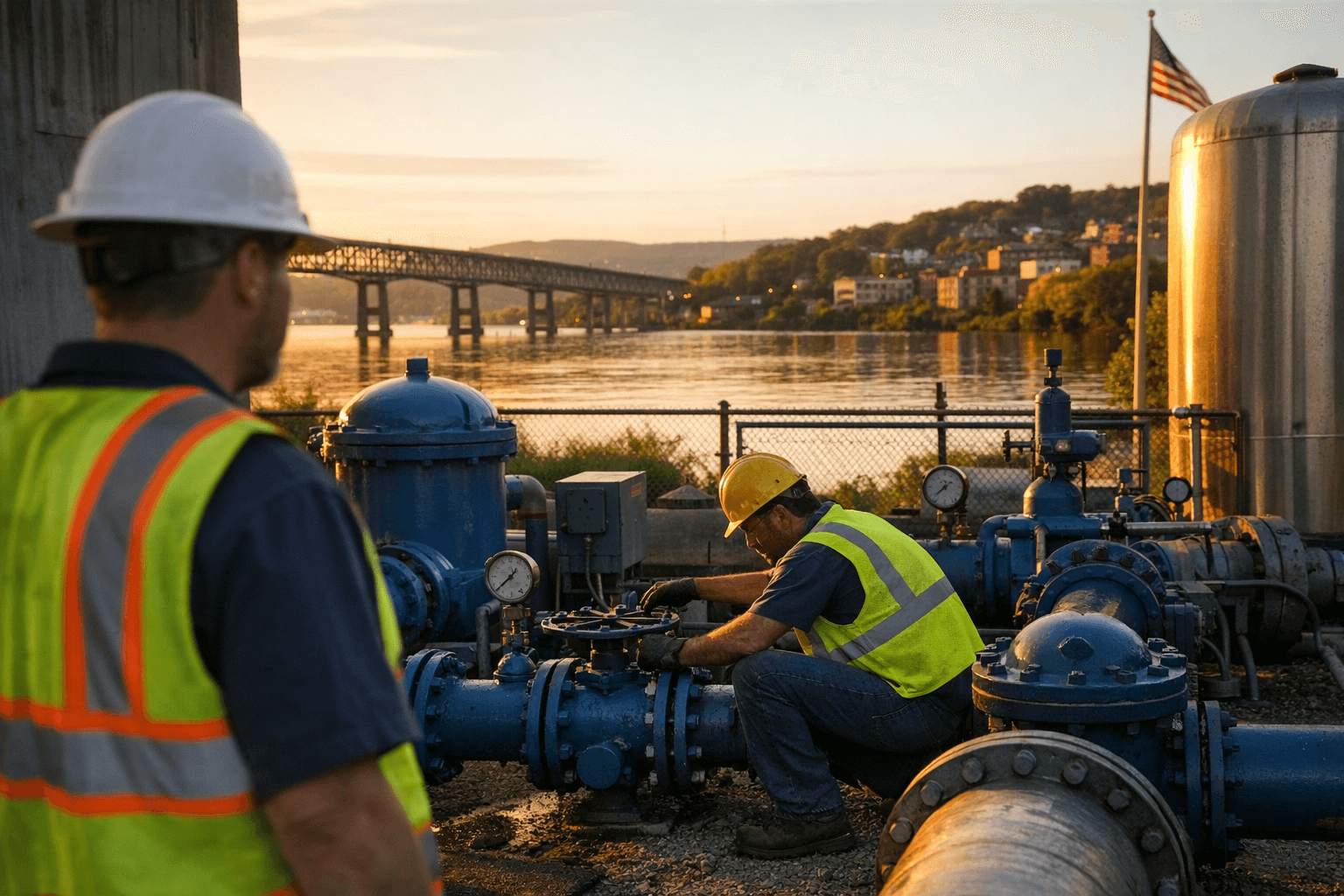
Newburgh said it has spent the past decade rebuilding the pieces of its water system that most residents never see, from pump stations and hydrants to lead service lines and reservoir spillways, while setting up a $15 million filtration plant upgrade expected to begin later in 2026.
The city marked Drinking Water Week with an announcement on April 24 that it will host an open house on Saturday, May 9, from 12 p.m. to 4 p.m. at 493 Little Britain Road. The event is designed to let residents tour key drinking-water facilities and meet the workers who keep the system running for more than 28,000 people in the city and more than 38,000 customers each day, according to the city’s water report.
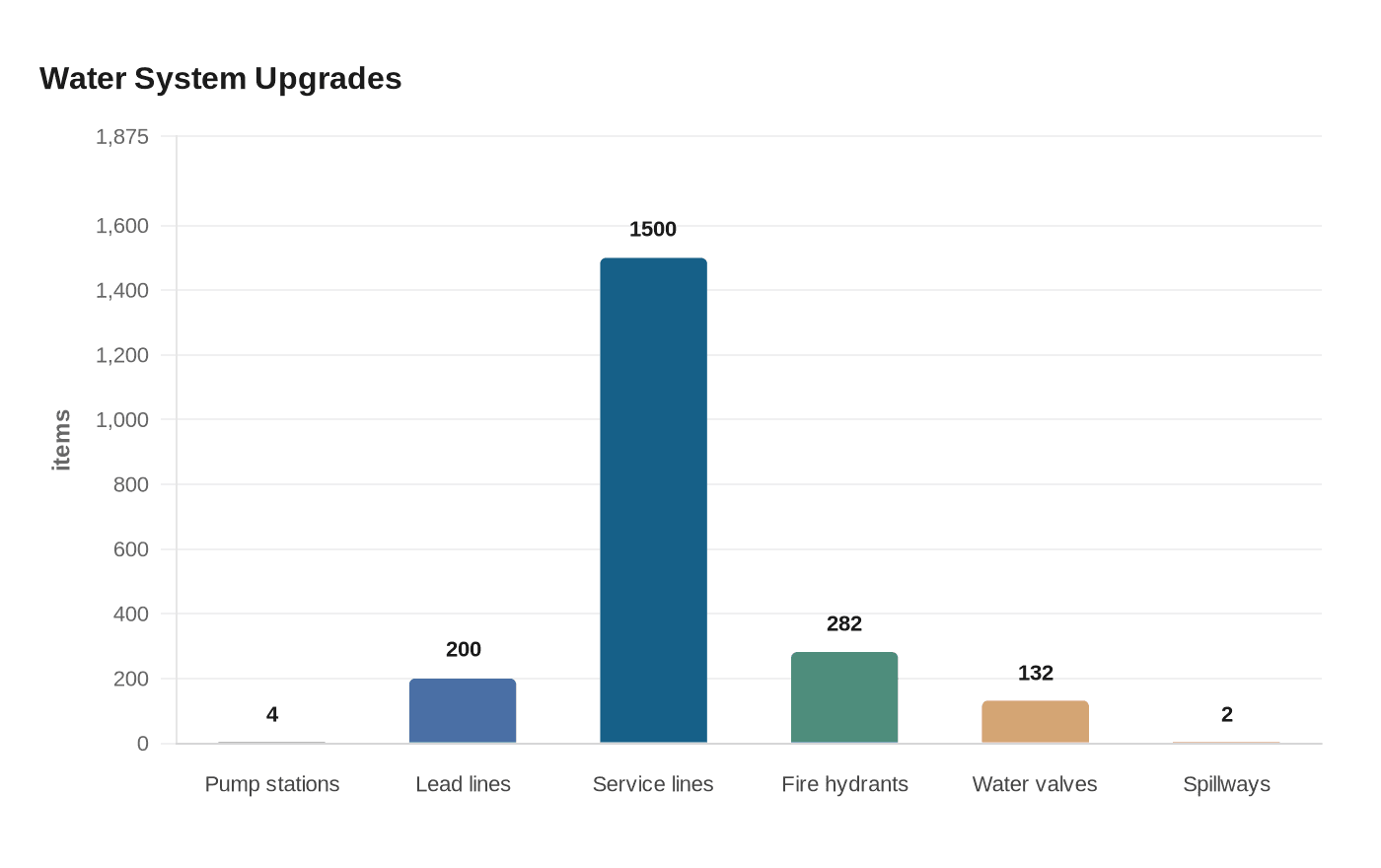
City officials say the recent work is extensive. Over the past decade, Newburgh has remodeled all four drinking-water pump stations, replaced more than 200 lead lines, inventoried more than 1,500 water service lines, installed 282 fire hydrants and added 132 new water main valves ranging from four inches to 20 inches. The city also says staff designed and installed new mains to improve water quality and fire flow, reconstructed two spillways on reservoir dams and renovated a water supply intake gatehouse built in 1909.
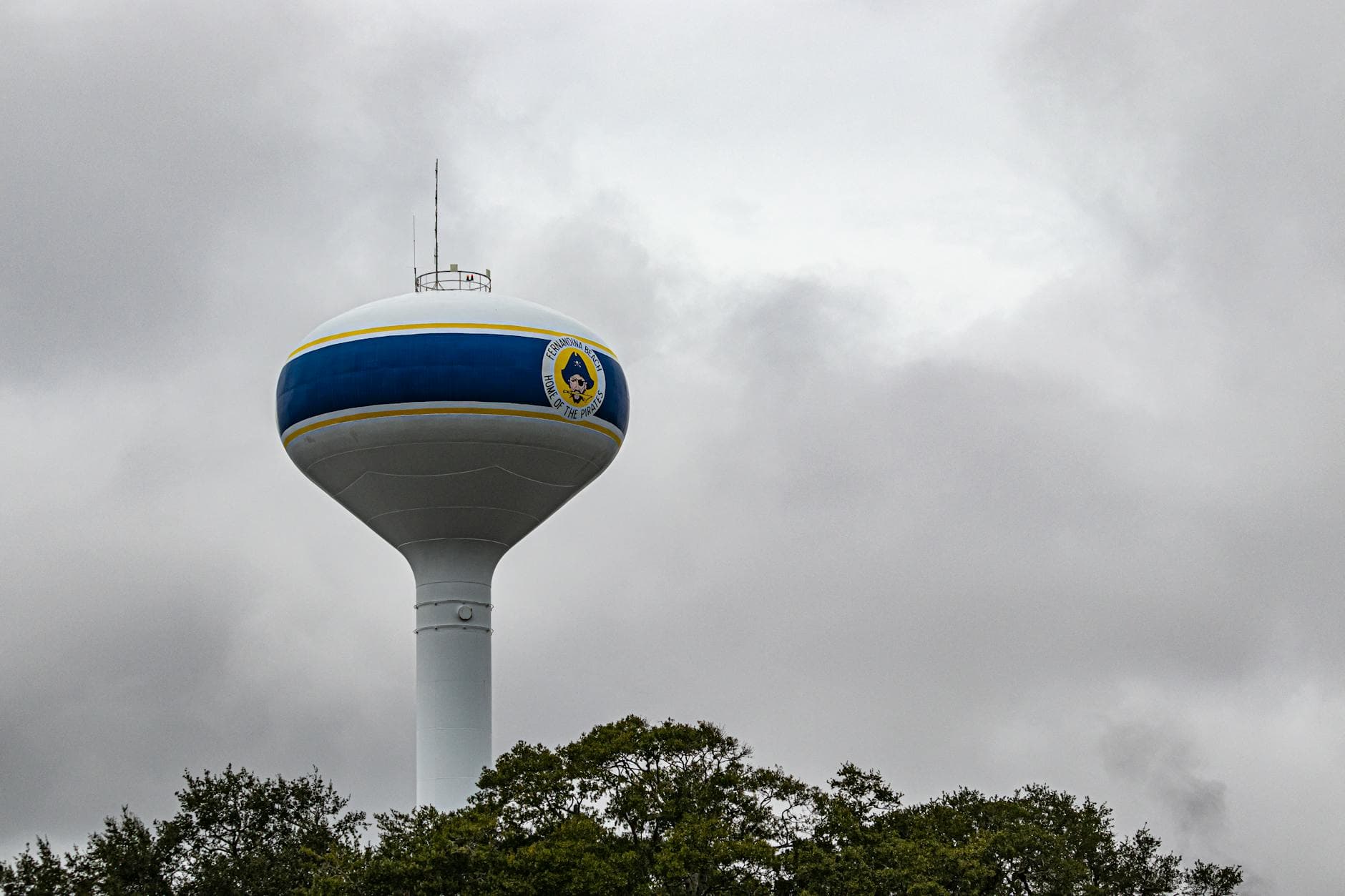
City Manager and Public Works Commissioner Jason Morris said the system’s assets are often hidden from view, but remain vital to public health, fire protection and economic growth. Water Superintendent Wayne Vradenburgh heads the Water Division, which the city says is tasked with providing water of the highest possible quality.
The system’s scale helps explain the pressure on city leaders to get it right. Newburgh says its filtration plant can treat about 8.85 million gallons a day. In 2023, the city produced about 1.2 billion gallons of drinking water, averaging 3.293 million gallons a day with a peak of 4.106 million gallons on a single day.
The upgrade push comes after years of scrutiny over the city’s water supply. State records show Brown’s Pond was used as an alternate source in early May 2016, followed by a connection to the New York City Catskill Aqueduct in early June 2016. New York advanced its first $2.4 million payment for Catskill Aqueduct water on Sept. 14, 2016.
Newburgh’s water history stretches back much farther. City materials say Washington Lake Reservoir was built in the city’s earlier history, a 30-inch cast-iron low service was added in 1907 to meet demand, and the reservoir dam has been raised multiple times over the years. The city also says it has secured and protected 96 acres in the watershed of its drinking-water reservoirs, while the New York State Department of Environmental Conservation and the Orange County Water Authority announced a 13.5-acre conservation easement in March to protect water quality.
Lead work remains part of the picture, too. The city says it has allocated more than $1.6 million to survey, catalog and replace lead service lines, including nearly $600,000 spent in 2022 on a Vac-Con Hydro Excavator for inventory work. The U.S. Environmental Protection Agency held a Newburgh lead-in-drinking-water roundtable on June 24, 2021, underscoring how closely the city’s system remains watched.
This article was produced by Prism’s automated news system from verified source data, official records, and press releases, then run through automated quality and moderation checks before publishing. The system is built and supervised by the people who set the standards it runs under. Read our full AI policy.
Did this article answer your question?