Newburgh Secures 13.5-Acre Conservation Easement to Protect Drinking Water Supply
A 13.5-acre strip of New Windsor forest owned by a Catholic religious order will never be developed, permanently sealing off a critical filter for Newburgh's 29,000 water users.
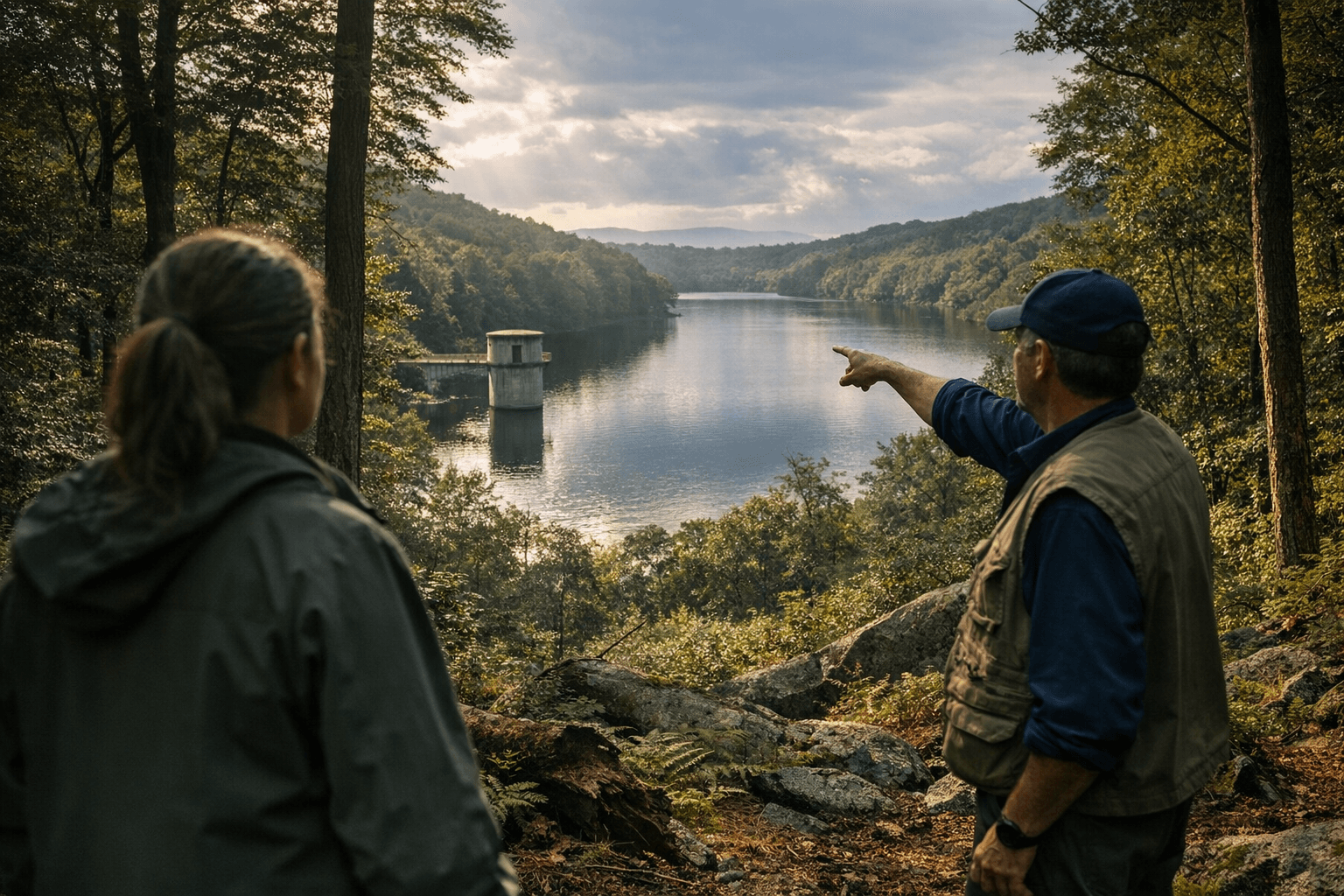
The New York State Department of Environmental Conservation and the Orange County Water Authority secured a conservation easement totaling 13.5 acres to protect water quality and help safeguard public drinking water sources for the City of Newburgh. The announcement came March 25, closing out more than six years of acquisition work focused on one of the Hudson Valley's most vulnerable reservoirs.
The easement covers land in the Brown's Pond watershed, which feeds the Silver Stream Reservoir, one of the primary drinking water sources for the City of Newburgh, serving around 29,000 people. The preserved land sits on a larger 39-acre property in New Windsor owned by the Sisters of the Presentation of the Blessed Virgin Mary, and will remain undeveloped and in its natural state.
Orange County Water Authority Board Chair Dominic Cordisco framed the stakes bluntly: "This easement will prevent future development of the property. That way there isn't additional development, there aren't houses or anything like that that would cause potential runoff issues that would degrade the quality of the drinking water supply."
Cordisco noted that over six years of effort went into purchasing land and conservation easements to protect Newburgh's water supply, thanking Governor Hochul, the DEC, and the Orange County Land Trust for making it happen.
Orange County Land Trust Executive Director Jim Delaune said that when the Land Trust first approached the Sisters about protecting their forest for drinking water purposes, the religious community was "very receptive and enthusiastic," a response Delaune credited to their dedication to the greater good. Delaune also thanked Governor Hochul, the DEC, and the OCWA for securing the Water Quality Improvement Project grant that made the project possible.
Keeping the forest intact helps filter pollutants and prevents contaminants from entering the water supply through runoff or future development, according to DEC officials. The project was funded through the state's Water Quality Improvement Project program and carried out in partnership with the Orange County Land Trust.
The Brown's Pond watershed carries particular significance for Newburgh beyond its role as a primary source. In 2014, polyfluoroalkyl substances (PFAS) were found in Washington Lake, the city's primary drinking water source, and since 2016, Brown's Pond in New Windsor and the Catskill Aqueduct have given the city the flexibility to avoid relying on Washington Lake. Mayor Torrance Harvey noted that when the Catskill Aqueduct undergoes routine maintenance, Brown's Pond serves as the city's backup drinking water reservoir, making the integrity of its watershed a non-negotiable public health concern.
Much of the land within the Brown's Pond watershed has been developed over the past 40 years for residential use, making undeveloped parcels like the Sisters' property increasingly rare and strategically critical. The grants supporting this easement draw from the state's Environmental Protection Fund, for which Governor Hochul's 2026-27 executive budget proposes a record $425 million, covering land acquisition, water quality improvement, and environmental justice projects.
DEC Interim Commissioner Sean Mahar called the partnership a model for the state's broader water investment strategy: "New York State's record investments are ensuring long-term access to clean drinking water, and DEC is fortunate to work with partners like the Open Space Institute and Orange County Water Authority to achieve our goals.
This article was produced by Prism’s automated news system from verified source data, official records, and press releases, then run through automated quality and moderation checks before publishing. The system is built and supervised by the people who set the standards it runs under. Read our full AI policy.
Did this article answer your question?