It looks like the research notes or article content didn't come through — the placeholder text references "[Full text above]" but no actual story details are visible. Could you paste the article content or notes directly into your message? I'll generate the headline right away once I can see the story.
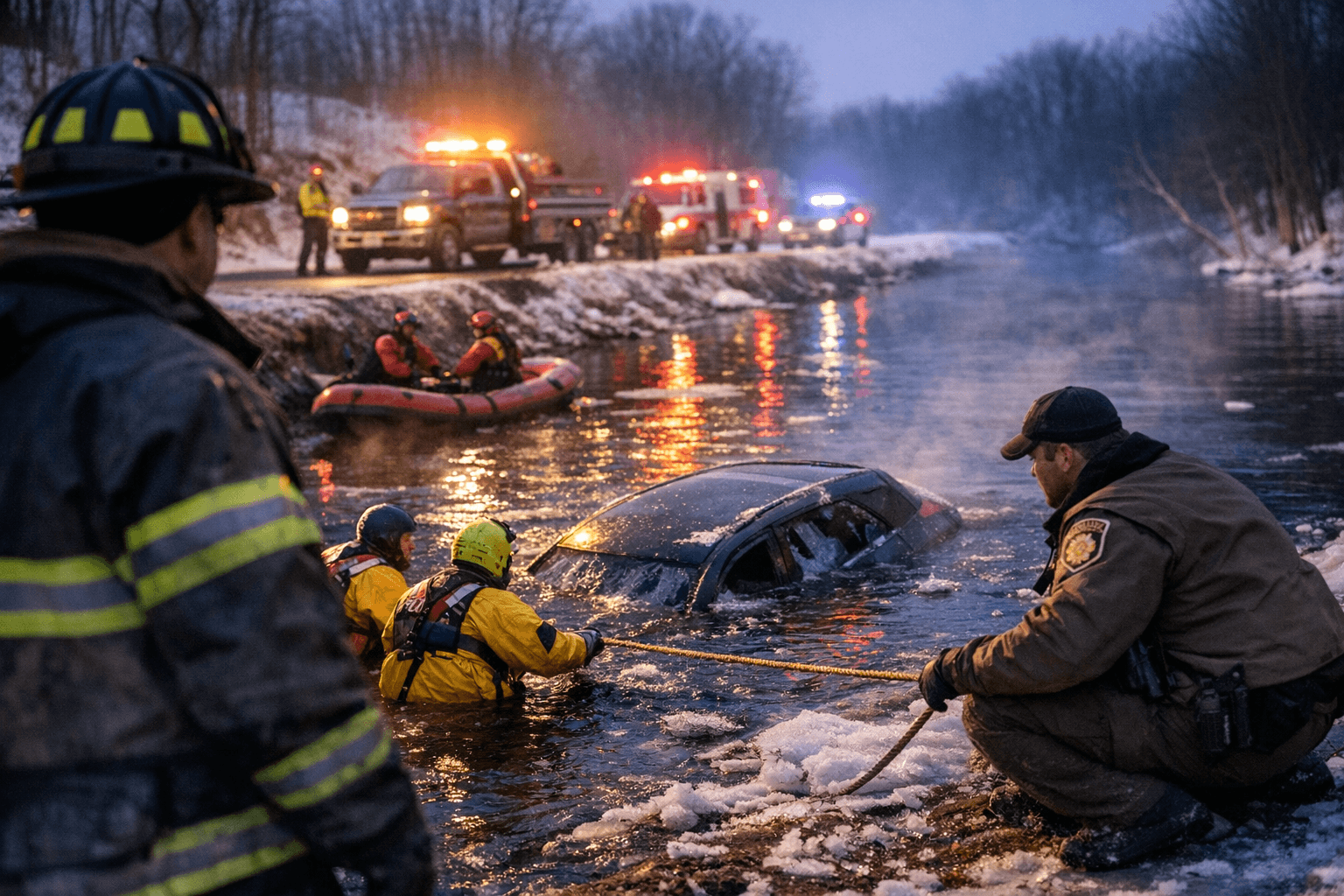
A 23-year-old Battle Lake man's vehicle entered the Otter Tail River on County Highway 1 Thursday, underscoring cold-water survival risks in a county already reeling from a surge in traffic deaths.
![It looks like the research notes or article content didn't come through — the placeholder text references "[Full text above]" but no actual story details are visible. Could you paste the article content or notes directly into your message? I'll generate the headline right away once I can see the story.](/_next/image?url=https%3A%2F%2Fmedia-cdn.socastsrm.com%2Fwordpress%2Fwp-content%2Fblogs.dir%2F2396%2Ffiles%2F2023%2F02%2Fwefghj-300x236.jpg&w=1920&q=75)
Elijah Hendrickx, 23, of Battle Lake was behind the wheel when his vehicle left County Highway 1 and entered the Otter Tail River in the Phelps–Lost Lake area of south-central Otter Tail County on Thursday, April 2, according to the Otter Tail County Sheriff's Office and Minnesota State Patrol.
The stretch of river near the crash site is characterized by the Minnesota DNR as scenic and slow-flowing, winding through one of the county's least-developed corridors between West Lost Lake and Otter Tail Lake. That unhurried current, however, does little to blunt the physiological violence of cold water immersion. According to Minnesota Sea Grant, cold shock, marked by nearly uncontrollable hyperventilation, typically sets in within two to three minutes of entering cold water. Muscle incapacitation follows within 20 to 30 minutes. The first 15 minutes, researchers emphasize, are the window that determines survival.
The National Center for Cold Water Safety has warned that standard survival time charts widely circulated in boating safety materials do not account for cold shock at all, meaning victims can drown before hypothermia ever becomes the primary threat.
The crash arrives at a grim moment for county road safety. Otter Tail County recorded 10 traffic fatalities across 44 crashes in 2024, more than triple the three deaths reported in 2023. Statewide, Minnesota recorded 477 traffic-related fatalities that same year. County Public Health Director Jody Lien flagged the 2024 spike publicly, and the county subsequently applied for a Toward Zero Deaths grant from the Minnesota Department of Public Safety, the state program operating under MnDOT's 2025-2029 Strategic Highway Safety Plan, which targets no more than 225 annual roadway deaths by 2030. Otter Tail County ranks above the state average in both speeding-related and impaired-driving crash categories.
The 192-mile Otter Tail River, known in Ojibwe as Nigigwaanowe-ziibi and the third-longest river lying entirely within Minnesota, begins in Becker County and eventually forms the Red River of the North at Breckenridge. The section threading through south-central Otter Tail County passes through the same lake country that has drawn generations of residents and visitors to the region Battle Lake's French cartographers once called Lac du Battaile.
The investigation into Thursday's crash remains ongoing.
Sources:
Know something we missed? Have a correction or additional information?
Submit a Tip