How Ricetown, Indian Creek kept two names in Owsley County
Ricetown’s post office name survived long after the office closed, but locals still call the area Indian Creek, a split that reveals how Owsley County remembers place.
Ricetown and Indian Creek are the same place in Owsley County, but not in the same way. One name lived in the post office record, the other stayed alive in everyday speech. That divide still matters in a county where roads, creek valleys, family memory, and mail routes have long carried more weight than any single map label.
A place with two names
The community sits on Indian Creek about eight miles south of Booneville, and the name most residents use is still Indian Creek. The post office history tells a different story: the office opened in 1901 as Floyd, renamed Ricetown in 1905, and closed in 2005. The first postmaster was Joseph Baker, and the Ricetown name honored local merchant Harvey Rice.
That sequence is more than a naming quirk. In small Appalachian places, the post office often becomes the version of the community that survives in records, while older settlement names continue in conversation, directions, and family stories. Ricetown is a clear example of how one place can carry both identities at once without either one disappearing completely.
Why the postal record matters
The United States Postal Service’s Postmaster Finder is useful for tracing a community like this, but it also has limits. Its database has complete information on more than 17,000 post offices, and the agency notes that many discontinued post offices are not listed. That means the official postal record can preserve an important version of a place’s past while still leaving gaps, especially for small rural offices that no longer operate.
For Owsley County, that makes local and historical sources especially valuable. A post office file may tell you when a name changed, who served as postmaster, and when service ended. It will not always explain how residents themselves continued to use an older place name, or why Indian Creek stayed stronger than Ricetown in daily life. That gap is exactly where family memory and county history become essential.
Owsley County’s landscape shaped the naming
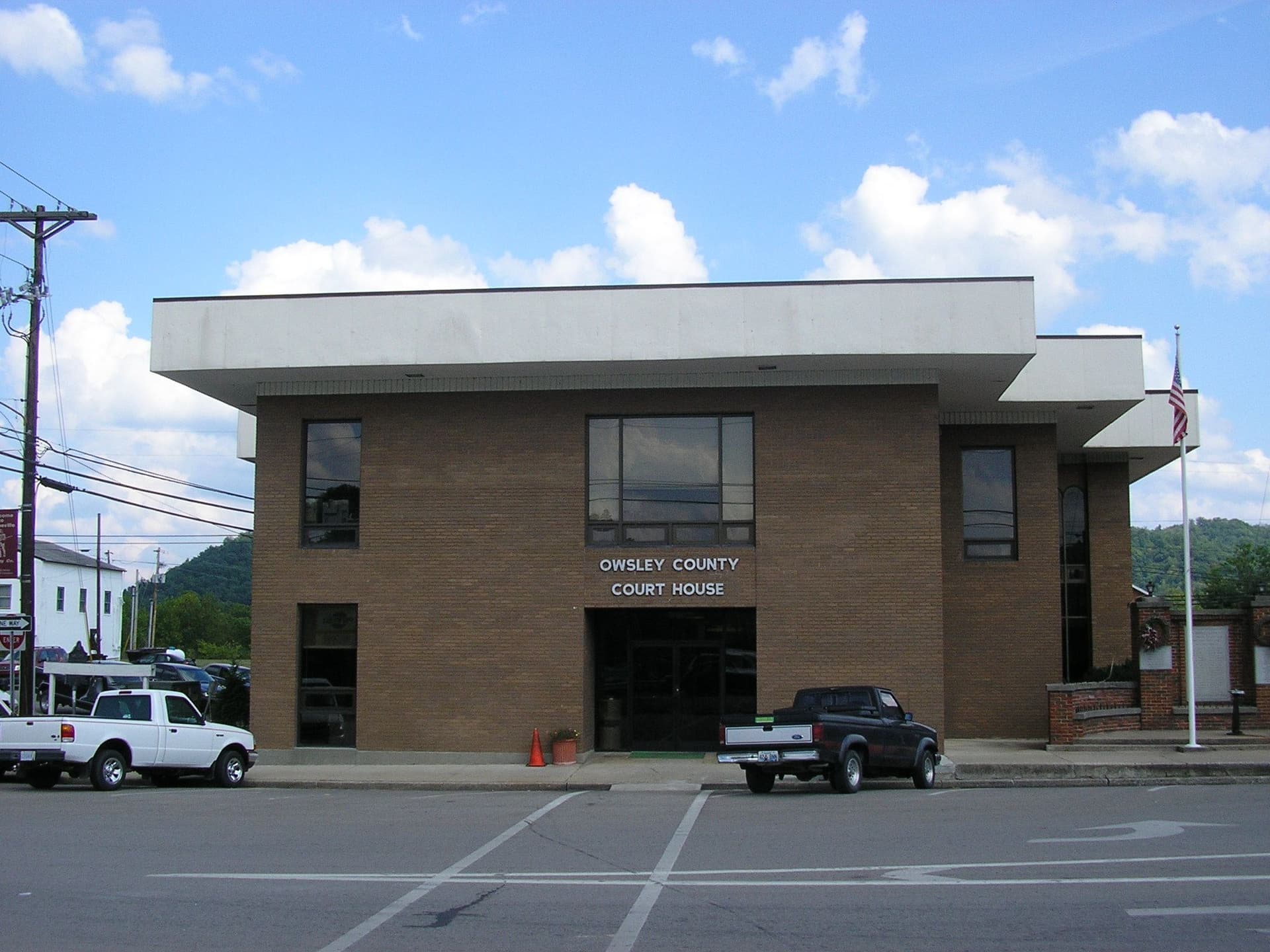
Owsley County itself gives context to why a community like Ricetown can keep two names in circulation. The county was formed in 1843 from Breathitt, Clay, and Estill counties, and its county seat is Booneville. It sits in Kentucky’s Eastern Coal Field region, where settlement patterns followed creek bottoms, hollows, and scattered roads rather than dense town centers.
The county’s size and population help explain the local pull of place-based names. In 2020, Owsley County had 4,051 residents spread across 197.41 square miles, an average of 20.5 people per square mile. That made it the second-least populous county in Kentucky, a reminder that in a place this sparsely settled, a creek name can remain more immediate than an official postal label.
A mapped place, not just a memory
The geographic record reinforces that Ricetown, or Indian Creek Neighborhood, is a real and locatable place, not just a story passed down by word of mouth. A U.S. Board on Geographic Names listing captured by a mapping site identifies Indian Creek Neighborhood as a historical populated place in Owsley County, near 37°23'27"N, 83°37'25"W, at an elevation of 827 feet.
Those coordinates matter because they anchor the community in the physical landscape that shaped it. Indian Creek is not an abstract label. It is a creek valley, a settlement pattern, and a point on the map where residents have long known one another by roads, ridges, and neighboring families rather than by a municipal boundary.
Booneville shows the same naming pattern
Ricetown is not the only Owsley County place whose name changed through postal service. Booneville has its own naming history that follows the same Appalachian pattern. The community was once known as Boone’s Station and Moore’s Station, and the Owsley Court House post office opened in 1844 before the name changed to Booneville in 1846.
That history matters because it shows how post offices could reshape local identity across the county, not just in one settlement. Names shifted as offices opened, communities matured, merchants became influential, and residents adapted to the language used for mail and official business. In that sense, Ricetown fits a broader countywide pattern rather than standing apart from it.
Memory, archives, and how the place lives on
Owsley County also has a memory-preservation tradition that helps explain why these layered names still matter. The Owsley County Oral History Project, supported through Kentucky’s state archives program and the Kentucky Department for Libraries and Archives, gives residents a place to preserve how they talk about the county, its roads, and its communities.
That kind of archive is important in a place like Indian Creek, where formal records may say Ricetown but local speech may never have fully adopted that name. Oral history can capture which name people use for church directions, cemetery visits, school routes, and family property. It is often in those everyday details that the older identity stays strongest.
What Ricetown reveals about rural Owsley County
Ricetown’s story is not just about one post office that opened, changed names, and closed. It shows how rural communities can hold onto different versions of themselves at once. The postal name preserved one history, the creek name preserved another, and both remained tied to the same ground south of Booneville.
In Owsley County, that tension between official naming and lived identity is part of the public record. Maps can mark one thing, mail routes another, and family memory something older still. Ricetown, or Indian Creek, shows how all three can survive together in the same small place.
This article was produced by Prism’s automated news system from verified source data, official records, and press releases, then run through automated quality and moderation checks before publishing. The system is built and supervised by the people who set the standards it runs under. Read our full AI policy.
Did this article answer your question?