Owsley County oral history project preserves local voices and memories
Owsley County’s archive keeps Booneville names, cleanup memories, and family voices searchable before they fade from living memory.
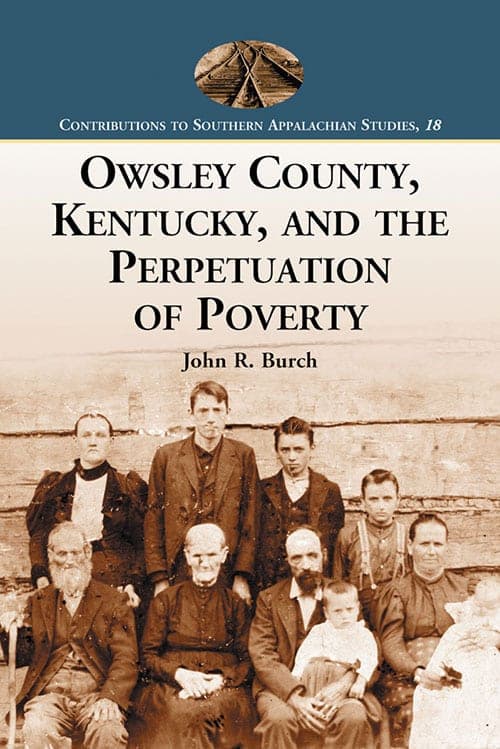
Owsley County had 4,051 residents in the 2020 census and an estimated 3,932 on July 1, 2025. In that county, Fred W. Gabbard’s Booneville memories of county place names and Ronnie Callahan’s account of PRIDE cleanups, sewer expansion, tourism, the economy, and litter prevention preserve the kind of everyday local knowledge that can vanish when a generation passes, and place Owsley inside a statewide system built to keep those voices findable.
A county record built from living voices
The Owsley County Oral History Project is a working collection of local memory, shaped by county libraries and volunteers and rooted in the Kentucky Oral History Commission’s effort to build oral history programs in all 120 Kentucky counties. Since 1987, most county oral histories have come from technical assistance grants that give volunteer interviewers training and equipment, which means the archive has grown through community effort rather than outside extraction.
The county’s 2020 to 2024 estimates also show 70.4 percent of adults with a high school diploma or higher and 7.1 percent with a bachelor’s degree or higher.
How the statewide system keeps Owsley stories findable
Kentucky’s oral history network began in 1976, when the Kentucky Oral History Commission was created as part of the state’s U.S. Bicentennial effort. Kentucky already had eight oral history programs then, but they did not reflect the full range of the state’s regions. The commission’s guiding idea was to document every part of Kentucky and make the recordings accessible across county lines.
That model still shapes how Owsley County’s interviews are preserved. The Kentucky Historical Society identifies KOHC as the only state commission in the nation committed to statewide oral history documentation through granting programs and outreach. Pass the Word acts as the public gateway, giving users a roadmap to interviews held in repositories across the Commonwealth rather than trapping them in a single filing cabinet or one local building.
The commission’s support is practical, not symbolic. It offers grants twice a year for equipment, training, and funding, and it loans oral-history recording kits at no cost. Its resources point users toward the Oral History Association, the Library of Congress, the Society of American Archivists, and other digital and archival tools. Pass the Word also includes resources for teachers and educators, and oral history archival accreditation is part of the stewardship work that keeps the recordings usable over time.
What Booneville’s stories carry
Booneville gives the archive a strong sense of place. The county seat sits on the South Fork of the Kentucky River at KY 11 and KY 30. The town was once known as Boones Station and Moores Station, the courthouse and post office opened in 1844, and Booneville was incorporated in 1846.

A Morehead State University oral-history item records Fred W. Gabbard of Booneville talking about the origin and history of community names in Owsley County. Those place names map how residents have understood the county for generations, and they often survive in memory long after signs, buildings, and paper records change.
Ronnie Callahan’s interview covers PRIDE cleanups, sewer expansion, tourism, the economy, and litter prevention.
How families, schools, and churches can use it now
The collection is searchable across Kentucky, not hidden in a single local room. Families can use it to trace a surname, a hollow, or a remembered business name before those links disappear from living memory. Schools can use the interviews for local history lessons that begin in Booneville and move outward to the wider county story, giving students a reason to study the place they already know.
Churches can use the archive in a similar way. Church anniversaries, homecomings, cemetery projects, and community histories often depend on the names and stories older members carry in their heads. An oral-history recording can preserve who organized a revival, who kept a congregation fed, and how a church fit into the daily life of a settlement or neighborhood.
The archive also gives teachers a ready-made bridge between memory and method. Because Pass the Word includes resources for educators, the collection can support classroom work that asks students to listen, compare versions of a story, and understand why preservation standards matter.
What still needs to be recorded
The recordings already in the system show that Owsley County’s memory includes place names, roadwork, sanitation, tourism, and the practical labor of keeping a county moving. The harder question is what has not been captured yet. Every archive leaves gaps, and in a county this small, those gaps can shape how the next generation understands who built the place and what work counted.
Whose stories are still missing from the tape, the catalog, and the searchable record: families from the more remote hollows, school workers, church women, farmers, tradespeople, and residents whose daily labor rarely enters official history?
This article was produced by Prism’s automated news system from verified source data, official records, and press releases, then run through automated quality and moderation checks before publishing. The system is built and supervised by the people who set the standards it runs under. Read our full AI policy.
Did this article answer your question?