Owsley County smoke-free ordinance covers workplaces, vehicles and restaurants
Owsley County's smoke-free rule reaches county vehicles, outdoor work sites and restaurant seating, not just indoor offices. It also covers vapor and nicotine products.
Owsley County’s clean-air rule is broader than many people expect. The county is listed as a 100% smoke-free community for workplaces and enclosed public places, and the coverage reaches county vehicles, outdoor work areas with two or more employees, and restaurant seating areas.
What the county rule actually covers
The University of Kentucky’s BREATHE ordinance database places Owsley County in the strongest category it tracks: a 100% smoke-free ordinance for workplaces and enclosed public places. That means the rule is not limited to a handful of government buildings or a few business types. It reaches all places of employment, including facilities and vehicles owned, leased, or operated by the Owsley County Fiscal Court.
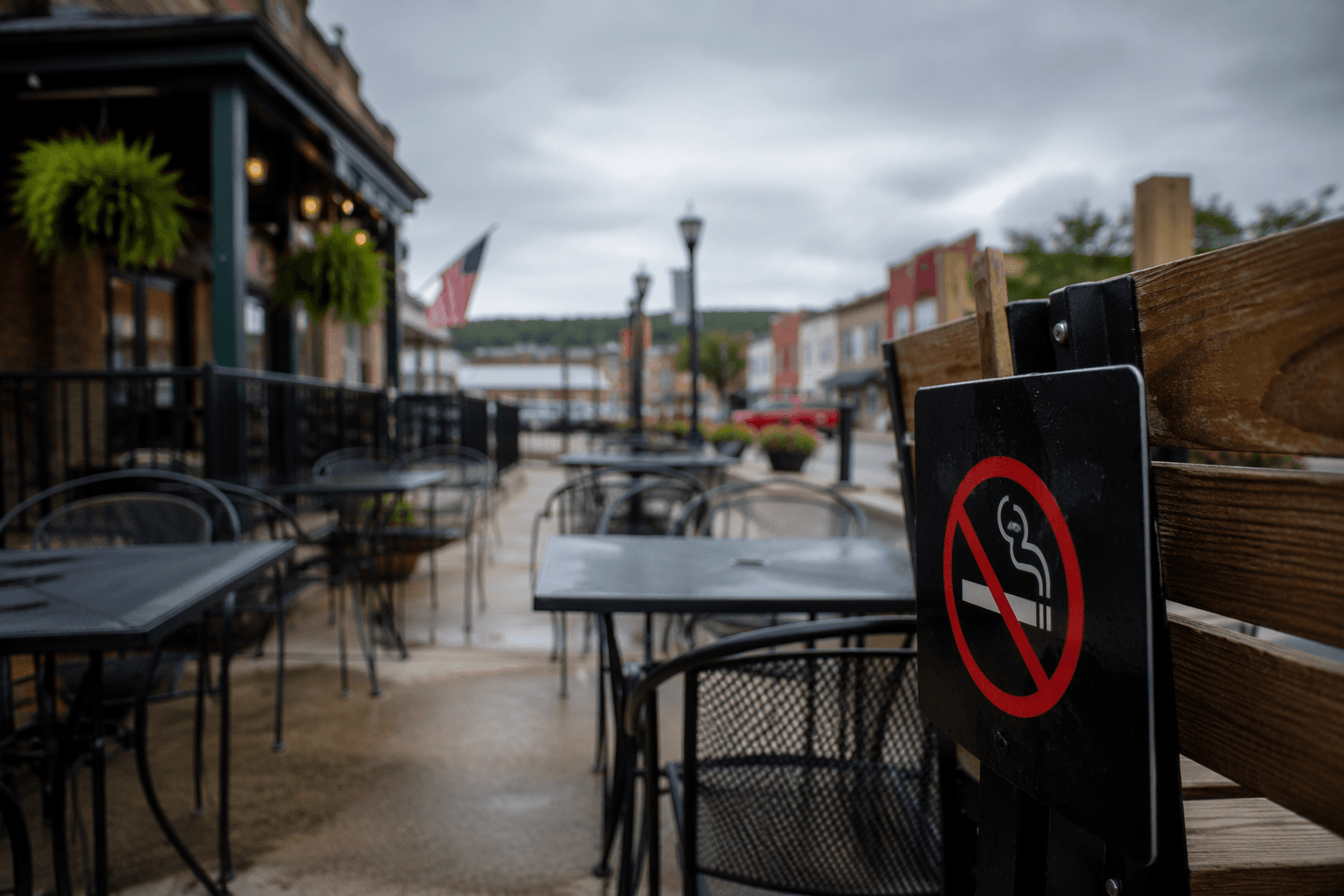
That same listing extends the rule to all outdoor places of employment where two or more employees are required to be. In practical terms, a covered worksite does not stop being covered just because it is outside. The county’s clean-air standard also applies to all enclosed public places, including outdoor seating or serving areas of restaurants, which closes off the common assumption that patios and similar areas are automatically exempt.
The ordinance text goes even further by spelling out the products it regulates. The law is described as relating to the protection of the public health and welfare by regulating smoking of tobacco, alternative nicotine products, vapor products and electronic tobacco products in enclosed public places, places of employment and certain outdoor public places. In other words, the rule is not just about cigarettes.
Where residents and business owners are most likely to misunderstand it
The easiest mistake to make is to think the ordinance stops at the indoor dining room or the office doorway. Owsley County’s policy does not work that way. If a restaurant has outdoor seating or serving space, that area is included in the county’s smoke-free coverage, so the policy reaches the places where customers often assume smoking is still allowed.
A second common misunderstanding is to overlook county-controlled vehicles and outdoor work crews. The ordinance specifically names facilities and vehicles owned, leased or operated by the Owsley County Fiscal Court, and it also covers outdoor places of employment where two or more employees are required to be. That matters for county workers, supervisors and anyone who manages shared transportation or outdoor job sites.
For restaurant owners, the wording matters for setup, signage, employee training and customer expectations. For residents, it explains why the county’s rule is not a simple indoor-only policy. The line is drawn by the type of space, not by whether smoke can drift away in open air.
Who holds the authority
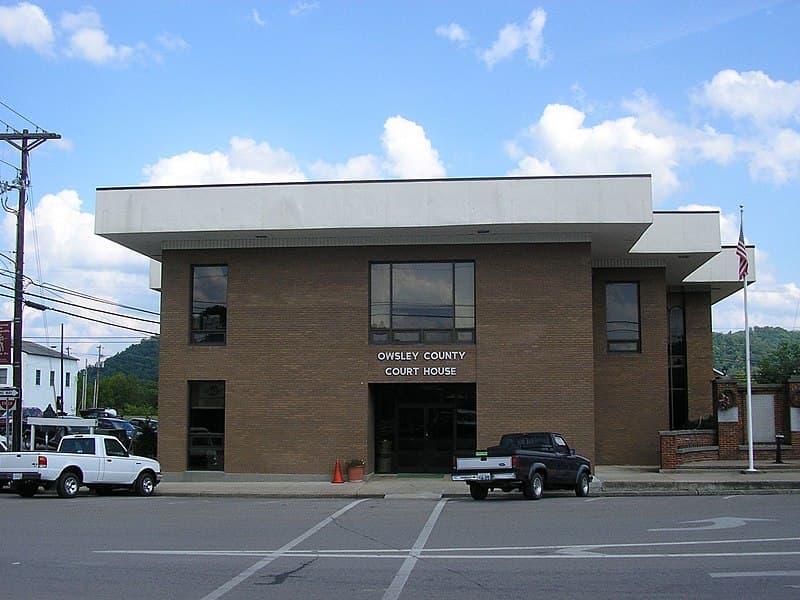
The ordinance text says the Owsley County Fiscal Court is acting under statutory and common-law authority to regulate smoking in public places and places of employment. That makes the fiscal court the county body at the center of the policy, and it is the public institution residents should look to when asking who set the rule and who has the authority to keep it in force.
The ordinance PDF carried through BREATHE is labeled “11.08.2021-accessibilityupdated.” The label matters because it is the version the public can use to read the county’s language directly, including the list of covered products and spaces. The document frames the ordinance as a public-health measure, not a narrow workplace policy.
How Owsley County fits into Kentucky’s smoke-free map
BREATHE’s statewide database says Kentucky’s maps and listings were updated January 1, 2026, and it groups local laws under smoke-free ordinances covering all indoor workplaces and enclosed public places. Owsley County belongs in that stronger category, alongside other Kentucky communities that have chosen comprehensive local restrictions rather than partial rules.
Kentucky’s local smoke-free history also shows that these ordinances have been shaped through courts and local votes over time. On April 23, 2004, the Kentucky Supreme Court upheld Lexington’s comprehensive smoke-free workplace ordinance in a 6-1 decision, confirming a law that covered workplaces, restaurants and bars. That ruling helped establish the legal ground for later local ordinances across the state.
More recent examples show the same pattern of local action. Paducah said it voted on April 10, 2018 to strengthen its smoking ordinance, and the Northern Kentucky Health Department said Bellevue’s smoke-free ordinance was set to go into effect on May 15, 2023. Those examples matter in a county like Owsley because they show smoke-free policy in Kentucky has moved through city and county action, not just statewide mandates.
Ellen Hahn, professor of nursing and public health and director of the Kentucky Center for Smoke-free Policy at the University of Kentucky, summed up that long timeline in a June 30, 2023 comment: “Policy change takes time, often decades.” Her point fits Owsley County’s place in the broader Kentucky story, where local ordinances have gradually expanded the number of places where secondhand smoke is off limits.
What the rule means day to day in Booneville and across the county
For daily life in Booneville and the rest of Owsley County, the safest reading is straightforward: if a place is a county workplace, a county vehicle, an outdoor worksite with two or more employees, an enclosed public place or a restaurant seating area, smoking and vaping are off the table. The county’s ordinance is broad enough that people should not assume a patio, a work truck or an outdoor job assignment creates an exception.
The clearest practical takeaway is that Owsley County’s clean-air standard is not a loose suggestion. It is a countywide policy with defined spaces, defined products and a named local authority behind it, and that makes the rule easy to describe once and easier to enforce every day.
This article was produced by Prism’s automated news system from verified source data, official records, and press releases, then run through automated quality and moderation checks before publishing. The system is built and supervised by the people who set the standards it runs under. Read our full AI policy.
Did this article answer your question?