Indiana Cotton Mill stands as Perry County's industrial landmark
Cannelton’s cotton mill is Perry County’s clearest industrial landmark, linking river trade, factory labor, and a 70-apartment reuse that still shapes the town.
The Indiana Cotton Mill still dominates Cannelton for a reason. Built of native sandstone and set against the Ohio River and high bluffs, it is the clearest physical record of Perry County’s attempt to turn river access into industrial power. The building is more than an old factory wall. It ties together jobs, capital, architecture, and the county’s civic memory in one place.
A river bet that stretched far beyond Perry County
Cannelton was founded in 1835, and its backers believed the town’s coal resources could support steam-powered textile manufacturing. That idea mattered because it offered an alternative to the New England model of water-powered mills. The project was financed by Southern, Western, and Northeastern interests, a broad coalition that saw southern Indiana as a place to challenge New England textile dominance.
Indiana Historical Society records say the Indiana Cotton Mills were founded in 1848 by an act of the Indiana State Legislature, and the original company name was Cannelton Cotton Mills. That plural name still refers to the one building on the riverfront. The financing and chartering gave the enterprise a national ambition that was unusual for a town of Cannelton’s size.
The building itself is the argument
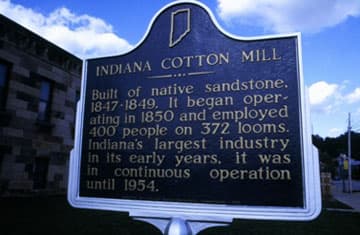
The Indiana Historical Bureau marker dates construction from 1847 to 1849, says the mill began operating in 1850, employed 400 people on 372 looms, and stayed in continuous operation until 1954. The National Park Service and Library of Congress records narrow the opening even further, saying the mill began in May 1849 and the first cloth was woven on January 7, 1851. Those dates show a long setup, then a factory that kept going for more than a century.
The building is attributed to Thomas A. Tefft, and the National Register and Historic American Engineering Record materials describe it as a monumental example of industrial architecture. They point to its superb masonry construction, twin towers, early mechanical systems, and fire-prevention features. The mill stands facing the Ohio River on a dramatic site near the center of Cannelton, where the town’s narrow land between river and bluff gave the factory an imposing profile.
The National Register materials place the mill’s period of significance in two spans, 1825-1849 and 1850-1874. That framing makes the site larger than one factory date. It captures the town’s pre-factory buildup, the factory’s rise, and the industrial identity that grew around it.
What the mill meant for work, wages, and daily life
For Perry County, the mill’s first impact was labor. Four hundred workers on 372 looms meant a major payroll for a river town that had hoped coal, steam, and river trade could anchor a factory economy. The first product was cloth, and the original business focused on carding cotton and manufacturing cloth, especially cotton sheeting.
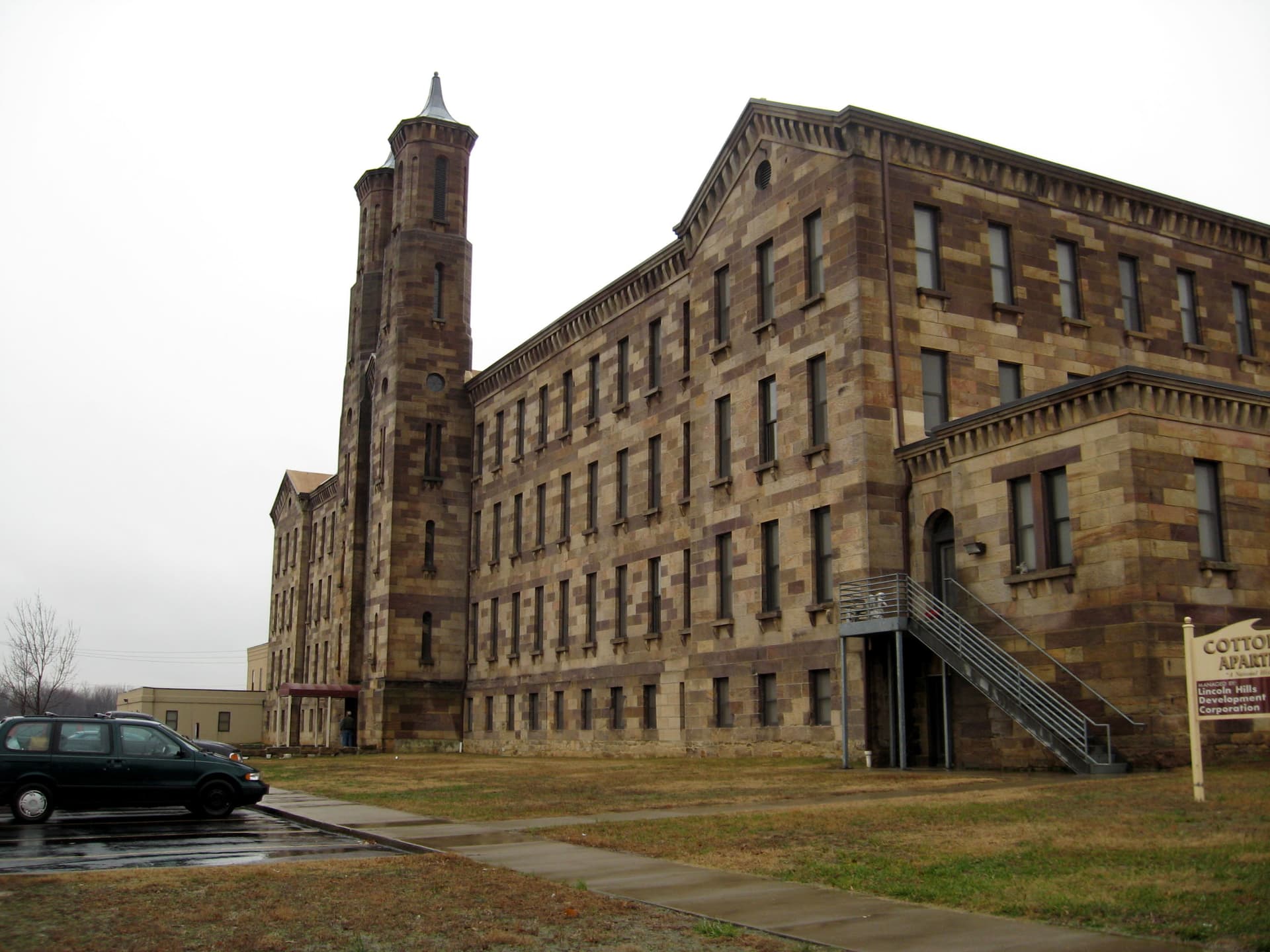
The Library of Congress record notes that the mill did not trigger the industrial boom its backers hoped for, but it did produce cotton cloth for more than 100 years. That matters locally because it explains both the promise and the limit of Cannelton’s industrial story. The Ohio River brought the idea, the capital, and the freight connection, but it did not turn Perry County into a manufacturing hub on the scale the founders imagined.
The mill’s labor history also reflects broader American industrial patterns. Later summaries show women and children made up a major share of the workforce in the late 19th and early 20th centuries, and by 1890 men were a minority of workers. Children were still employed into 1900. In other words, the building is not only a landmark of architecture and river commerce, it is also part of the labor history of textile production in the Midwest.
From factory floor to housing asset
The building’s second life is just as important as its first. Lincoln Hills Development Corporation bought the property in 1999 and carried out a rehabilitation and adaptive reuse project from 2001 to 2003. That work created 70 affordable apartments and kept the mill from becoming a dead monument on the riverfront.
The redevelopment won the National Preservation Honor Award from the National Trust for Historic Preservation on October 2, 2003. Current Lincoln Hills materials describe the Cotton Mill Apartments as a four-level affordable housing complex with elevator access, a community room, indoor mailboxes, and laundry on each floor. The units include efficiencies and one-, two-, and three-bedroom apartments.
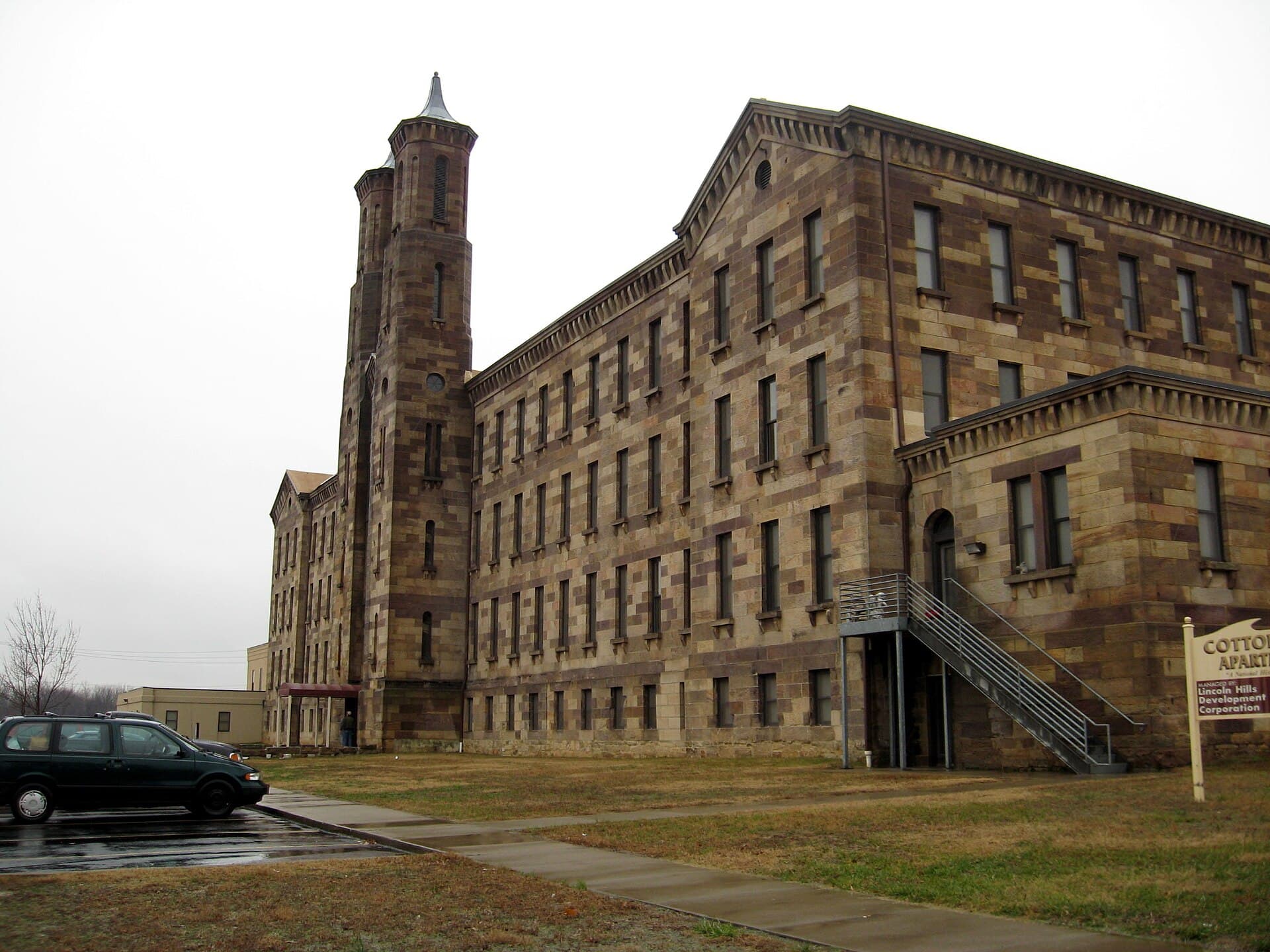
That reuse also shapes how Cannelton presents itself now. The mill is built into the way the historic district is interpreted and marketed, which means the county is not treating the building as a frozen relic. It remains part of daily life, and that is what keeps it relevant.
Why it still matters in Perry County
The Indiana Cotton Mill is Perry County’s most important industrial landmark because it explains the county’s industrial identity better than any plaque or museum label could. It shows how Cannelton was founded with coal, river access, and outside capital in mind. It shows what the Ohio River was supposed to become for southern Indiana, a launchpad for manufacturing ambition.
It also shows what was lost when that era faded. The factory did not deliver the regional boom its investors wanted, and the larger industrial future they imagined never fully arrived. What remained was the building, first as evidence of a bold 19th-century experiment, then as a housing complex that kept the structure in use. In Perry County, that makes the mill not just the oldest industrial landmark, but the one that still explains the county’s past, its river economy, and the limits of its industrial promise.
This article was produced by Prism’s automated news system from verified source data, official records, and press releases, then run through automated quality and moderation checks before publishing. The system is built and supervised by the people who set the standards it runs under. Read our full AI policy.
Did this article answer your question?