Winzerwald Winery blends German heritage and Perry County landscape
Winzerwald and Blue Heron turn Perry County into a route of German roots, river bluffs, and family-built wineries shaped by the land.
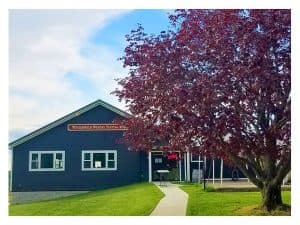
Winzerwald Winery sits where Perry County’s wine story feels most rooted in place: on rolling land in the Hoosier National Forest along Interstate 64, with German-inspired bottles, family history, and ridge-top views that make the stop feel inseparable from the county itself. The route does not end there. In Cannelton, Blue Heron Vineyards & Winery looks out over the Ohio River and the Cannelton Locks and Dam, turning the county’s river edge into a second, distinctly local stop.
Winzerwald at the forest edge
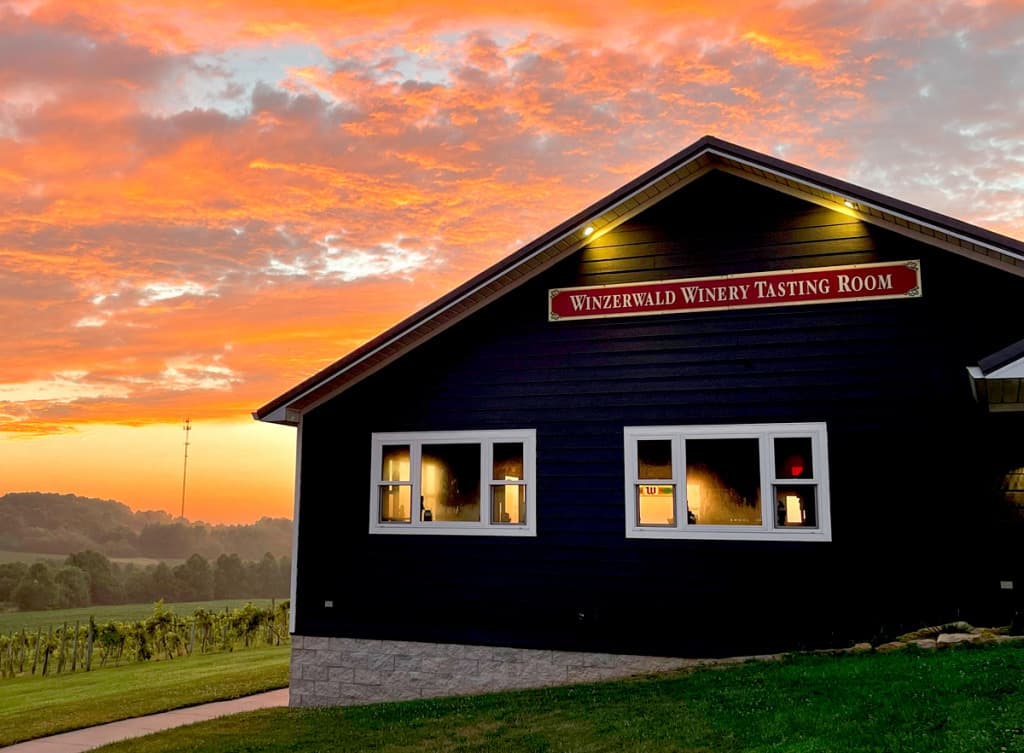
Winzerwald is the clearest starting point for a Perry County wine route because its identity is tied to both land and lineage. The winery opened in June 2002 and expanded in 2018 with a larger tasting room that includes a restaurant, a timeline that shows how the business has grown from a single stop into a more developed destination. Dan and Donna Adams own the winery, and the site itself is part of the appeal: Winzerwald says it sits on 85 acres in the Hoosier National Forest along Interstate 64, about 2 miles from Exit 72 and 4 miles from Exit 79.
That location matters because it gives the winery the kind of roadside access and wooded setting that make Perry County feel different from a generic wine region. Winzerwald says it is about half an hour north of Tell City, about an hour east of Evansville, and about an hour west of Louisville, which places it within reach of multiple day-trip markets while keeping the county’s rural character intact. It also identifies itself as part of the Indiana Uplands AVA and the Indiana Uplands Wine Trail, so a visit here is not just one tasting room but a piece of a broader regional wine landscape.
Heritage in the bottle
Winzerwald’s strongest distinction is the way it folds German family history into the wine list. The winery traces its heritage to a great-great-grandfather who was a cooper in Germany and brought wine grapes to America in the 1800s. That lineage shows up in the styles it produces: Riesling, Gewurztraminer, Pinot Meunier, Gluhwein, Mai Wein and Ice Wein, all of them tied to a German-style identity rather than a broad, anything-goes tasting menu.
The winery also centers the idea of Gemütlichkeit, which it uses to describe hospitality and friendship. That matters because it frames the visit as a social and cultural experience, not simply a place to sample a flight and leave. Winzerwald has built festivals and educational tours into that same idea, making the property feel like a living expression of family memory and county heritage instead of a standalone retail stop.

Food, events, and a longer stay
The 2018 expansion added a larger tasting room with a restaurant, and that addition changed the rhythm of a visit. Winzerwald’s Wein Kitchen serves German-inspired food such as Bavarian pretzels, flatbreads, charcuterie plates and wine-and-food flights, which gives the property a clear connection between what is poured and what is plated. Monthly Sips and Samples events push that pairing even further, reinforcing the winery’s role as a place to linger rather than a quick stop off the interstate.
That combination of restaurant, tasting room, and event calendar helps explain why Winzerwald fits Perry County so well. The county’s tourism identity has always leaned on history, scenery and local continuity, and Winzerwald translates those themes into a modern stop where the landscape outside the windows and the German traditions on the menu tell the same story.
Blue Heron on the river bluffs
Blue Heron Vineyards & Winery extends that story to the Ohio River side of the county. The winery is in Cannelton at 5330 Blue Heron Lane, and its setting above the Ohio River and the Cannelton Locks and Dam gives it one of the most recognizable views in Perry County. Blue Heron markets itself as part winery, part concert venue, part retreat and part scenic overlook, which makes the place as much about the view and the gathering as it is about the wine.
The family behind Blue Heron strengthens that identity. Retired educators Lynn and Gary Dauby run the operation, and Lynn Dauby taught art in Perry County for more than 30 years. That background gives the winery a strong local-craft feel, with a direct tie to the county’s schools, creativity and long memory. Gary Dauby’s role as a vineyard and cellar caretaker keeps the business grounded in hands-on work rather than branding alone.
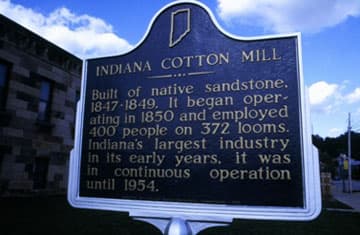
Blue Heron also ties its labels to Perry County landmarks and symbols. One label references the Indiana Cotton Mill in nearby Cannelton, while another, Prime 23, is linked to the winery’s Celtic Cross sculpture. That sculpture was carved by Greg Harris from a 20-by-22-by-4-foot stone on the property over 23 months, and Blue Heron describes it as the world’s largest in-situ Celtic Cross. It is the kind of detail that turns a winery visit into a local-history stop, with art, stonework and river scenery all part of the same experience.
Why Perry County’s route feels different
Perry County’s wine stops make sense only when they are read against the county itself. The Ohio River forms the county’s southern border, Highway 66 is part of the Ohio River Scenic Byway, and the county sits between the Ohio and Anderson rivers, a geography that helps explain why scenic views and route-based tourism matter here. The county’s population was about 19,170 in the 2020 Census, small enough that individual places still carry outsized identity.
Tell City anchors that identity. Founded in 1857 by Swiss-German immigrants and named for Swiss hero William Tell, it remains the county’s hub of culture and commerce, and that heritage is visible in the way local tourism still frames the region. In that setting, Winzerwald’s German-style wines and Blue Heron’s river bluffs do more than attract visitors. They connect Perry County’s present-day tourism to its immigrant roots, its family businesses and the landscape that has shaped the county for generations.
Taken together, the two wineries define a route that cannot be duplicated elsewhere. One looks over interstate and forest; the other overlooks river and dam. Between them, Perry County’s wine country becomes a compact portrait of German heritage, local family continuity and the scenery that has always given the county its character.
This article was produced by Prism’s automated news system from verified source data, official records, and press releases, then run through automated quality and moderation checks before publishing. The system is built and supervised by the people who set the standards it runs under. Read our full AI policy.
Did this article answer your question?