Perry County library traces roots to 1893 community effort
Thirty Tell City residents each gave $3 in 1893, launching a library that grew from Schreiber’s Drug Store to a Carnegie building and a countywide public system.
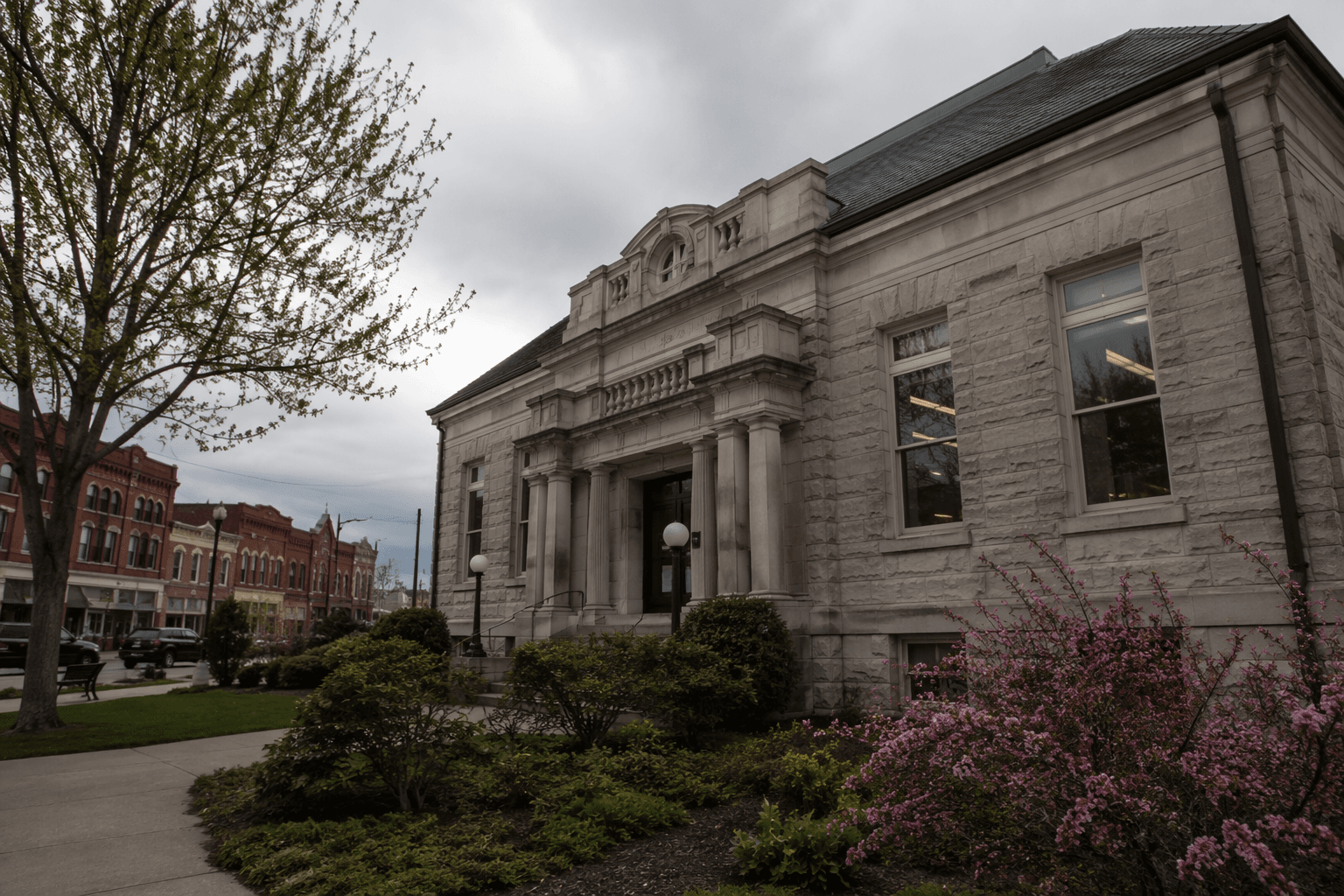
Perry County’s public library began with a very local decision: in 1893, 30 Tell City residents each put in $3 to form the Tell City Library Association. The first books bought with that pooled money were housed at Schreiber’s Drug Store, a practical start that turned a small community collection into one of the county’s first lasting civic institutions. By 1917, that effort had grown enough to justify a dedicated building at the corner of 9th and Franklin Streets, funded by a $10,000 Carnegie Corporation grant.
A county shaped by local initiative
That founding story fits Perry County itself. The Indiana State Library places the county’s creation in 1814, when it was formed from Gibson and Warrick Counties, and identifies Tell City as the county seat in southern Indiana on the Kentucky border. In a county shaped by river-town growth and close-knit communities, the library became more than a place for books. It became a steady public institution built first by neighbors and later reinforced by philanthropy.
The Perry County Public Library’s current mission still reflects that broad role. Its strategic plan says the system provides all residents with access to materials, resources, and services for education, information, and recreation through three branch locations and outreach services. That language connects the 1893 association to the modern library, showing how a small local effort matured into countywide access.
How the library took root
The original Tell City Library Association was a community project in the most literal sense. Thirty residents contributed the same amount, and the total became the seed money for the first book collection. Instead of a custom building, those books were placed at Schreiber’s Drug Store, which shows how civic life in small towns often began in borrowed commercial space before it moved into something permanent.
That early setup mattered because it made reading and reference material part of everyday town life. A drug store location was visible, familiar, and easy to reach, which likely lowered the barrier for people who would not otherwise have treated a library as part of their routine. From there, the idea of a public library had enough support to grow into a formal institution that the county would keep expanding over the next century.
The Carnegie building changed the scale
The next major milestone came in 1917, when the old Tell City Public Library opened at the corner of 9th and Franklin Streets with help from a $10,000 grant from the Carnegie Corporation. That put Perry County inside the wider Carnegie library movement, but the county’s path to that point was distinctly local. Residents organized the first collection themselves, and only later did one of the era’s best-known philanthropic programs help fund a permanent home.
A dedicated building changed what the library could do. It shifted the collection from a storefront arrangement to a public building with a fixed identity and greater capacity for service, making the library easier to use as a daily civic resource. In practical terms, that meant a stronger base for lending, studying, and community access at a time when books and reference materials were still far less available than they are now.
What the library provides now
Today, the Perry County Public Library serves the county through three branch locations and outreach services. Its mission statement is straightforward about the scope of that work: materials, resources, and services for education, information, and recreation. The current Tell City branch is listed at 2328 Tell Street in Tell City, which places the county’s main public library services close to the center of the county seat.
That current footprint matters because Perry County is spread across a rural river county, where access is often measured by travel time as much as by collection size. Branch locations and outreach services extend the library’s reach beyond a single building, keeping the institution useful for students, families, job seekers, and anyone who needs a public place to read, research, or connect.

Genealogy and local history remain part of the mission
The library’s history work is one of the clearest links between its past and present. Through a partnership with Advantage Archives and Community History Archives, Perry County Public Library offers free access to historical newspapers. That makes the library a practical starting point for people tracing family lines, following the history of a town, or looking for older references to schools and businesses in the county.
Tammy Harrington, the library’s staff genealogist, helps researchers search a free digital archive that includes 30 titles and more than 100,000 images spanning newspapers and yearbooks back to the 1800s. That kind of archive gives local history a searchable form, turning old print records into a resource that can still answer questions about names, dates, places, and community life. For a county with roots in the 1800s, that is not a side service. It is part of how memory stays usable.
How residents stay connected to the library
The library also uses its resources page to point people toward its newsletter, which serves as a source for news and updates. That keeps the institution tied to everyday county life, not just to its historical identity. The same library that began with a $3 contribution from 30 residents now circulates information through branches, outreach, archives, and ongoing public communication.
Seen together, those pieces tell a clear Perry County story. The library did not begin as a grand government project. It grew from local money, local effort, and local need, then added Carnegie support, countywide service, and historical resources that still help residents understand where they come from.
This article was produced by Prism’s automated news system from verified source data, official records, and press releases, then run through automated quality and moderation checks before publishing. The system is built and supervised by the people who set the standards it runs under. Read our full AI policy.
Did this article answer your question?