Perry County recycling guide details drop-off sites, trash-tag rules
A bag of trash without the orange tag can be rejected in Perry County, and the county says misuse and dumping costs land on taxpayers.
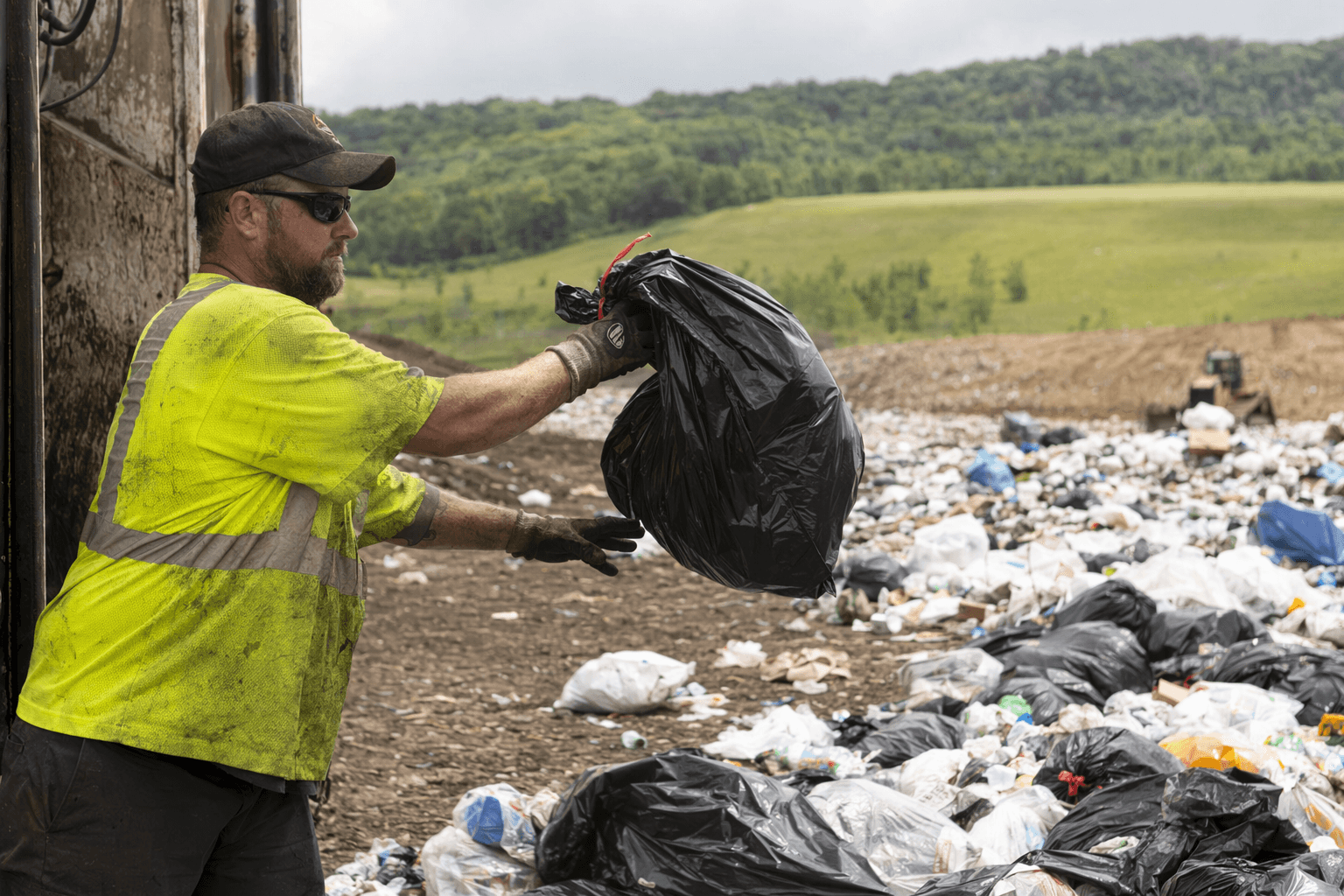
A bag of trash without the orange county tag can be turned away, and Perry County’s drop-off map is designed to keep that from happening. The county’s solid-waste system is now the clearest route for getting rid of recyclables, bulky waste, and problem items the right way, but it only works if residents know which site takes what.
Where each load goes
Cannelton is the county’s primary recycling location, and it is the most complete stop in the system. The site is at 508 N. 2nd St., Cannelton, IN 47520, and it is open Monday through Friday from 9 a.m. to 4:30 p.m. CST and Saturday from 8 a.m. to 4 p.m. CST. The county lists it for plastics, glass and metals, cardboard and papers, electronics, batteries and lightbulbs, oil and antifreeze, household and large-item trash disposal, and chemical and hazardous material drop-off.
Branchville is the other key drop-off point, located at Old Hwy 37 and County Road 40. The county says it is open Tuesday, Wednesday, Thursday and Saturday, and the site remains part of the post-dissolution county system. It is the place to remember when Cannelton is not convenient, especially for residents coming from the western side of the county.
Derby is different from both of those locations. The site behind the Derby Market at 14895 State Road 70 is recycling only, and it does not accept trash. That distinction matters because a wrong turn with a trailer or truck load can mean a wasted trip and, in some cases, a load that never belongs at that site in the first place.
What the county accepts, and where to sort it first
Perry County’s solid-waste page does more than list addresses. It lays out a practical breakdown of common problem waste so residents can sort before they drive.
- Plastics, glass and metals go through the recycling system.
- Cardboard and papers are also part of the recycling stream.
- Electronics, batteries and lightbulbs are handled through the county’s disposal system and should not be tossed in regular trash.
- Oil and antifreeze are treated as special waste, not ordinary garbage.
- Household and large-item trash disposal is available, but only under the county’s trash-tag rule.
- Chemical and hazardous material drop-off is part of the county’s solid-waste program, which is meant to keep dangerous material out of regular trash and out of roadside dumping.
That list is important because it saves residents from guessing. A garage cleanout, storm debris, old paint, broken electronics, dead batteries or a pile of mixed recyclables can each belong in a different category, and the county expects people to separate them before arrival.
The orange trash-tag rule is the part people miss
If you are dropping off trash at the Cannelton or Branchville centers, every bag needs an orange county trash tag. The tags cost $1.50 each, and the county says the tag must go on each bag.
The tags can be purchased at Nobles IGA and Walmart in Tell City, at Tinker Shop in Cannelton, and at Circle S in Branchville. That makes the system easy to use if you plan ahead, but it also means an untagged bag can become a rejected load. The rule is simple, and the county has made the purchase points easy to find so residents can avoid extra trips.
That fee also shows the county’s basic operating logic: the system is meant to be used, but not abused. A small tag cost is far cheaper than a missed dump run, and it is far cheaper than the cost of hauling a load back home because it was not prepared correctly.
Why the county treats dumping as a public cost
Perry County’s solid-waste setup is not just a convenience service. County code includes rules on lawful disposal, the authority of the county solid-waste management district, illegal open dumping, enforcement and a solid-waste clean-up fund. That legal framework matters because when trash ends up where it should not, the county has to respond, and the public often pays for that response through cleanup work, staff time and equipment.
The policy shift is also real. The Perry County Solid Waste District ceased operating effective Jan. 1, 2025, and its assets, duties and services were transferred to a new county department called Perry County Solid Waste. The Cannelton and Branchville drop-off recycling sites remained operational under county government, which means the service did not disappear, but the administration behind it changed.
That transition puts the county in a more direct role over the system residents use every week. Perry County Government now lists the solid-waste office at 2219 Payne Street, Tell City, IN 47586, with weekday hours from 8 a.m. to 4 p.m. CST. For residents trying to sort out a disposal question, that office is the county’s front door.
Branchville showed why enforcement matters
The county’s concerns about Branchville explain why the rules are more than paperwork. At an early 2024 solid-waste meeting, officials discussed water damage and frozen pipes at the Branchville site after severe cold weather. The building was described as uninsulated and served by only a small plug-in heater, a thin margin of protection for a public disposal site.
The same discussions also pointed to illegal dumping problems at Branchville, including needles left in a trash bag instead of a hazardous-waste container. That is exactly the kind of misuse that turns a local service into a cleanup problem. It creates danger for workers, complicates disposal, and adds cost for everyone who follows the rules.
The board also made leadership changes at that meeting, appointing Randy Kleaving as chairman and Gail Garner as vice chairman. Director Kris Wheeler then proposed a new camera system for Branchville that could zoom in on license plates and send real-time alerts. The proposed price for four cameras was $4,374, a small number compared with the longer-term expense of tracking down dumping and cleaning up after it.
What to remember before you load the truck
The county’s system is built around a few practical checks. If the load is recyclable, choose the correct recycling site. If it is trash, buy the orange tags first and use one on every bag. If it is hazardous, bulky or unusually messy, sort it before you go so it does not get rejected or sent to the wrong place.
Perry County has laid out the map, the rules and the enforcement tools. The result is a disposal system that is meant to be used correctly, because every wrong dump and every unnecessary cleanup becomes a bill the county does not have to send to taxpayers twice.
This article was produced by Prism’s automated news system from verified source data, official records, and press releases, then run through automated quality and moderation checks before publishing. The system is built and supervised by the people who set the standards it runs under. Read our full AI policy.
Know something we missed? Have a correction or additional information?
Submit a Tip