Perry County's 380 rockshelters preserve thousands of years of history
Perry County’s 380-plus recorded rockshelters make its bluffs a countywide archive, and Celina Shelter shows why protecting them is a local responsibility.
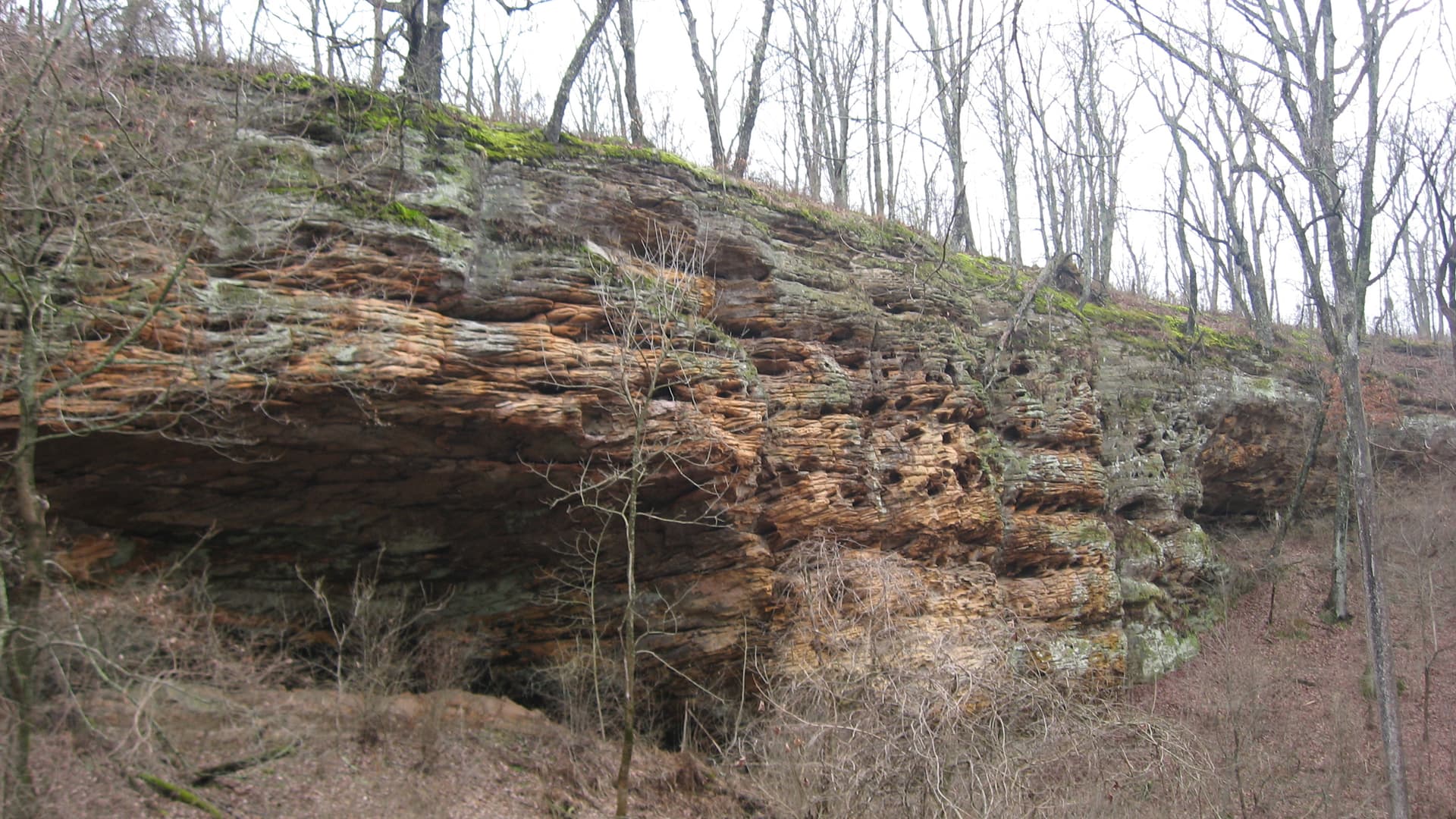
Perry County’s bluffs hold more than 380 recorded rockshelters, turning the county into one of Indiana’s most important archaeological landscapes. The Celina Shelter, site 12-Pe-1023, shows how those overlooked recesses preserve a long record of human use, even when most people drive past them without realizing what sits in the hills above the Ohio River corridor. That record matters because what survives in stone and soil can still be damaged, erased, or looted if it is not treated as a local asset.
Why Perry County stands out
Ball State University Applied Anthropology Laboratories’ Celina Shelter report says Perry County is famous for the density of its rockshelters, and numerous surveys have recorded over 380 of them. That concentration is unusual enough that Smith prepared a draft National Register nomination for Perry County rockshelters in 1983, a sign that the county’s archaeological record has long been recognized as more than a scattered set of isolated sites.
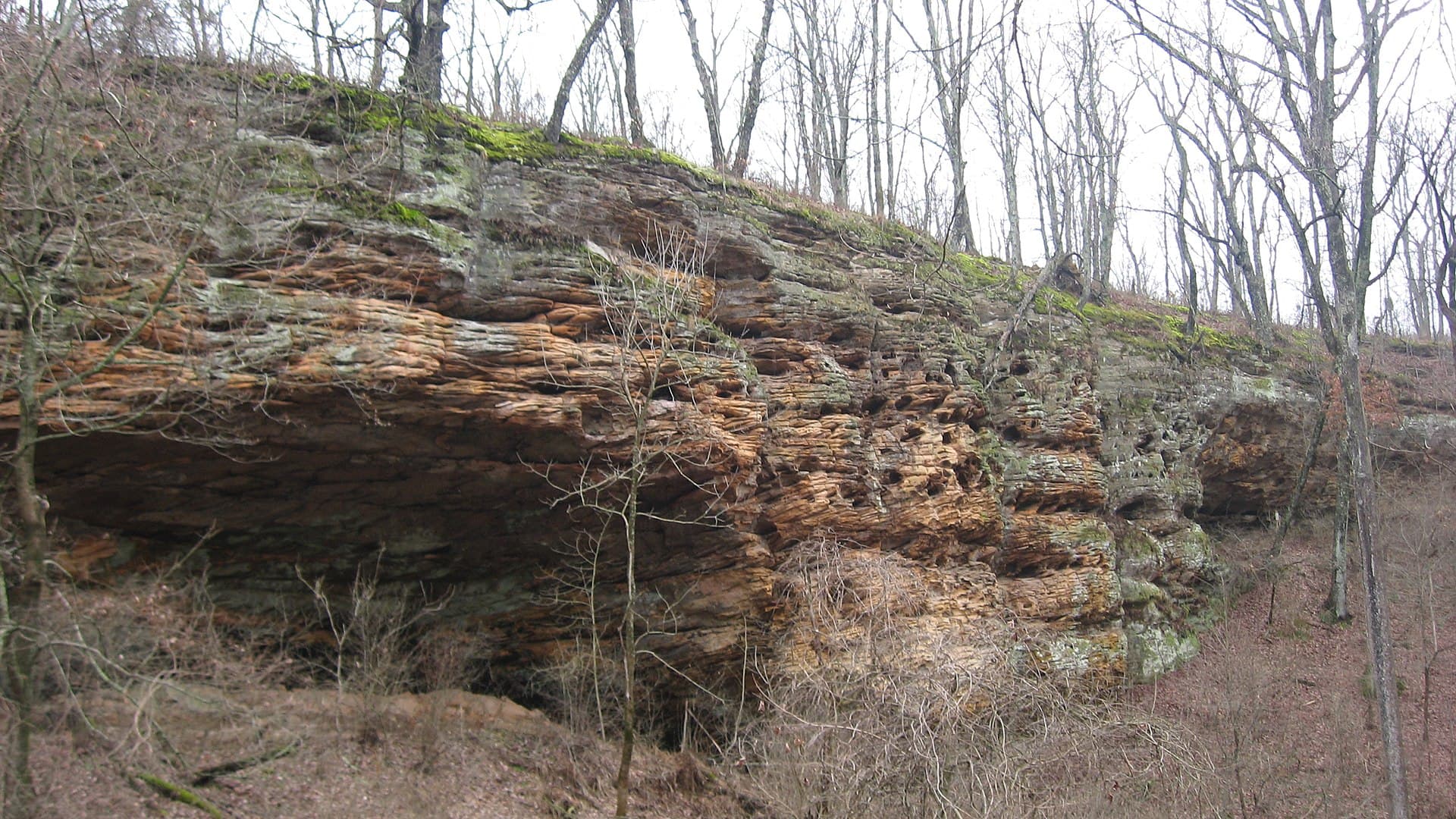
The landscape itself helps explain why. In southern Indiana, steep bluff country, carved drainage patterns, and sandstone or limestone outcrops create protected recesses that prehistoric people returned to again and again. From the outside, many shelters are just sheltered breaks in the rock line, but they are part of a much larger pattern of repeated human use across the county.
What rockshelters preserve
Rockshelters often preserve the kinds of evidence open-air sites lose to erosion. Stone tools, animal bone, charcoal, hearths, broken pottery, and soil layers can survive in a shelter, giving archaeologists a timeline of changing activity across seasons and generations. A single shelter can reveal what people hunted, what plants they used, how they cooked, and how they moved between the Ohio River corridor and nearby uplands.
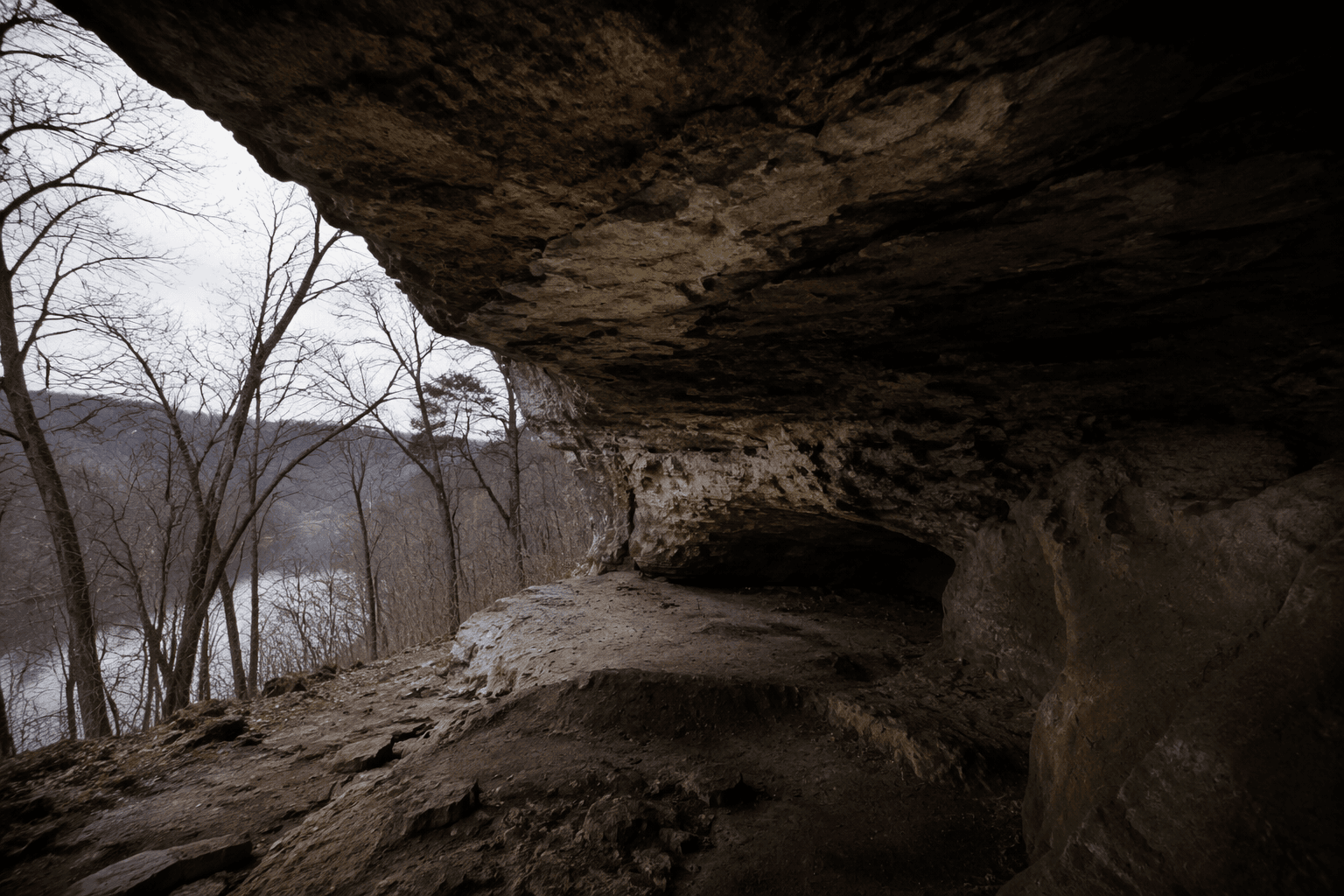
That is why Perry County’s shelters matter beyond simple site counts. They are not just places where people paused; they are places where people lived, camped, worked, and returned often enough to leave layered traces of daily life. In a county with so many shelters, those traces add up to a regional record that is unusually deep for Indiana.
Celina Shelter and the countywide record
Celina Shelter helps connect the local landscape to the broader story of Perry County archaeology. The site sits in a county where Rockhouse Cliffs Rock Shelters are listed among Perry County’s National Register of Historic Places properties, showing that these places are recognized at the national level as part of the historic record. The county’s archaeological significance is not limited to Cannelton or Tell City; it reaches into the bluff country and the shelter walls themselves.
That recognition matters because the National Register of Historic Places is the federal list of historic properties formally recognized by the National Park Service. Once a site is formally documented, it becomes harder to dismiss as empty ground. It becomes part of a public record that can guide land use, research, and preservation decisions.
A long timeline in the Hoosier National Forest region
The USDA Forest Service’s prehistory overview for the Hoosier National Forest region covers human use of the landscape from 12,000 B.C. to 1650. It identifies major cultural periods including Paleoindian, Early Archaic, Middle Archaic, Late Archaic, Woodland, and Mississippian, giving Perry County’s shelters a place in a much larger regional sequence.
The overview links the Archaic period with hunting and gathering, atlatl weights, shell mounds, camps, and seasonal food use. That detail matters because it shows how rockshelters fit into a broader pattern of movement and adaptation, not a single moment in time. The shelters preserved in Perry County help track how people used the Ohio River corridor and the surrounding uplands over thousands of years.
Where preservation work still happens
Archaeological investigations continue in the Bear Hollow and Oil Creek regions of the proposed Branchville Archaeological District of the Hoosier National Forest in Perry County. Ball State’s ROI056 project summary describes additional survey and testing in rockshelters there, adding to the countywide picture of repeated use and long-term occupation. Each investigation strengthens the documentation before erosion, weathering, or unauthorized digging can strip away the context that makes the site readable.
That context is what makes preservation urgent. Archaeological sites are non-renewable resources, and once they are disturbed, the information they contain is gone. In a county with so many shelters, stewardship is not abstract, because the loss of one site can mean the loss of a chapter in the local record.
How the record is protected
Perry County’s archaeological record is managed within Indiana’s Division of Historic Preservation and Archaeology framework, which covers archaeology, environmental review, and the National & State Register programs. The division says its archaeology team administers programs for protecting and preserving Indiana’s precontact and historic archaeological sites and the valuable information they contain.
Its central repository of archaeological records, SHAARD, is open to the public except for archaeological information. That balance between access and protection reflects the reality on the ground: broad public knowledge helps preserve history, but sensitive site details can also make shelters more vulnerable to damage or looting. In Perry County, that balance is part of what keeps a hidden landscape from being lost in plain sight.
The county’s rockshelters are not just a scholarly resource tucked into forested hills. They are a fragile public inheritance spread across private land, forest ground, and bluff country, and the official record now makes clear that protecting them is a county-level responsibility.
This article was produced by Prism’s automated news system from verified source data, official records, and press releases, then run through automated quality and moderation checks before publishing. The system is built and supervised by the people who set the standards it runs under. Read our full AI policy.
Did this article answer your question?