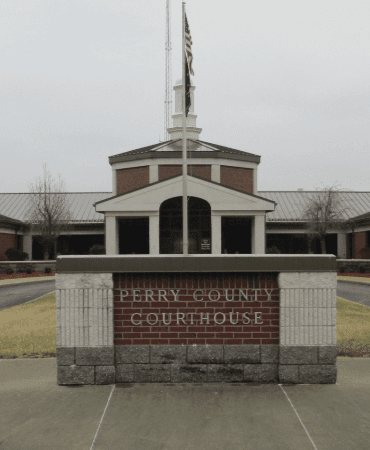
Perry County’s courthouses tell the story of shifting county seats
Perry County’s seats moved from Troy to Rome to Cannelton and now Tell City, and the surviving buildings in Troy and Rome still map that shift.
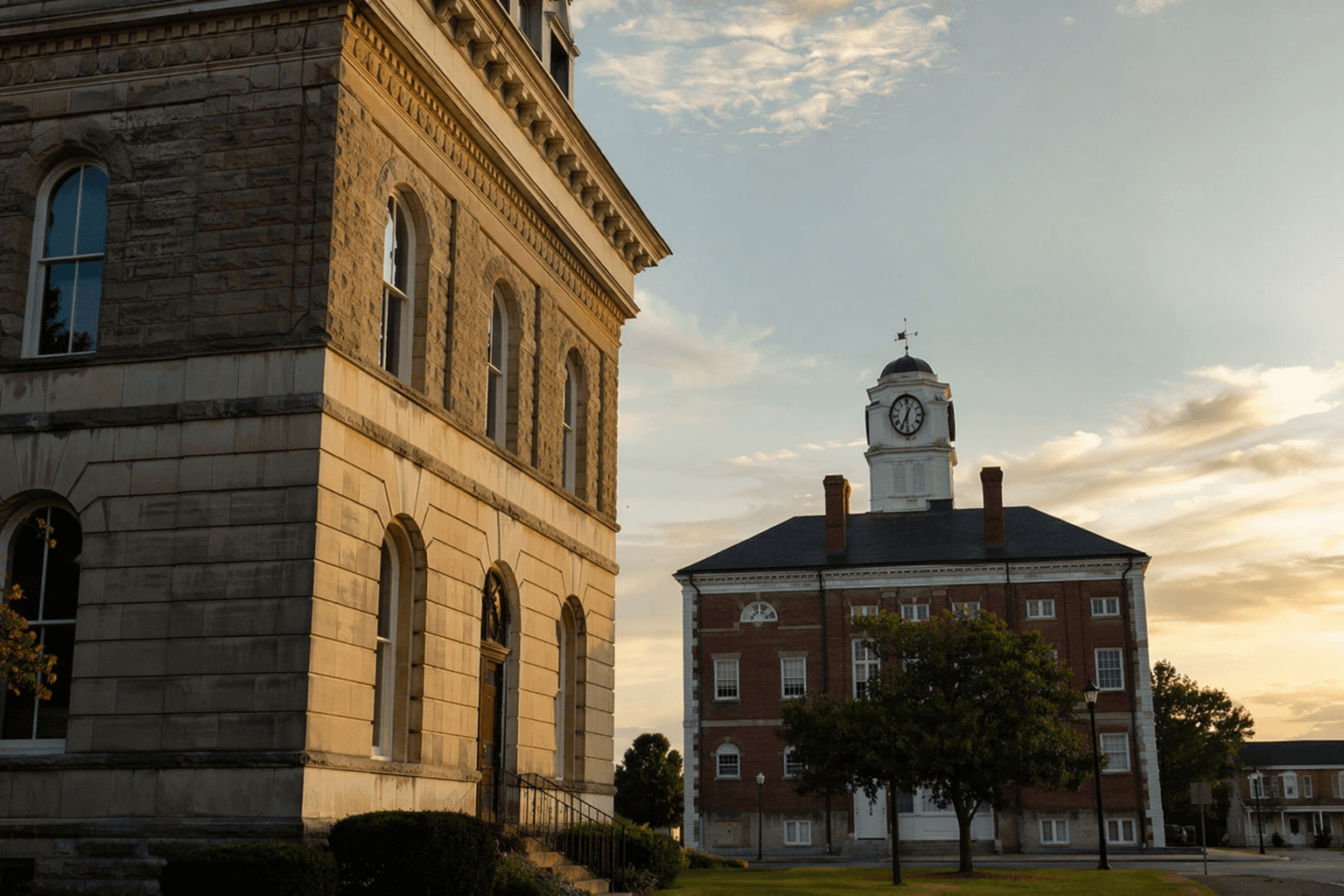
Perry County’s courthouse trail starts in Troy, moves through Rome and Cannelton, and ends today in Tell City, but the old seats never really left the landscape. A sandstone house on Water Street and a courthouse built in 1818 still mark the county’s early geography, while the present county seat points to the latest administrative stop in a long shift shaped by the Ohio River and changing settlement patterns. In a county organized in 1814 and named for Commodore Oliver Hazard Perry, the courthouses tell the story of where power sat, moved, and settled.
How the county’s shape pushed government around
Perry County sits with the Ohio River as its southern border, while Spencer, Dubois, and Crawford counties frame the other sides. More than 60,000 acres of the Hoosier National Forest lie inside the county, and the population was 19,170 in the 2020 census, down from about 19,338 in the 2010 Census. Those numbers matter because the county’s public history has always been tied to geography: river towns, inland crossroads, forest land, and the practical problem of putting a courthouse where enough people could reach it.
That is why the county seat story is easy to remember and worth following on the ground. Troy was first, then Rome, then Cannelton from 1859 through 1994, when the seat moved to Tell City. Each move says something about where county government needed to be at that moment, and each former seat still leaves behind a building or place name that keeps the old map visible.
Troy and the Nester House on Water Street
Troy gives the county its first courthouse-era footprint, even though the seat itself moved on long ago. The Nester House, also known as Riverplace, stands on Water Street and was placed on the National Register of Historic Places in 1990. The town says the lot was purchased in 1841, and the building was made from local sandstone, a material that ties the structure directly to the place it sits.
The house has had the kind of layered life that makes old county seats useful to modern visitors and local families alike. It has served as a grocery store, residence, hotel, museum, and more, which means it is not just a preserved shell but a building that keeps changing jobs as Troy changes around it. Preservation records describe it as a roughly 1863 sandstone hotel with a later rear addition and a two-tier porch, details that help explain why it still feels rooted in the town’s 19th-century street life.
The Riverplace story also carries the kind of local lore that sticks because it is tied to a visible place. A cellar tunnel was believed to run from the house to a barn two blocks north, and town history connects that feature to Underground Railroad activity. Indiana’s historic-preservation office cautions that the Underground Railroad in this state was generally not a network of literal tunnels or secret rooms, but a system of people opening their homes and offering help. That makes the Troy story more specific, not less: the house sits at the meeting point of architecture, memory, and the harder realities of how freedom-seeking routes actually worked.
Rome and the courthouse that never left
Rome is where Perry County’s earliest courthouse history became a physical landmark that still stands. The Rome Courthouse building was built in 1818, and the organization caring for it calls it Indiana’s oldest standing courthouse. It is also one of only two surviving Indiana public buildings from that era still standing in place, which gives the site unusual weight for anyone tracing the county’s first decades.
The building’s uses show how a county courthouse can outlive its original purpose and still remain civic property in the broadest sense. It has served as a courthouse, academy, public school, elementary school, and now community center. The current effort around the building centers on preservation and awareness of the courthouse, its collections, and its grounds as part of Indiana history, so the site remains more than a relic. It is a venue where the county’s first seat can still be read in brick, timber, and the layout of the grounds.
Rome became the seat after Spencer County was formed from parts of Perry and Warrick counties in 1818, when officials wanted a more central location. The county seat stayed in Rome until 1859, when it moved to Cannelton. That mid-19th-century move marks the point where the county’s center of gravity shifted again, and Rome’s courthouse became a surviving witness to the earlier phase rather than the administrative core. Some early county records were lost in the 1820s, which leaves gaps in the paper trail and makes the surviving building even more important as evidence of what the county once was.
Cannelton and Tell City in the long arc of county government
Cannelton held the county seat for more than a century, from 1859 through 1994. That long stretch matters because it shows that Perry County did not simply drift from one courthouse to the next in quick succession; it settled into a river-town seat for generations before shifting again to Tell City. The move in 1994 brought county government to its current location, but the earlier seat still defines how residents understand the county’s internal geography.
For anyone reading Perry County through its courthouse history, Cannelton and Tell City are the later chapters in the same public story. Cannelton marks the river-oriented era that dominated county government for most of the modern period, while Tell City represents the present-day administrative center. Together, they show how Perry County’s institutions kept adapting to where people lived, worked, and traveled, even as the older seats remained visible in surviving buildings and place names.
Reading the county today
The quickest way to understand Perry County is to treat its seats as a trail, not a list. Troy shows the first county-center era through the Nester House and its layered local history. Rome preserves the 1818 courthouse and the county’s earliest public architecture in place. Cannelton and Tell City mark the later administrative shift that kept county government moving along the Ohio River corridor.
That sequence still matters because the county’s public life was built in stages, and those stages are still standing. In Perry County, the courthouse story is not locked in archives alone. It is written in sandstone, in surviving grounds, in civic buildings that found new uses, and in the names of the towns that kept inheriting the work of local government.
This article was produced by Prism’s automated news system from verified source data, official records, and press releases, then run through automated quality and moderation checks before publishing. The system is built and supervised by the people who set the standards it runs under. Read our full AI policy.
Did this article answer your question?