How Hazard got its name, and the family who founded it
Hazard began as a riverbank settlement, then Perry Court House, and its name still ties the courthouse lawn, the county seat, and downtown to Elijah Combs's family.
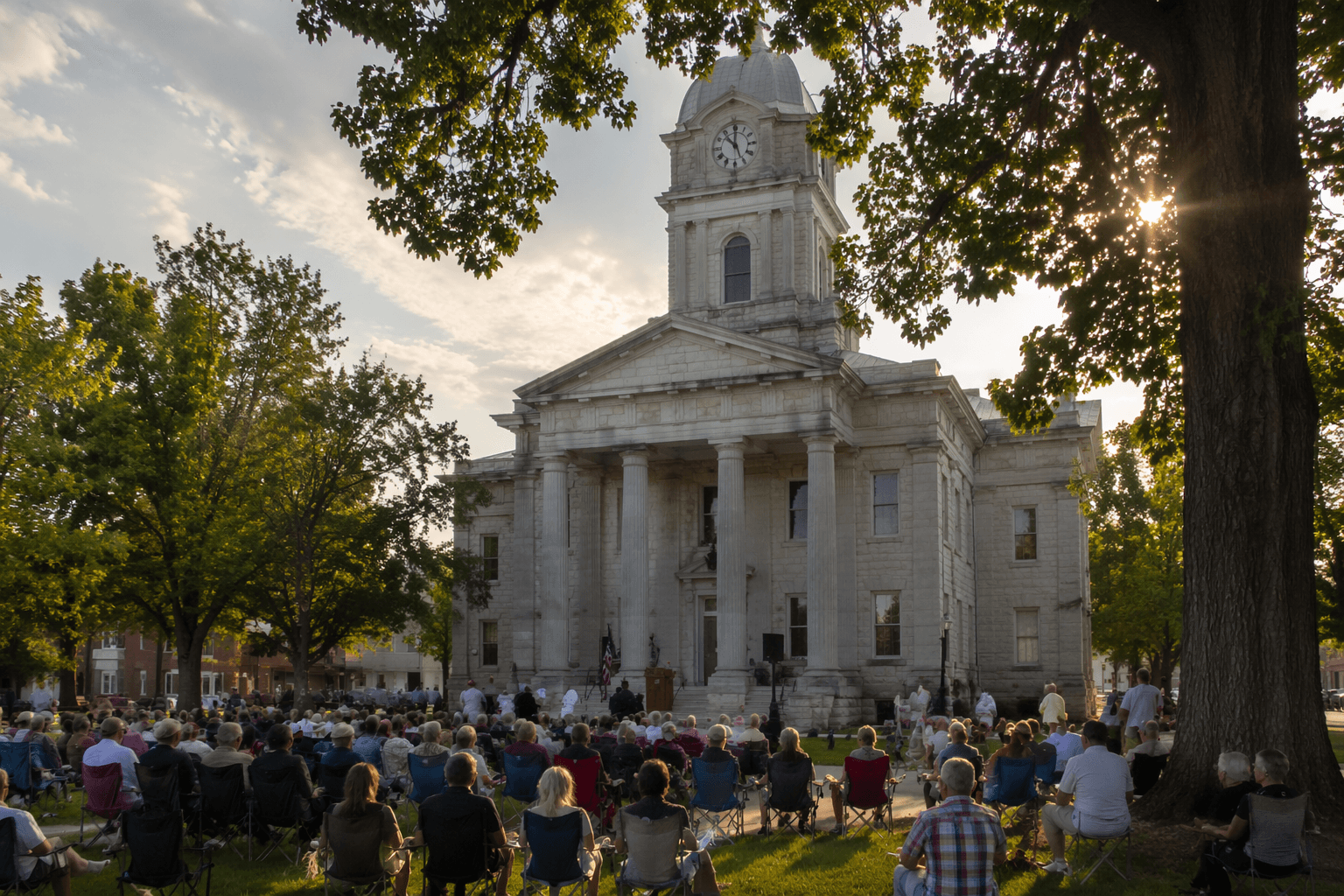
Hazard grew from a family settlement on the North Fork of the Kentucky River into Perry County’s courthouse town, and that sequence still explains how the city works today. The name on the map, the old county-seat location, and the marker on the courthouse lawn all point back to Elijah Combs, the first settler in the Hazard area, and to the family that turned a riverbank homeplace into a civic center.
From a cabin to a county seat
The story starts with Elijah Combs and his brothers, who came with their parents to Kentucky in 1790. The Kentucky Historical Society marker on the Hazard courthouse lawn identifies Combs as the first settler here, a leader in forming the county, and the man who deeded the land on which Hazard stands to trustees in 1826. It also notes that he later served in the Kentucky legislature in 1840, a reminder that the founder’s influence stretched beyond the first clearing and first buildings.
Hazard’s official city history adds the step-by-step geography of that early settlement. Combs traveled from Virginia in 1795, built a temporary cabin on the North Fork of the Kentucky River, and later returned with Sarah Roark. After that, he built the two-story log structure known as the Old Log Fort, and court was held there for several years. In other words, the place was not just a homestead: it became the county’s working center before a formal town grid ever existed.
That progression matters because it explains why downtown Hazard sits where it does. The courthouse, the old settlement corridor, and the river line all grew from the same choice of location. The city’s history shows that the village was already being referred to as Hazard in early court records, which means the name circulated before incorporation and long before modern downtown took shape.
Why the town is called Hazard
The name Hazard comes from Commodore Oliver Hazard Perry, the War of 1812 naval hero whose victory at Lake Erie made him nationally famous. Perry’s battle message, “We have met the enemy and they are ours,” became one of the best-known lines of the war, and his name gave both the county and county seat a broader national connection. The Kentucky Historical Society’s Perry County marker says the county was formed from parts of Clay and Floyd counties, and that both the county and Hazard were named for Perry.
The county seat first became officially known as Perry Court House when Perry County was established in 1821 as Kentucky’s 68th county. That name reflected its function, not just its geography: it was the seat of county government, the place where legal business and public records were handled. By 1854, the post office had been named Hazard, and the city was incorporated in 1884, fixing the shorter name that people had already been using.
Perry County’s own history helps fill in the documentary trail. It says the first post office was established in 1824 in a small settlement on the North Fork of the Kentucky River known then as Perry Court House, and that this early community was founded by Elijah Combs and his seven brothers. That sequence, from family settlement to post office to county seat, gives the name Hazard its practical origin as much as its commemorative one.
The family at the center of the story
Elijah Combs was not only the first settler in the Hazard area, he was also the hinge between private landholding and public institutions. By deed-ing the land on which Hazard stands to trustees in 1826, he helped move the settlement from a family base to a town with official civic space. That transition is part of why the old courthouse lawn still matters: it is not just decorative ground around a public building, but the public face of the original settlement.
Sarah Roark belongs in the story as well, because the city history ties the building of the Old Log Fort to Combs’s return with her. The fort is important less as a surviving structure than as proof of how early Hazard functioned. A building that could host court for several years was doing the work of a courthouse before Hazard had the kind of formal downtown most people recognize today.
Taken together, the records show a community shaped by family migration, river access, and legal necessity. The Combs family’s role was not symbolic. It was logistical: clear the land, build the cabin, raise the fort, establish the post office, and deed the town site so public life could continue.
Why the old names still matter now
Hazard’s origin story still shows up in the way the city describes itself. The City of Hazard says the community serves as the center for education, communication and healthcare for Hazard and surrounding counties. That is not separate from the old county-seat history; it grows directly from it. Courthouses tend to attract roads, offices, services, and institutions, and Hazard’s early role as Perry Court House set that pattern in motion.
The town’s scale also helps explain why the founding details remain visible. Perry County covers approximately 343 square miles and had nearly 29,000 residents in the 2010 census. In a county that size, the county seat is more than a symbol. It is the place where daily life still concentrates, from government to services to the physical orientation of downtown.
The marker program itself adds another layer of context. The Kentucky Historical Society says it has installed more than 2,400 historical markers across Kentucky since 1949. The plaque at the Hazard Courthouse Lawn places the city’s founding story inside that statewide memory system, but it also gives passersby something immediate: a dated route from 1790, 1795, 1821, 1824, 1826, 1854 and 1884 to the street plan and civic center that exist now.
For anyone standing near the courthouse today, the outline is clear. A family settlement on the North Fork became Perry Court House, Perry Court House became Hazard, and the old names still explain why the courthouse lawn, downtown, and the county seat all occupy the same historical ground.
This article was produced by Prism’s automated news system from verified source data, official records, and press releases, then run through automated quality and moderation checks before publishing. The system is built and supervised by the people who set the standards it runs under. Read our full AI policy.
Did this article answer your question?