Perry County website spotlights services, grants, officials, and local attractions
Perry County’s site is most useful as a practical county guide, putting contacts, recycling details, and visitor spots in one place. It is stronger as a public directory than a full online service desk.
What a resident can use right now
Perry County’s website works best as a quick-reference map of county government and county life. It points visitors to office contacts, a road index, service links, elected officials, and attractions, while also signaling where the county wants to be seen: in public services, cleanup, and recreation. What stands out most is not a flashy design but a plain-government purpose, helping people figure out who does what, where to go, and how the county describes itself.
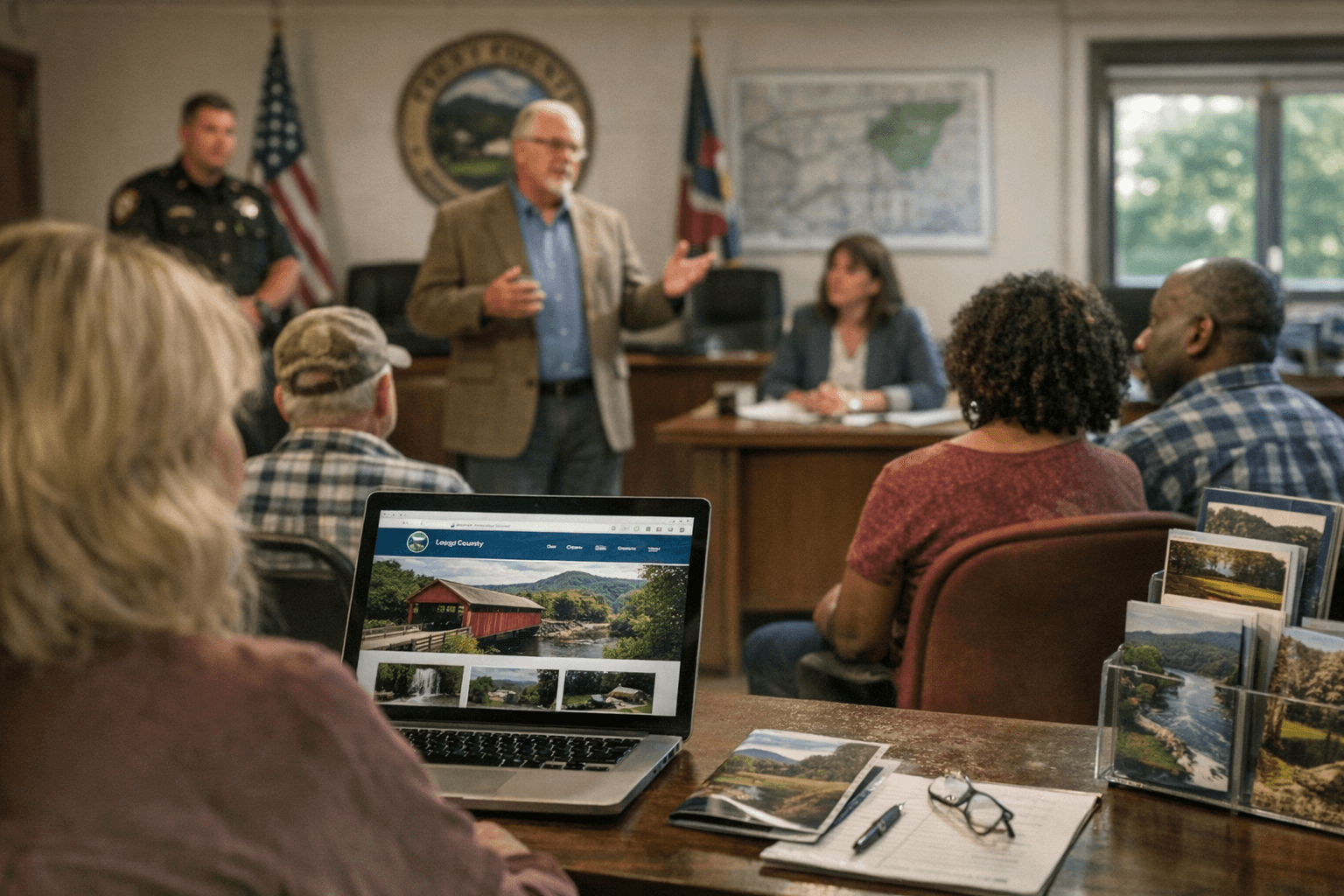
The site is most useful when you need names and responsibilities. The Perry County Fiscal Court says it oversees the county budget, county roads, county parks, public safety, and other services, and the elected-officials page lists County Judge Executive Scott Alexander, District 1 Magistrate Don Miller, District 2 Magistrate Ronald Combs, District 3 Magistrate Clayton Church, and County Attorney John Carl Shackelford. That gives residents a direct path to the people tied to local decision-making in Hazard, the county seat, rather than leaving them to guess which office handles which problem.
The county’s grant story is part of the message
The strongest thread running through the site is the county’s emphasis on grant funding and infrastructure. Perry County says Scott Alexander’s tenure has brought in more than $100 million in grant funding, with money tied to water and sewer improvements, waste cleanup and recycling, homeland security, economic development, transportation alternatives, and recreation. Kentucky Energy and Environment materials also say Alexander is in his third term as judge-executive and created a grant department during his time in office, which helps explain why the county presents itself as a place where outside dollars are being turned into visible projects.
That matters in a county that has seen population decline, from 28,712 people in the 2010 census to 28,473 in the 2020 census, across 343 square miles. Perry County was named for Commodore Oliver Hazard Perry, the naval hero of the War of 1812, and its public messaging suggests leaders are trying to connect that identity to present-day service delivery. In 2023, WEKU reported the county was set to receive $3.8 million in coal severance tax funds, and Alexander said that money would go toward economic development and quality-of-life improvements. Taken together, those details show a county using grants, severance money, and public pages to frame the work of keeping services visible in a smaller rural county.
What the site says about trash, recycling, and cleanup
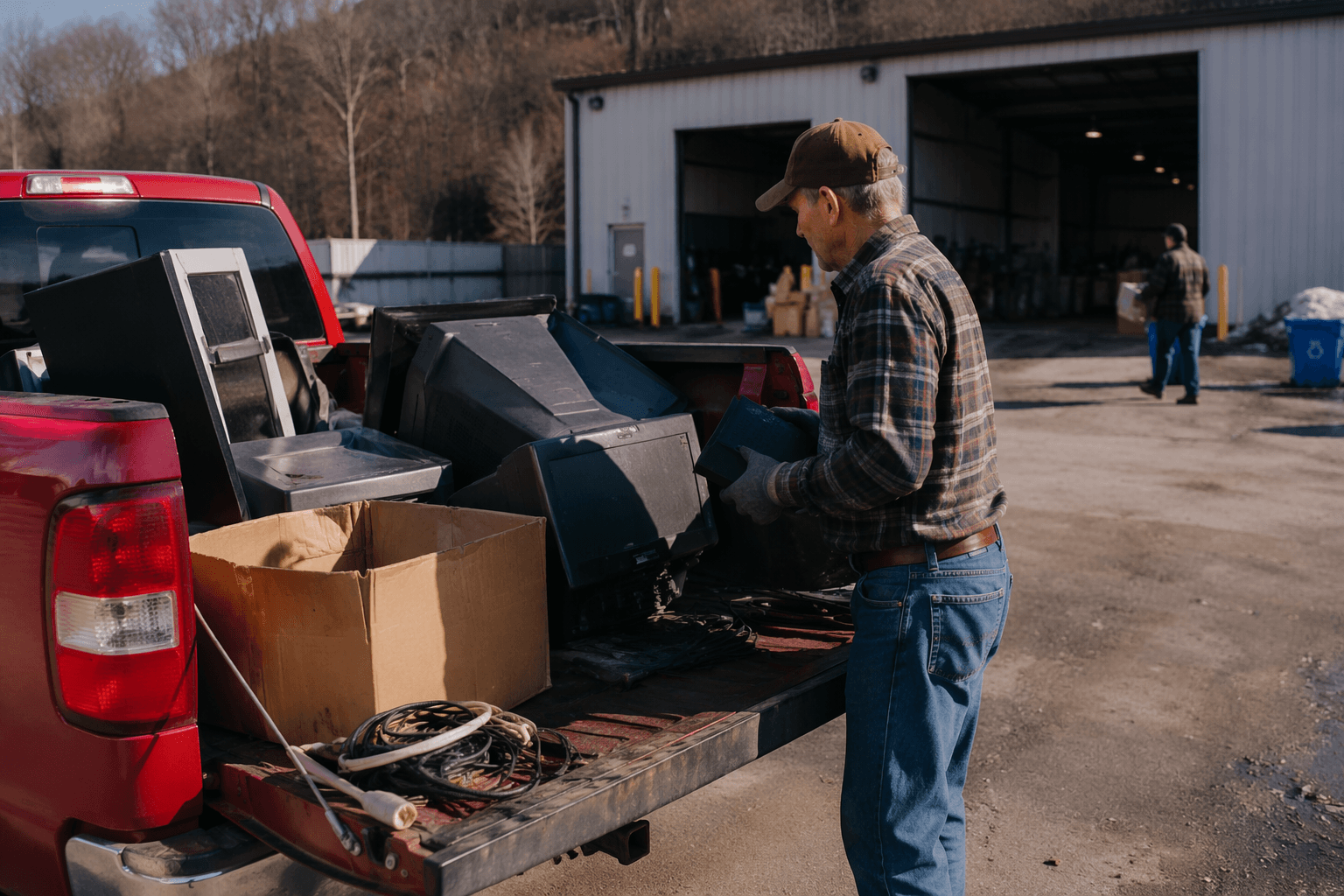
The most immediately practical pages are the solid-waste and recycling sections. Perry County says weekday drop-off is available for large trash items, electronic waste, and hazardous waste, which gives residents a direct answer when bulky items or special materials cannot go into ordinary pickup. The solid-waste page also says Alexander purchased several recycling trailers with grant funds, and the county has placed permanent trailers at Viper Park-and-Ride in Viper, Haven King’s old truck lot in Chavies, Vicco City Water in Vicco, and Perry County Park, with an additional trailer at the National Guard Armory for public use.
That network matters because it turns the county’s recycling effort into something physical and local rather than abstract. The website also points to a county recycling program that includes mobile recycling units, cardboard recyclers, and a recycling center at the county garage. For residents trying to sort waste the right way, the county’s message is clear: there is a system, and it reaches beyond Hazard into communities like Chavies, Vicco, and Viper.
How the county presents recreation and visitors
Perry County’s website also functions as a visitor guide, especially through its promotion of the Perry County Fair and Leatherwood Off-Road Park. The county says it created the Perry County Fair in 2015 and describes it as a three-day event with free entertainment. The fair page also says it welcomes school and church groups, volunteer fire departments, civic organizations, small businesses, and individual entrepreneurs, which makes it more than a simple festival listing. It reads like a community showcase, one meant to pull in both local groups and small vendors who want a place on the calendar.
Leatherwood Off-Road Park is presented as one of the county’s signature attractions. The county describes it as Kentucky’s largest off-road park, with more than 250 miles of trails across more than 50,000 acres. That scale gives Perry County a tourism identity that reaches beyond county lines, especially for visitors looking for outdoor recreation in the Appalachian hills. In the county’s own telling, local life is not only about roads, offices, and public works. It is also about events, trail systems, and the kind of outdoor draw that can put a small mountain county on a regional map.
Why the site works, and where it feels more like a bulletin board
The website’s biggest strength is that it gathers a lot of county identity into one place. It combines government contacts, fiscal court structure, waste information, grant-driven projects, and attractions such as the fair and Leatherwood into a single county portrait. That makes it useful for a resident who wants the basics fast, whether the task is finding who handles roads, checking recycling options, or seeing what the county promotes to visitors.
Its weaker point is that it feels more like a directory than a full-service digital counter. The site is good at pointing people toward the right office, trailer location, or attraction, but the material highlighted on the county pages is built around information and direction rather than deeper self-service tools. That still gives Perry County residents a practical benefit: one place to understand how the county sees itself, where officials sit, and where everyday services and local attractions fit into that picture.
This article was produced by Prism’s automated news system from verified source data, official records, and press releases, then run through automated quality and moderation checks before publishing. The system is built and supervised by the people who set the standards it runs under. Read our full AI policy.
Did this article answer your question?