Two Hospitalized After House Fire in Krypton Community
A Jan. 2 house fire in the Krypton community left a home and nearby garage destroyed and sent two residents to Hazard ARH with smoke inhalation. The loss underscores risks to rural households, the health effects of smoke exposure, and the strain such disasters place on limited local housing and emergency resources.
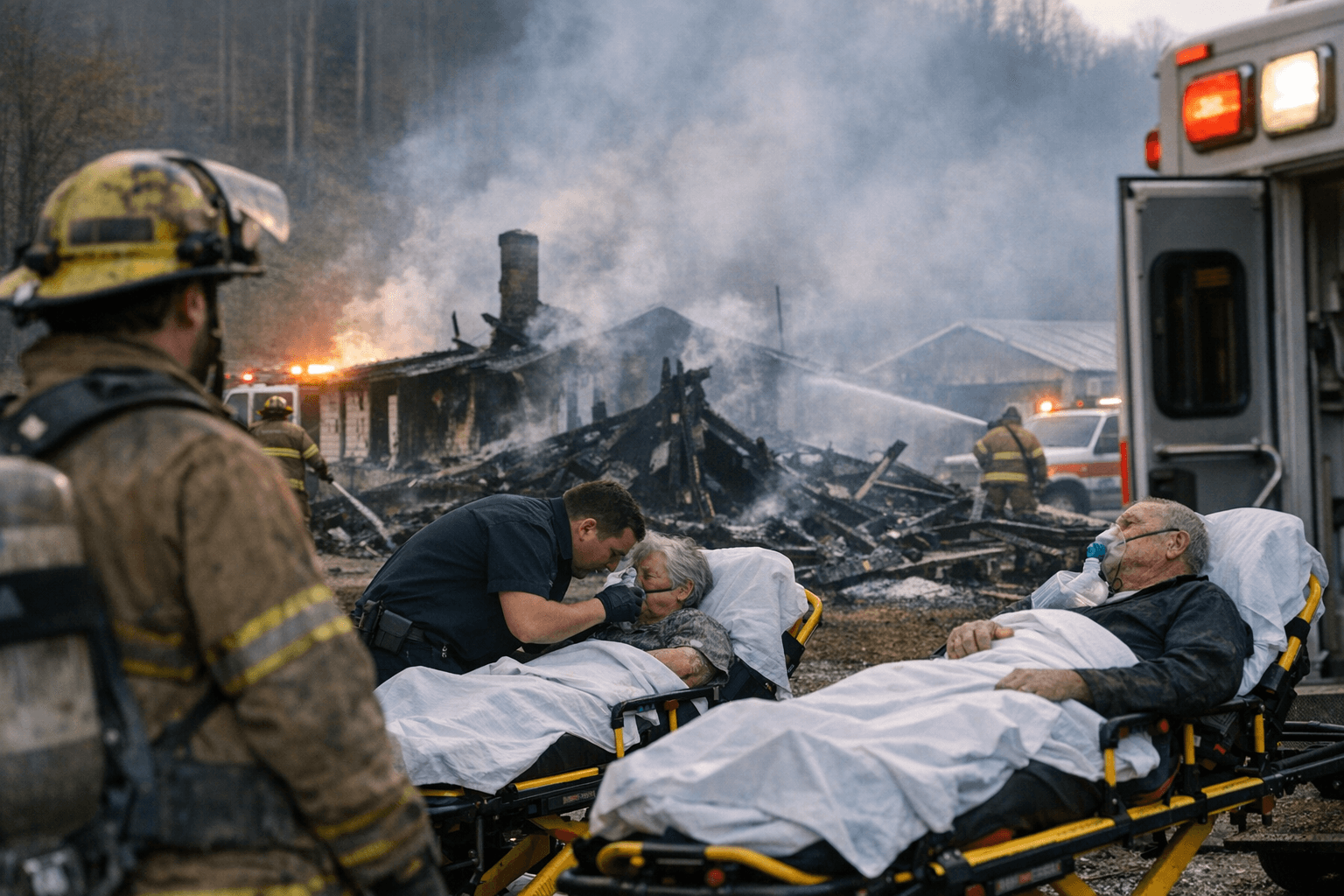
Fire crews from the Avawam Fire Department and Rescue Squad responded overnight on Jan. 2 to a structure fire in Krypton where both the residence and an adjacent garage were fully involved. Fire officials reported the home and garage were a total loss. Two residents were transported to Hazard ARH for treatment after suffering smoke inhalation, and the American Red Cross was notified to assist the affected household. Fire authorities said the cause of the blaze remains under investigation.
Smoke inhalation can produce immediate and delayed health effects, from coughing and breathing difficulty to chemical irritation and carbon monoxide exposure that can require medical monitoring. Local residents treated at the hospital underscore the clinical reality that fire survivors often need acute care and follow-up evaluations for respiratory and cardiac complications, particularly older adults and people with chronic lung or heart conditions.
Beyond the immediate medical needs, the incident highlights broader public health and social equity concerns for Perry County. The loss of a home and a garage can produce sudden displacement, property loss, and financial strain. Rural communities frequently face limited options for temporary housing, fewer social services nearby, and longer distances to medical and mental health care. Those structural vulnerabilities can deepen the hardship of households already contending with low incomes, limited savings, or gaps in insurance coverage.
Local emergency services play a critical role in response, yet rural departments often operate with constrained budgets and volunteer staffing. The involvement of the American Red Cross points to the need for outside assistance in sheltering and recovery, but long-term recovery depends on available housing, local social supports, and coordinated policy responses that prioritize emergency preparedness and housing stability.
For community members, this fire is a reminder of basic prevention steps such as functioning smoke alarms, evacuation planning, and safe heating and electrical practices. For policymakers and healthcare planners, it is a prompt to consider investments in fire prevention, emergency response capacity, and support systems for displaced families. Officials continue to investigate the cause of the fire, and the two residents remain in care at Hazard ARH as recovery and assessment proceed.
This article was produced by Prism’s automated news system from verified source data, official records, and press releases, then run through automated quality and moderation checks before publishing. The system is built and supervised by the people who set the standards it runs under. Read our full AI policy.
Did this article answer your question?