Cherry Street walk traces Helena-West Helena's rise as county seat
Cherry Street's courthouse, ridge houses, and commercial blocks show how Helena-West Helena became the county seat, and why preservation now carries real civic and economic stakes.
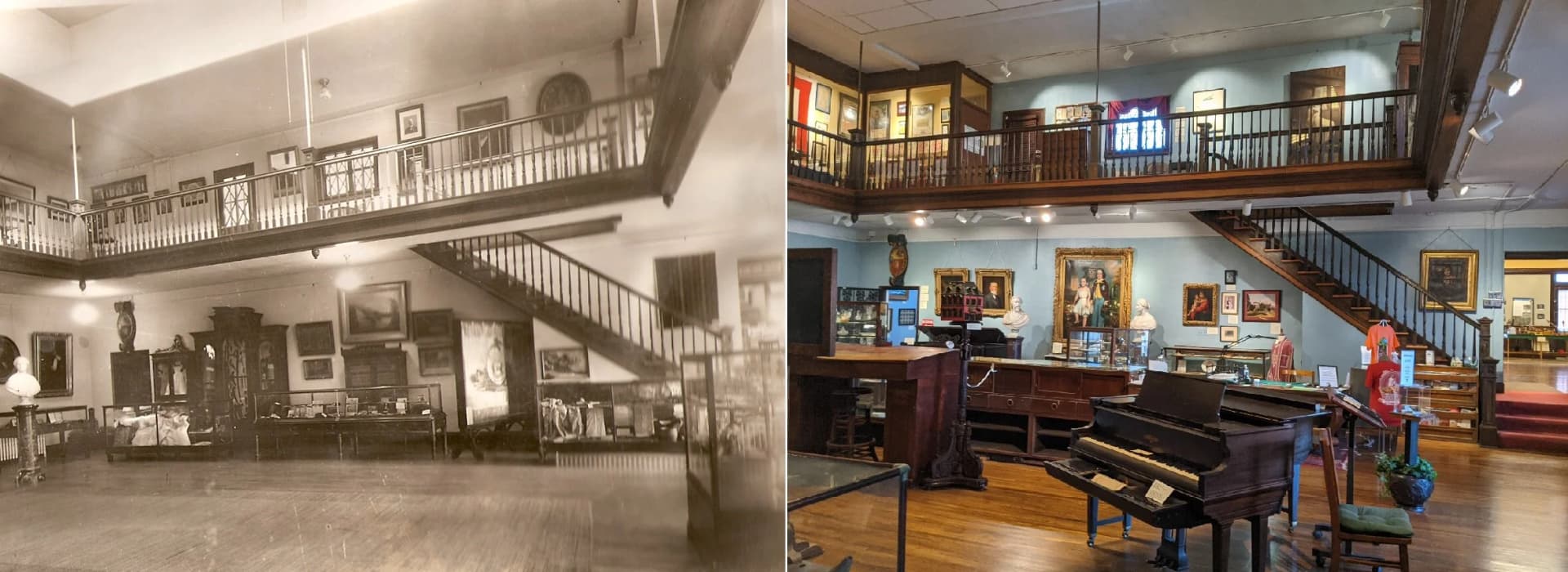
At Cherry Street Pavilion, the walk begins with a simple question: what does a county seat look like when its history is still written in brick, courthouse stone, and ridge-top houses? On Cherry Street, Helena-West Helena answers with a compact downtown that stretches from the commercial blocks around Cherry and Missouri to the Phillips County Courthouse at 622 Cherry Street and the older homes climbing toward Crowley’s Ridge. Keep those buildings in use and they help preserve county memory, foot traffic, and downtown value; let them fade and the city loses both heritage and a working civic center.
Cherry Street as the county seat's spine
The Cherry Street Historic District gives the walk its frame. It was added to the National Register of Historic Places on August 17, 1987, then expanded in 2010 to include the 100, 200, and 600 blocks of Cherry Street and buildings on Missouri Street near Cherry. That expansion matters because it recognizes that Helena-West Helena’s downtown story is not confined to a single showcase block. The district’s commercial fabric tells the story of a river town that grew into a county seat and kept building outward along the streets that still anchor public life.
Helena’s earliest geography explains why this corner of Phillips County mattered so much. The city sits on the southern edge of Crowley’s Ridge and on the Mississippi River, with the original town site in the floodplain. The Arkansas Historic Preservation Program’s tour script traces Helena’s growth to practical necessities: access to the river, the higher ground of Crowley’s Ridge, drinking water from springs, and canebrakes that fed cattle. Much of that low ground flooded periodically until substantial levee systems were built in the late nineteenth century, a reminder that the town’s downtown blocks were never separate from the river’s risks.
Phillips County itself was created by the Arkansas Territorial Legislature on May 1, 1820, and named for Sylvanus Phillips, who moved to the Helena area around 1815. Helena was incorporated in 1833, and by then the settlement had already begun to organize itself around trade, landholding, and transport. Phillips was a cattleman, trader, and land speculator, a useful profile for a place where access to river traffic and upland routes could decide who prospered.
The courthouse made Cherry Street the civic core
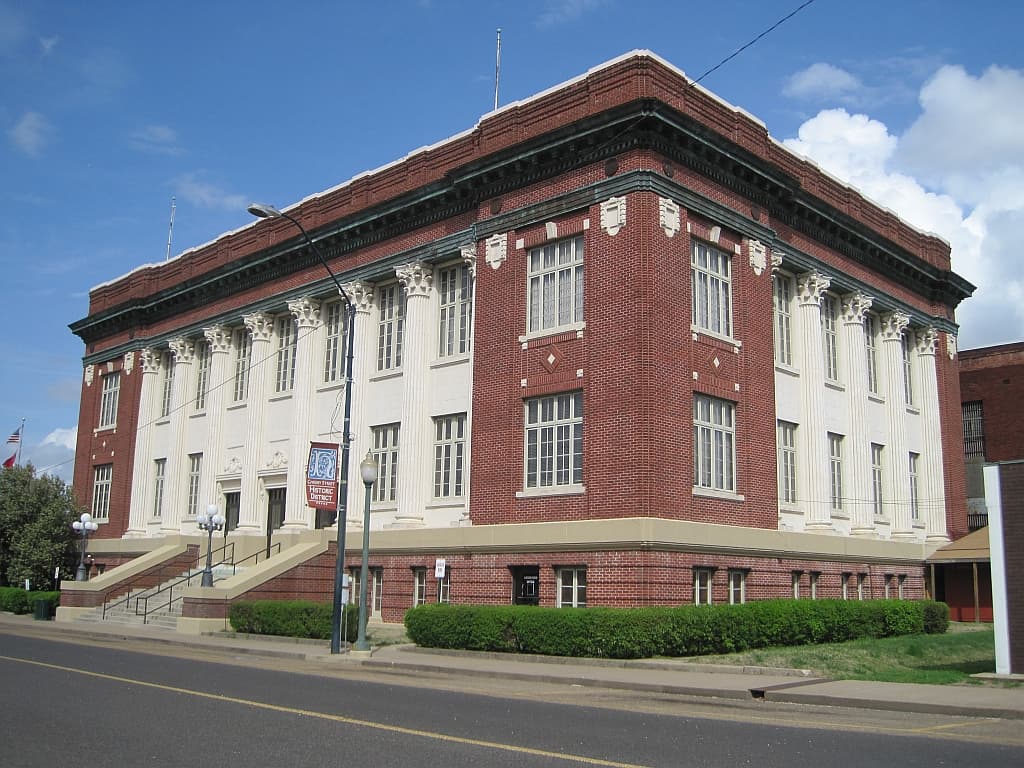
If Cherry Street tells the story of commerce, the Phillips County Courthouse at 622 Cherry Street tells the story of government. Completed in 1915, it stands three stories tall and is recognized as the best Classical Revival building in Phillips County. The courthouse was listed on the National Register of Historic Places on July 5, 1977, giving it formal status not just as a government building but as one of the county’s most important landmarks.
The present courthouse replaced earlier county courthouses, including one that grew too small after the Civil War. A cornerstone ceremony for a new courthouse was held on April 27, 1869, marking the county’s effort to keep pace with its own expansion. That sequence is the heart of the accountability story on Cherry Street: when county government moved into a larger, more permanent home, the surrounding downtown became the natural place for lawyers, clerks, merchants, and residents to do business.
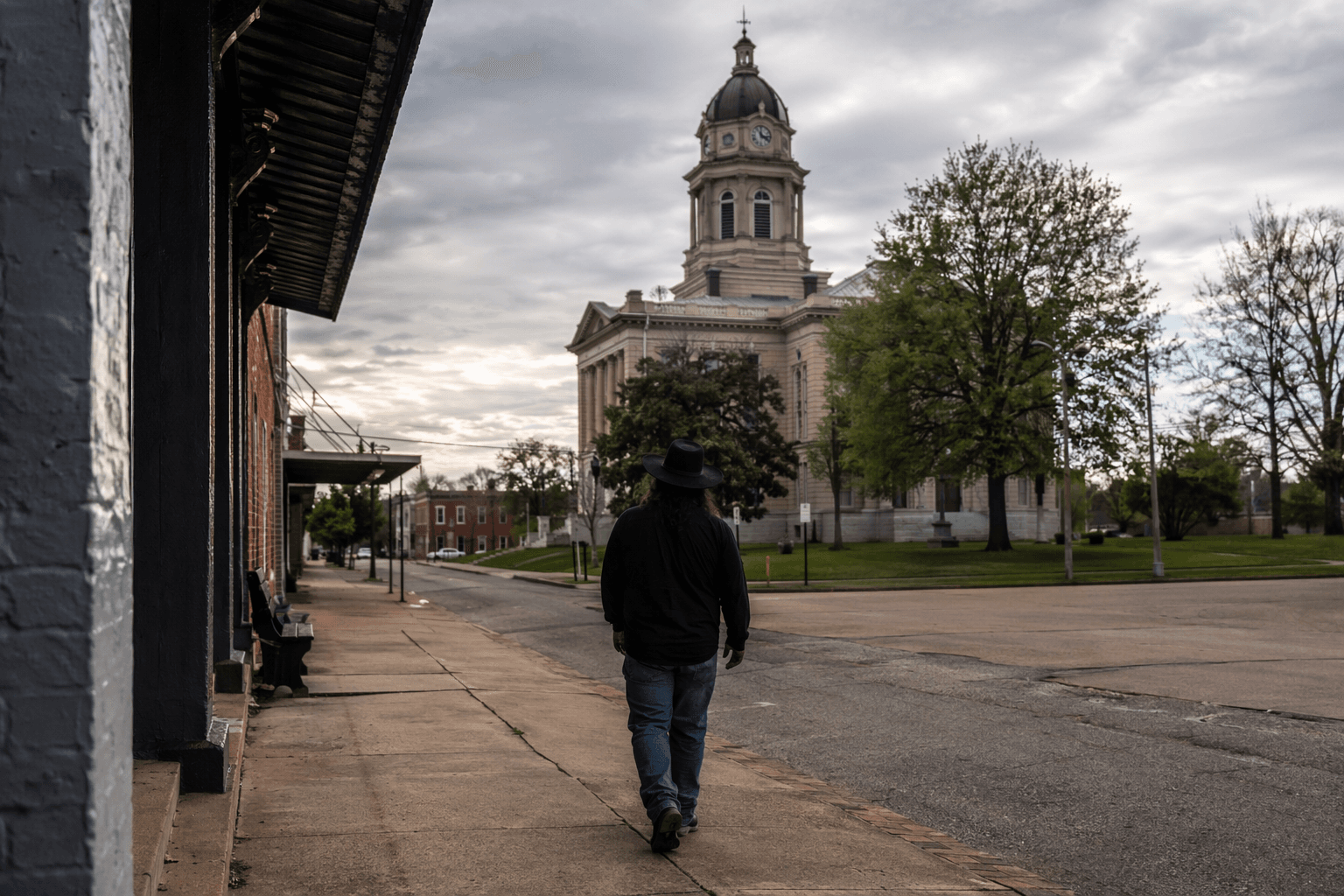
The building’s preservation is not only an aesthetic concern. A courthouse that is maintained signals that the county still expects to use the center of town for public life. A courthouse that is allowed to decline would push more activity away from Cherry Street, weaken nearby businesses, and make the cost of future restoration even higher. In a county seat, the condition of the courthouse is a public statement about whether government intends to stay visible and accessible downtown.
The ridge houses show who climbed with the town
The residential blocks above downtown add another layer to the story. The West House at 229 Beech Street was built in 1900 for Mercer Elmer West by the Clem Brothers of St. Louis. It is an early Arkansas example of the Georgian Revival, but it also carries Queen Anne decorative details, a mix that reflects a moment when local prosperity and changing taste met on the ridge. Its setting also matters: the house offers a ridge-top view of the Mississippi River, tying domestic architecture to the same geography that shaped the city itself.
A few blocks away, the White House at 1015 Perry Street, designed by Charles L. Thompson around 1910, shows the county seat moving into a more refined architectural vocabulary. It is a two-story brick residence on North Perry Street, and it signals the shift toward Colonial Revival tastes that took hold in many Arkansas towns as the twentieth century advanced. The Altman House at 1202 Perry Street, built in 1914, goes further still. Its National Register form describes it as an excellent example of an upper-middle-class early twentieth-century house whose eclectic design combines Arts and Crafts and Classical Revival influences.
These houses matter because they show that Helena-West Helena did not grow only as a place of government offices and storefronts. The ridge captured domestic life, wealth, and style in ways that helped define the town’s social geography. Preserving them keeps a rare sequence intact: the street grid below, the courthouse in the middle, and the residences rising above the river town on higher ground.
Why preservation is an economic question now
Helena-West Helena itself was created by merger on January 1, 2006, and the 2010 census counted 12,282 residents, about 75 percent of them African-American. Phillips County had 16,568 residents in the 2020 census, and the county now has 50 National Register of Historic Places listings. That concentration of historic sites gives the county an unusually dense preservation footprint for a place of its size, but it also raises the stakes when older buildings sit vacant or underused.
The Delta Cultural Center, which opened in 1990 in downtown Helena-West Helena, is a major stakeholder in that effort. As a Department of Arkansas Heritage museum devoted to interpreting the cultural heritage of the Arkansas Delta, it sits inside the same downtown landscape as the courthouse and Cherry Street district. Together, those institutions form a public-facing cluster that can support tourism, education, and local business if the surrounding blocks remain intact and active.
The architecture walk on Cherry Street works because it connects the county’s past to decisions that are still visible now. The courthouse shows how government claimed a stable place in town, the commercial blocks show how trade followed, and the ridge houses show how prosperity expressed itself above the floodplain. In Phillips County, preservation is not just about keeping old buildings pretty. It is about whether the county seat remains a living downtown or becomes a memory of one.
This article was produced by Prism’s automated news system from verified source data, official records, and press releases, then run through automated quality and moderation checks before publishing. The system is built and supervised by the people who set the standards it runs under. Read our full AI policy.
Know something we missed? Have a correction or additional information?
Submit a Tip